-
 Chris Alarcon
 - 21 Aug, 2026
Claude 5, Explained for Non-Coders: What Fable 5 Actually Changed at Work (2026)
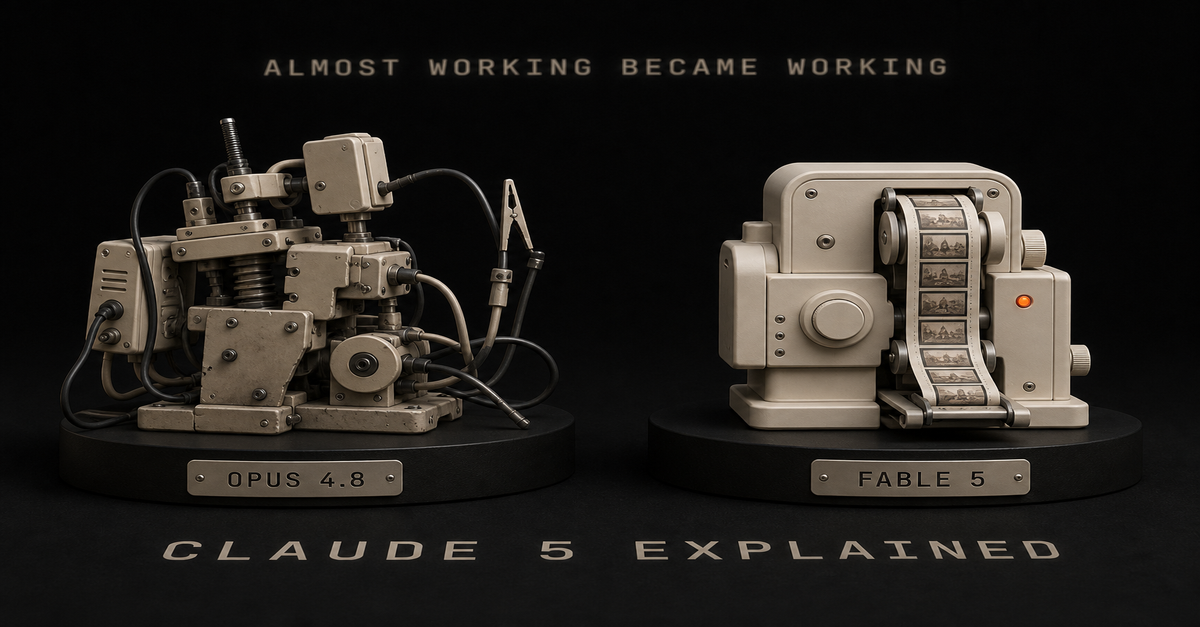
Quick answer: Claude 5 is Anthropic's new model family, and Fable 5 is its first model - a new tier that sits above Opus in capability. In plain English: the ceiling moved. Tasks that used to almost work now just work. That sentence sounds like marketing until it happens inside your own workflow, so this post gives you mine, before and after. The short version: Opus 4.8 needed a plumber. Fable 5 just did the job. The plain-English version of what launched Anthropic's Claude 5 family launched June 9, 2026, led by Fable 5. It had a bumpy start: access was suspended June 12 and came back July 1, and Anthropic logged all of it on its own announcement. The parts that matter to a normal person:Anthropic's own announcement, captured August 21, 2026. Launch June 9, access suspended June 12, redeployed July 1 - the timeline is right on the page.Fable 5 is a new class of model above Opus - Anthropic calls the tier Mythos-class. Fable 5 and Claude Mythos 5 share the same underlying model; Fable is the version everyone can use, with additional safety measures, while Mythos goes only to approved organizations. Opus 5 is still around and still excellent. The standard lineup did not get worse; the ceiling above it got higher. Update, September 22, 2026: Opus 5.5 replaced it as the Opus Anthropic recommends, and Anthropic says it "performs at the level of Claude Fable 5.1 on most work" (announcement). The plan gotcha: since July 20, Fable 5 is not part of Claude Pro's normal usage - it bills as separate usage credits there. On Max plans it is included, capped at 50% of weekly limits, per Anthropic's pricing page. I track every plan detail like this, dated, on my AI plan tracker.My before-and-after, with receipts on YouTube So this is what changed in my own work. No benchmarks. Before, on Opus 4.8: I was trying to build a visual-aid system for my short videos - the thing that adds graphics, titles, and proof screenshots onto a talking-head clip automatically. It was a big job with a lot of steps and a lot of judgment calls. On 4.8 I could get close. There was always some plumbing left, and what came out was a bit Frankenstein: parts bolted together, me holding the wrench. After, on Fable 5: it just did it. I rebuilt the skill with Fable, and over the following weeks it got reliable enough that it now runs my shorts post-production. I record a talking head; the system does the visuals.My actual shorts page, captured August 21, 2026. The price overlays and proof cards on these videos are generated by the pipeline Fable 5 rebuilt - the thing Opus 4.8 could only almost do. You do not have to take my word - the receipts are public. Go to my YouTube shorts and compare this week's videos against ones from four months ago. It's night and day. Part of that is me (lighting, style, topics evolving). But the visuals on recent shorts come from the Fable-built pipeline, doing work the previous generation could not finish. And it is not just me. My feeds during the launch window were full of people shipping fully polished videos from scratch, even avatar versions of themselves. Fable moved the line. Big creative pipelines used to be expert projects. Now a determined non-coder can get one built just by asking in plain English.The 60-second version, from my Shorts: There are 4 different Claudes. Here's which one does what.The plan decides how much Fable you actually getPlan Fable 5 access Who it fitsFree Not included Everyday questions on standard modelsPro ($20/mo) Pay-per-use usage credits Full work surface, Fable on demandMax ($100/$200) Included, up to 50% of weekly limits AI doing real work every dayFree and everyday use: you do not need Fable. The standard models are strong, and most people would not feel the difference on normal tasks. Pro at $20: you get the full working surface - Claude Code, Cowork, Projects - on the standard models, with Fable available as pay-per-use credits. My full verdict on that tier: Is Claude Pro worth it. Max at $100/$200: Fable inside your plan up to half your weekly limit. If your work leans on AI all day, this is where you can actually use the new ceiling every day. Sizing guide in Claude Pro vs Max. A practical tip from daily use: Opus 5 on high effort is phenomenal and covers most real work. I only reach for Fable when the task is really hard. That habit stretches any plan a long way.My picker, September 2026. Fable 5.1 is one tap away under More models, but Opus 5 stays the default, and the Effort dial is what actually moves your meter. The honest limits No clean sweep here. For research workflows, I still find ChatGPT's Sol Ultra phenomenal - in my experience sometimes better than Fable at digging through a question (that full comparison is here). And the competition is hot: xAI is shipping faster than anyone and their agent products are moving weekly (my read on that). No one model is going to take it all. Claude is the design-and-build freak, ChatGPT the research generalist with the better everyday app, Grok the fast-moving bet. The Claude 5 launch raised Anthropic's ceiling, but the race is still on. How I know what is on this page Model-family facts: Anthropic's own announcement, linked above. Plan and pricing facts: read off Anthropic's official pages August 21, 2026, dated on the tracker. The before-and-after: my own production pipeline, with the output public on my channel - linked so you can check the receipts yourself. Three seats, three movesCurious non-coder: ignore the model-name noise. Get any paid Claude plan, use the standard models, and let one real chore be your benchmark. Pro user hitting the ceiling on hard tasks: try Fable via usage credits on your hardest workflow before upgrading plans. If it finishes what Opus almost finishes, the Max math starts making sense. Deciding between labs at the top: Claude Max vs ChatGPT Pro is the $200 decision, written from paying for both.More plain-English Claude guidance: Claude Guides. Last reviewed August 2026. Plan facts verified against official pages on August 21, 2026.