You opened X, saw a Grok tab, then a friend said "use grok.com" and someone else mentioned Grok Bot. Now you can't tell if those are the same thing, or if you have to pay Elon before you type a word.
You don't. Grok is free to start at grok.com, and it's three things that live in three places.
I pay $100 a month for SuperGrok Plus, next to Claude and ChatGPT. Ironically I use Grok Bot more than I thought I would. Right now it's really serving as my hub to catch my analytics on the fly.
Here's the first thing I'd have you make, one prompt and four takes back:My Grok Imagine run, SuperGrok Plus, September 10, 2026.
Published September 25, 2026. Docs checked on xAI's and Cursor's pages that day.
What you need (as of September 25, 2026, on my account)A browser or the app. Use grok.com in Chrome, or the iOS or Android app. xAI's FAQ says the old grok.x.ai address can miss features like Projects.
A free account. xAI's overview says it plainly: "Grok is free to start."
The login you'd pay with later. Your subscription sticks to the account you bought it with (X, Apple or Google). Pick one and keep it.
For a work laptop: Grok's connectors reach Gmail, Drive, Outlook, Teams, SharePoint and Salesforce on every plan. Ask IT before you connect a work account.
Skip for now: Companions (iOS only), X Premium, and the $300 Heavy plan.The part that confuses people is where each piece lives:Where
What you do there
Cost to startgrok.com and the Grok app
Chat, Imagine, voice, file uploads, connectors, Build
FreeThe Grok tab inside X
Chat without leaving X. X runs it, and X's plans decide what you get
Your X account (I couldn't read X's help page today, so no limits quoted)Grok Bot (a separate app)
A bot with its own cloud computer that runs jobs for you
SuperGrok ($30 as of September 11) or above linked, X Premium+, or a paid Cursor planThis page teaches the first row, then the third. If money is the question, Grok free vs SuperGrok covers what each plan unlocks.
Step 1: Sign up at grok.com and leave the mode on Auto
grok.com → Sign up → pick your login. You'll land on one message box with a mode button next to it.grok.com's mode menu, signed out, September 22, 2026.
Fast answers quick questions. Auto decides for you, and it's where I'd leave a beginner. Expert thinks longer, and xAI's plan table dashed it for the free plan when I checked on September 10.
There's no model number in that menu, and xAI hasn't said which Grok version the app runs.
Step 2: Ask about something that happened this week
Live search is Grok's home turf. It reads X and the web while it answers, and you can watch it search.Grok chat on my account running four searches, August 28, 2026.
Your first real task, 10 minutes:
What changed this week in [your industry]? Give me 5 bullets, each with
a link. Mark which ones come from posts on X and which come from news sites.Applicable for: marketers, sales, ops leads, anyone who writes a Monday update.
To hand it a document, click the + next to the message box. xAI allows up to about 100 files on the web, 150 MB each. If you're weighing this against the chatbot you already pay for, Grok vs ChatGPT is my split.
Step 3: Open Imagine and pick from four instead of rewriting one prompt
grok.com → Imagine (in the sidebar, or top right when signed out). If a friend opened Grok for the first time, I'd tell them to try the Imagine feature because it generates four images at once. I tried it, I thought it was really cool.
That's the image at the top of this page. You steer by picking the closest take and asking for more of that, which feels closer to Midjourney than to ChatGPT or Claude.
A flat, friendly illustration for a slide called "Q4 onboarding plan".
Warm colors, a desk, a laptop, a checklist. No words in the image.Applicable for: anyone who makes slides, flyers, or social posts and has no designer.
Two limits to know. Every output carries a Grok watermark, and xAI's FAQ says "there is no setting to remove the watermark." And on September 10, xAI's plan table checked still images for free and dashed video, so video is a paid thing. Is Grok Imagine free? has that table.
Paid users are grumbling this week. u/hucresi, a SuperGrok subscriber, posted on r/grok that they "can not generate more than two quality images and can not generate videos more than 6 seconds." That's one user's report. u/pee_bottle gave the other side: "it still seems to be pretty good compared to the competition."
Step 4: Switch the mode to Build when you want a page, not an answer
Same mode button, one more option: mode menu → Build. You describe a site or a small tool, and it builds one with a live preview next to the chat. xAI put Build on every plan on August 19.Grok Build on my SuperGrok Plus account, September 10, 2026.
I just don't trust it if I'm gonna build something serious. I've tested it, and it's not terrible. A starter website, sure.
But to write a blog post or edit one, I won't hand it to Grok. That's still Claude's job for me. The walkthrough is in What is Grok Build?.
Step 5: Install Grok Bot only when you have a job that repeats
Grok Bot is not a chat mode. It's a separate app for macOS, Windows, Linux, iOS and Android, per xAI's Grok Bot FAQ. In my words, it's a bot with its own virtual machine and it's at your disposal. That's why it keeps working after you close the laptop.The errand it ran with my laptop shut: Grok Bot Explained: It Works With Your Laptop Closed (10 min).Download Grok Bot → sign in with a Cursor account → link your SuperGrok plan. That Cursor step surprises people, but it's how xAI's get-started guide sets it up.Cursor's Grok Bot plans page, September 25, 2026.
The $10 SuperGrok Lite plan doesn't include it, per Cursor's plans page. Mine runs on SuperGrok Plus:My Grok billing screen, captured August 28, 2026.
This is where you'll feel Grok the most. You chat with it on the fly: yo, buy me this, remind me this.
It's decently smart for health questions and reminders too. And for catching my analytics, it's really good where Codex flunks. Codex has automations for that, but Grok Bot is more consistent.My Grok Bot, Inbox Hawk's three daily routines, September 10, 2026.
xAI's guide builds a first task from five parts: outcome, sources, constraints, deliverable and a review point. Here's that shape for a 15-minute first job:
Outcome: every weekday at 9am, tell me which emails need a reply today.
Sources: my inbox.
Constraints: don't send, delete or archive anything.
Deliverable: a message to me with 5 lines max, one per email.
Review point: ask me before you touch anything.Applicable for: managers, freelancers, anyone whose morning starts buried in email. Use a personal inbox first, not a work one, until IT says yes.
My 12 real jobs, and the one I'd kill first, are in Grok Bot use cases.
How to tell it actually workedChat: you see the search steps ("Ran 4 searches") and links you can click. No links? Ask it to search and cite, then check one.
Imagine: four tiles come back from one prompt, each with the Grok watermark.
Grok Bot: the routine shows under Routines with its time, and a message lands at that time without you opening anything.One failure to know about: u/Moon_Frost, on the free tier, gets "thinking for x seconds/minutes, running x searches.. But never gives a response." That's one free-tier user's report this week, so if it hits you too, it's not your prompt. Paid plans also stop at a weekly pool, explained in Grok usage limits.
If you're buying just one AI, it's still not Grok
If you're gonna buy just one I still say ChatGPT, man, it gives you the most value. It has images, good voice you can talk to, and a really smart model. To me Claude has the smartest model right now, and it's where I do serious work, but ChatGPT is the best all-rounder for one subscription.
My rule: Grok free for live questions and images, Grok Bot when a job repeats, and ChatGPT if you only pay for one. ChatGPT Free vs Plus covers that decision, and Claude guides covers the serious-work side.
Where this comes from
The steps come from xAI's and Cursor's docs, checked September 25, 2026. Prices and free-plan rows are from xAI's plan page, September 10 and 11, because it wouldn't load today. The screenshots are my own SuperGrok Plus account, except Cursor's docs page and the signed-out menu.
I haven't tested the Grok tab inside X, and I haven't tried Companions.
Quick answer: Grok 4.7 came out on September 21, 2026, at exactly Grok 4.6's price: $2 per million input tokens, $6 per million output. It is a real but small step up. xAI's own coding scores rise 6 to 17 points, and Artificial Analysis moves its overall index just 2.
xAI launched it in Cursor, Grok Build and the API. The launch page never mentions the Grok app or SuperGrok.
My verdict after running it in Grok Build: same price, slightly better. I'm like, cool. But these are minor updates. And the first job I gave it failed.
My read on Grok 4.7: cheap per token, hungry per job, third in agentic coding by its own founder's count.
Published September 22, 2026, the day after launch. Prices, benchmarks and availability were checked on xAI's, GitHub's and Artificial Analysis's own pages that day.
Grok 4.7 at a glance: same price, small step upQuestion
AnswerRelease date
September 21, 2026 (xAI's launch post)Price
$2 in / $6 out per 1M tokens, same as 4.6Context window
500,000 tokens (xAI's docs)Real step up from 4.6?
Small. Coding scores up 6 to 17 points; overall index up 2Where xAI launched it
Cursor, Grok Build, the Grok API, coding tools, model routers, clouds; GitHub Copilot rolling outIn the Grok app / SuperGrok?
Not on xAI's launch list. Signed out, grok.com's picker shows modes, not model numbersGrok 4.7 Fast
Same model, twice the speed, twice the price; Cursor and Grok Build onlyMy verdict
"Same price, slightly better." A minor updatexAI's launch page, September 22, 2026. Last line: "Served at the same price and speed as Grok 4.6."
Grok 4.7 shipped to Build, Cursor and the API first
Here is where xAI says Grok 4.7 runs, word for word from the launch post: "Grok 4.7 is available today in Cursor and Grok Build. It is also available through the Grok API, third-party coding harnesses, and model routers and cloud platforms."
Read that list again. There is no Grok app in it, no grok.com, no SuperGrok, no Heavy.Surface
Has Grok 4.7?
SourceGrok Build (coding agent)
Yes, the default model per xAI's docs; chat-window Build mode showed 4.7 on my account
xAI's launch post and docsCursor
Yes, on all Cursor plans
xAI's docsGrok API
Yes, model id grok-4.7
xAI's docsOpenRouter, Vercel, Cloudflare
Yes
xAI's docsGitHub Copilot
Rolling out gradually, paid plans only
GitHub's changelogGrok app chat (grok.com, SuperGrok, Heavy)
Not listed. The signed-out picker shows no model numbers
xAI's launch post; screenshot belowGrok Bot
Unknown. It will not say which model it runs
Grok Bot itself, see belowgrok.com signed out, September 22, 2026. The picker shows modes, not models. Nothing says 4.6 or 4.7.
GitHub's wording is "Rollout will be gradual," for Copilot Pro, Pro+, Max, Business and Enterprise. So if your Copilot picker does not show it yet, that is expected.
Grok 4.7 Fast is the one to watch on your plan. Per xAI's docs it is "the same model served on faster infrastructure, billed at twice the standard token rates," it lives only in Cursor and Grok Build, and "it is not included in Grok Build's free tier."
My first job for Grok 4.7 in Build failed
I have been running Grok 4.7 in Grok Build. We confirmed the 4.7 label in Build, so that is the one surface where I know which model I am on.
The first thing I tried was having Grok Build make an app, or a script, to help me find good business ideas. Just to test it. It failed.
For what it is worth, this is something Codex flunked too, earlier. So 4.7 did not clear a bar that Codex had already missed.
That is honestly all I have tested it on so far. We have been building, or at least failed to build, and that is the whole field test. There is no log of that run on my machines, so I am not going to describe the error or pretend I timed it.
If Build mode itself is new to you, start with what Grok Build actually is. If you are choosing between it and Claude's version, that is Grok Build vs Claude Code.
Grok 4.7 vs 4.6: coding up 6 to 17 points, overall up 2
My honest reaction to the upgrade: "Same price, slightly better. I'm like cool. But it's just like these are minor updates, you know what I mean?"
The numbers say the same thing, with one surprise in the coding rows.Measure
Grok 4.6
Grok 4.7
ChangePrice per 1M tokens (in / out)
$2 / $6
$2 / $6
NoneCursorBench 4.0 (xAI)
40.4%
46.3%
+5.9 pointsTerminal-Bench 4.0 (xAI)
20.3%
37.6%
+17.3 pointsDeepSWE v1.1 (xAI)
65.2%
71.0%
+5.8 pointsGDPval, office-work Elo (xAI)
1605
1695
+90Artificial Analysis Intelligence Index
44
46
+2Artificial Analysis Coding Agent Index (with Grok Build)
47
56
+9Output tokens per index task (Artificial Analysis)
~36k (high)
~81k (xhigh)
More than doublexAI's numbers are xAI's own runs. The Artificial Analysis write-up is the independent check, and it agrees on the shape: a big jump on coding agents, a nudge on everything else.
Compare that to the same week at Anthropic. Claude Opus 5.5 landed one day later, and Anthropic says it "performs at the level of Claude Fable 5.1 on most work" at $4 / $20 per million tokens. That is the bigger update. My full take is in Opus 5.5 vs Fable.
Grok 4.7 is cheap per token, not cheap per job
When I first talked this through, I called 4.7 "way more token efficient." That is half right, and the half that is wrong matters for your bill.
Per token, it is cheap: $6 per million output tokens, against $20 for Claude Opus 5.5 and $50 for Claude Fable 5.1. Per job, it is hungry. Artificial Analysis measured about 81,000 output tokens per task at xhigh effort, against 36,000 for Grok 4.6 and 27,000 for GPT-6 Astra at max.
So the efficiency play is real. It is just the price tag doing the work, not a model that says less.
A Hacker News user, mchusma, noticed the same thing on day one: "It feels kind of like they really had it burn tokens to claw up the benchmarks."
To be fair to xAI, its own CursorBench chart plots Grok 4.7's average cost per task at roughly half of Fable 5.1's or Opus 5's, which is where the launch tagline "half the price of comparable models" comes from. Cheap tokens can still beat expensive ones even when you burn more of them.
Third place, by Musk's own count
What I heard going in was that 4.7 would be at Opus 5 level, and it turned out worse on some things. That is close to what Elon Musk actually posted a week before launch.Musk's pre-launch post, September 14, 2026: 4.7 "roughly on par with Opus 5.0, not 5.1."
After launch he was blunter. His September 21 post, via the Musk post archive: "Grok 4.7 places @SpaceXAI as third, after Anthropic & OpenAI, for agentic coding. When factoring in that Grok is significantly faster & lower cost, it's a great choice for your everyday workhorse."
Artificial Analysis puts it one spot lower. Grok 4.7 with Grok Build ranks fourth on its Coding Agent Index, behind Claude Fable 5.1, GPT-6 Astra and Claude Opus 5.
One correction to my own memory. I thought Elon said Grok 5 would be at Fable level. His September 14 post actually says "Grok 4.9 is probably Astra/Fable class" and "Grok 5 maybe better than anything." Either way, I am waiting on Grok 5.
Because here is the part I actually care about: if you can get Fable-like intelligence at Grok prices, that becomes very intriguing.
Where Grok genuinely wins: price, speed, and a free Build door
I do not think xAI's models are impressive right now. I also think Grok is not to be messed with at this point. They are playing the efficiency game well. 4.6 was pretty good, and 4.7 is solid, for what it is worth.
Here is what Grok 4.7 has going for it:Price per token. $2 / $6 per million, against $4 / $20 for Claude Opus 5.5 and $10 / $50 for Claude Fable 5.1. The output rate is under a third of Opus 5.5's.
More model, same bill. moojacob on Hacker News: "Apparently Grok 4.7 has 40% more weights than Grok 4.6, but the price ($6 output token, $2 input) is the same." xAI has not published a parameter count, so treat the 40% as reporting, not spec.
Speed. xAI serves it at 4.6's speed, and Grok 4.7 Fast gives you 2x the output speed at 2x the price. Musk's own pitch is "significantly faster & lower cost."
A free door. Grok Build has been on every plan, including Free, since August 19, 2026.Grok Bot will not tell you if it runs 4.7
Grok Bot ironically can't confirm if it's using 4.7, so I can't even tell you.
My guess is that a day after launch, it is. But nobody knows what the Bot uses under the hood; it just does whatever it does. So I am not going to vouch for 4.7 there. Build is the only place I have confirmed it.
If you are weighing the Bot against ChatGPT's agent, that comparison lives in GPT-6 Astra vs Grok Bot.
What to do about Grok 4.7 this week
Nobody should change plans over this release. Here is the move by who you are:If you use free Grok, open Build and try it. Grok Build is on the free plan, and xAI's docs say the Fast variant is held back from Build's free tier.
If you pay for SuperGrok, you already have 4.7 where xAI put it, in Grok Build. In regular chat, xAI has not said, and I have not captured my signed-in picker yet. Build and chat draw from one weekly pool, so read how Grok's usage limits work before you point long Build jobs at it.
If you pay for Claude or ChatGPT, this is not the week to switch. The same week brought Claude Opus 5.5, the bigger update in my book, and GPT-6 Sol. For everyday work, my setup is on Claude guides.
If you code in Cursor, this is where 4.7 makes the most sense: it is on every Cursor plan, cheap per token, and fourth on Artificial Analysis's coding-agent ranking. Try it on a job where speed matters more than the last few points of quality.FAQ
Is Grok 4.7 free?
Partly. Grok Build has been on every Grok plan including Free since August 19, 2026, and xAI's docs say the faster Grok 4.7 Fast variant is not included in Grok Build's free tier. xAI's docs describe the Grok Build coding agent; they do not say which model the chat window's Build mode (the hammer icon) runs on a free account.
Through the API you pay per token: $2 per million input tokens and $6 per million output tokens.
Is Grok 4.7 in SuperGrok?
In Grok Build, yes: xAI launched it there, Build is on every plan, and Build showed 4.7 on my SuperGrok Plus account. For regular Grok chat, xAI has not said. Its launch post never mentions the Grok app, SuperGrok or Heavy, and the signed-out grok.com picker shows modes, not model numbers.
What is the difference between Grok 4.7 and Grok 4.6?
Same price ($2 in, $6 out per million tokens), better coding scores. On xAI's own table CursorBench 4.0 goes from 40.4% to 46.3% and Terminal-Bench 4.0 from 20.3% to 37.6%.
Artificial Analysis moves it only 2 points on its overall Intelligence Index (44 to 46) but 9 points on its Coding Agent Index (47 to 56).
What is Grok 4.7 Fast?
The same Grok 4.7 model served on faster infrastructure, at twice the token price. xAI's docs say it is available only in Cursor and Grok Build, is not included in Grok Build's free tier, and is not on the public xAI API.
Is Grok 4.8 next?
Probably, but nothing is published. On September 14, 2026, Elon Musk posted that Grok 4.8 will be a noticeable improvement and that Grok 4.9 is probably Astra/Fable class. There is no release date, model card, or price for either.
Where this comes from
The facts come from xAI, GitHub, Artificial Analysis and Musk's own posts, all read September 22, 2026. What's mine is my SuperGrok Plus account and one failed Grok Build run on 4.7.
I haven't run my own benchmark, and I don't have a screenshot of my signed-in Grok app yet. Last reviewed September 2026.
Quick answer: if you pressed the hammer icon in Grok's chat window, the comparison you found on Google is about a different product. Build mode is free on every plan, needs nothing installed, and publishes to a live link.
Claude Code is a terminal agent that starts at $20 and works on your real files. Prototype in Build. Move it into Claude Code when it gets serious.
That last line is my whole split on these two: prototype in Build, move it when it gets serious.Update, September 22, 2026: both sides got a new model this week. xAI released Grok 4.7 on September 21 and its launch post lists Grok Build among the places it runs. Anthropic released Opus 5.5 the next day, Claude Code's docs now make it the default on Pro, Max, Team and Enterprise, and Anthropic says "Fast mode for Opus 5.5 is also available in Claude Code."
My split does not change. 5.5 is for serious work. 4.7 is just free work.
Build comes with my SuperGrok Plus plan, and with every other plan too, Free included. So to me it is a free canvas. There's definitely a use case for it, I just haven't found it yet. The full reasoning is further down.You are probably looking at the wrong Grok Build
There are two products with this name, and Google's page one is almost entirely about the one you did not mean.
Build mode, inside the Grok chat window. It lives behind the hammer icon in the composer, alongside the other modes. xAI announced it on July 28, 2026, and their pitch was that there is nothing to install and nothing to configure, and you never have to touch the code unless you want to.
The Grok Build CLI. A terminal coding agent aimed at professional engineering, announced back in May 2026.
Same name. Completely different audiences.
When I pulled the results for "grok build vs claude code" on September 18, 2026, every one that was genuinely about Build was about the CLI. Same on September 22, with three new ones added.
One was about Grok Bot, a third product again. Composio's is the honest one, because it puts CLI in the URL and tells you which thing it reviewed.
So if you came here because of a button you pressed in a chat window, that's a different product. What Grok Build is walks through both products and the mode menu; this page is only about choosing.
The two-products problem got worse with Grok 4.7. When xAI says the new model is "available today in Cursor and Grok Build," its docs mean the coding agent, where 4.7 is now the default model. That is also the Build the outside tests run.
The hammer icon is less clear. xAI's launch post does not say which model Build mode in the chat window runs, and it does not list the Grok app at all.
When I tried Build on my own account, I confirmed it was on 4.7. That is my report from one session, with no screenshot, not something xAI states. My first test there, an app or a script to help me find good business ideas, failed.
The money answer: Build is free, Claude Code starts at $20Grok Build (chat mode)
Claude CodeFree plan
Yes, every plan
NoEntry price
$0
$20/mo (Pro), $17/mo annualInstall anything?
No
Yes, terminal or an IDEWhere it works
Your browser, iOS, Android
The real files and folders on your laptop, plus the saved history of earlier versionsOutput
A live page at a grok.me link
Changes to a real project on your machinePublished limits
None for Build specifically
Plan usage limitsxAI changed the gate and most guides never caught up.The announcement is dated August 19, 2026, and the line that matters is one sentence: "Grok Build is now available on every plan, on the web and on mobile."
The paragraph under it explains why so much of the internet is still wrong: "When we introduced it in July, building in Grok was an Early Beta limited to SuperGrok Heavy."
Three weeks of truth, and then a year of guides repeating it. My own account is the cheapest disproof I can offer: I subscribe at the $100 SuperGrok Plus tier, Heavy mode is not on it, and Build is right there in my composer.
On the other side, Claude's pricing page lists Claude Code under Pro. The Free tier does not have it.
What actually comes out of each one
This is where the two products stop being comparable in a useful way.
Build mode gives you a page with a Publish button. In xAI's words, "Every app you publish gets its own address on grok.me, and you decide who can open it: just you, anyone with the link, or the whole internet." You can point a domain you already own at it instead.
That publish step is the entire reason a non-coder would care, and no benchmark table on page one mentions it.Claude Code gives you changes to something that already exists. It runs in your terminal, on the real files and folders on your laptop, including the saved history of every previous version of your work.
There is no Publish button because publishing is not the job. Modifying a project you already have is the job.
One makes a thing. The other changes your things.
I built a landscaping site in Build mode
On September 10, 2026 I gave Build mode a one-pager for an invented landscaping business and let it run.That is the real preview, with the Publish button sitting in the toolbar. It was a test, not a client job, and nothing got shipped to a real business.
What finished: the page. Hero, sections, copy, all of it live in the conversation, no install, no configuration, nothing to deploy.
It also produced a contact form, which is where a page like this usually falls apart.A form that renders is not a form that delivers mail to a business owner, and that gap is the honest edge of what this tool does for you.
The same build, in sixty seconds:The 60-second version, from my Shorts: Grok builds the app from one sentence and hands you the link.For prototyping, I think it is great. You can generate images in Imagine, generate mockup sites, and get to something you can look at fast.
I do not think "less capable" automatically means bad. Grok is finding a level that is respectable, and the stack you get with the subscription is enticing enough to try.
The moment I move it into Claude Code
Here is the line, and the word that decides it is serious.
Prototype, mockup, something you are building to find out whether it is worth building? Stay in Build. That is what it is good at and it costs nothing.
New, complex, or something other people are going to depend on? That is Claude Code, with Opus 5.5 behind it by default and Fable as the fallback, which is the choice I unpack on Fable vs Opus.
The reason is not loyalty, it is model position, and xAI's own founder is the clearest source on it. He has now said it twice.Before launch, on September 14, 2026, Elon Musk posted: "Grok 4.7 should be roughly on par with Opus 5.0, not 5.1. Better in some ways, worse in others. We need to fix multimodal performance."
Grok 4.7 shipped on September 21. That day he posted again: "Grok 4.7 places @SpaceXAI as third, after Anthropic & OpenAI, for agentic coding. When factoring in that Grok is significantly faster & lower cost, it's a great choice for your everyday workhorse."
xAI's own launch table says the same thing in numbers. On CursorBench 4.0, xAI lists Grok 4.7 at 46.3% and Claude Fable 5.1 at 51.8%.
Then on September 22, Anthropic shipped Opus 5.5 and said it "performs at the level of Claude Fable 5.1 on most work." It is already in my own Claude app.My Claude Code log shows the same switch: at 18:08 UTC that day I saved Opus 5.5 as my default for new sessions, at high effort.
Read what that actually says. Grok's own creator ranks it third and sells it on speed and price.
By Anthropic's account, the model Claude Code now gives you by default sits at the level of the model xAI's own table puts ahead of Grok 4.7. For something that matters, that is not a hard call.
I want to be fair about this, because it would be easy to be snide. I am not saying Grok is bad. I have access to it, I think I should lean on it more for certain builds, and I think it is worth using.
So did the two new models change my split? No. 5.5 is for serious work. 4.7 is just free work.
Grok gets serious for me once it reaches Fable level. I'm hoping that's Grok 5, probably before the end of the year if we're lucky. At that point you're talking about more serious tasks, and you can build really serious stuff.
That timing is my guess, not an xAI promise. Musk's own September 14 post pegs Grok 4.9 as "probably Astra/Fable class."
Right now the cheap, efficient side pays off if you're a developer with an app you just want to maintain. For the everyday user, you're better off using ChatGPT or Claude. This is not where you want to get nerdy. I'm not saying it's a terrible model to talk to, it's actually pretty smart.
For everyday use I still go with ChatGPT and Claude, because right now you're getting way more bang for the buck.
Omid Saffari, one of the few solo operators who has compared all three, lands in the same place, in a review written before Grok 4.7 shipped:For a throwaway side project or to kick the tires, fine. For the refactor your paying customers depend on this week, not yet.Worth noting he is reviewing the Grok Build CLI there, not the chat mode, so take it as a verdict on xAI's coding stack rather than on the hammer icon.
The line is not size. It is consequence.
Would I put it in front of a client
For a prototype, yes, and this is where the two Grok products earn their keep together.
Imagine is where I generate images, thumbnails, and visual mockups of a redesign. Build is where I make the actual working page you can click. For showing a client a direction before anyone has committed a budget, that combination is fast and it is cheap.
What I would not do is hand over a Build-mode page as the finished product for a business that depends on it. Prototype, decision, then build it properly. The prototype is not the deliverable, it is the argument for the deliverable.
One warning before you plan around any of this: xAI publishes no Grok Build usage limit, so every specific number you will find quoted for one was invented by the person quoting it, and Grok usage limits explained tracks what is actually published.
The one published gate so far is about speed. Grok 4.7 Fast, the quicker version billed at twice the token rate, "is not included in Grok Build's free tier," per xAI's docs.
So which one should you openIf you clicked the hammer icon and want to know if it is a toy: it is not, for prototypes. It is free, it publishes, and it is worth an afternoon.
If you have no subscription to either: Build mode is free on every Grok plan and Claude Code is not free at all. Start where it costs nothing.
If you are prototyping for a client: Build for the page, Imagine for the visuals, and do not confuse either with the finished job.
If the thing is new, complex, or something other people will depend on: Claude Code, at $20 minimum, and use the terminal.
If you are choosing a terminal coding agent and you write software for a living: you want the CLI comparison, which is what page one is already giving you. This page is not that.
If you are actually weighing Grok's chatbot against Claude Code: that is a different pairing, covered on Grok Bot vs Claude Code.For the non-Grok side of the same decision, Codex vs Claude Code is the version of this argument where one of the tools is free on every ChatGPT plan. The Claude Guides hub has the rest of the map.
Common questions
Is Grok Build the same as Claude Code?
No. Claude Code and the Grok Build CLI are both terminal coding agents. Build mode in the Grok chat window is a different product that installs nothing and publishes to a link. Most comparisons you will find are about the CLI.
Is Grok Build free?
Build mode is on every plan, per xAI's announcement of August 19, 2026. It was Heavy-only for about three weeks after its July launch, so anything written in July says Heavy only.
Which Grok Build does a "Claude Code vs Grok Build" comparison mean?
Almost always the CLI, the terminal product. If you are comparing Claude Code against the hammer icon in your chat window, most of page one is reviewing something else. The same confusion drives searches for grok build vs codex and grok bot vs grok build, which are three separate xAI products.
When should I move from Grok Build to Claude Code?
When the project becomes something other people depend on. Prototypes and mockups are fine in Build. New, complex work that other people will depend on belongs in Claude Code.
Does Grok Build use Grok 4.7?
The coding agent does. Since the September 21 launch, xAI's docs list Grok 4.7 as its default model, and Grok 4.7 Fast is not on Build's free tier. xAI does not say which model the hammer icon in the chat window runs. The model itself is covered on Grok 4.7 explained.
Which model does Claude Code use now?
Opus 5.5, by default, on Pro, Max, Team and Enterprise. Anthropic says it performs at the level of Fable 5.1 on most work. Neither Opus 5.5 nor Claude Code is on the Free plan.
Correction LogSeptember 18, 2026. Published, three days before Grok 4.7 shipped.
September 22, 2026. Grok 4.7 shipped on September 21 and Opus 5.5 on September 22. Replaced the pre-launch Grok 4.7 answers, added Musk's September 21 post and xAI's own CursorBench numbers, added Opus 5.5 as Claude Code's default, the Grok 4.7 Fast free-tier gate, and a note on which Grok Build xAI means. Noted that Omid Saffari's review predates 4.7. The split itself did not change.Where this comes from
The facts come from xAI's and Anthropic's own posts and docs, read September 22. I pay for SuperGrok Plus and Claude Max, and the app screenshots are mine.
The landscaping build was my own test on September 10. I have not tried the Grok Build CLI, and xAI publishes no Build usage numbers.
Published September 18, 2026. Updated September 22, 2026 for Grok 4.7 and Opus 5.5.
Quick answer: Grok's free plan is a standing plan, not a trial, and xAI's own table makes it more capable than the internet thinks.
That table checks the Grok 4.6 model, image generation and Grok Build under Free, and dashes video generation, Expert mode and Grok Bot. SuperGrok at $30 is where Grok Bot appears, and that is the line that should actually make you pay.
My rule on Grok pricing: free stops working the day you want something that runs without you.
Published September 10, 2026. Every price and row verified on xAI's pricing page the same day.
Quick decisionYour situation
RungQuestions, current news, real-time search
Free, $0You want a working page or app built for you
Free. Build is on every planYou want still images
xAI's table checks Free. The detailsYou want video or Expert mode
SuperGrok Lite, $10You want a bot running on a schedule
SuperGrok, $30You will run bots daily and hammer the meter
SuperGrok Plus, $100. My verdictYou want the swarm-of-agents tier and top usage
SuperGrok Heavy, $300 (sign in to see it)Where xAI actually prints the prices
Nobody screenshots this part, because most people writing about Grok are not paying for it.My own SuperGrok subscription screen, captured September 11, 2026. Four priced tiers, including the two that the public pricing page refuses to put a number on. "Current Plan" is my $100.Same screen, Business tab. SuperGrok Business is $30 per seat. Enterprise is the only rung that genuinely has no number.
And here is what a logged-out visitor gets at the same company:xAI's pricing page, captured September 10, 2026. Three numbers. Scroll down and Lite and Heavy appear as columns in the comparison table with buttons and no price; those buttons hand you to grok.com, where the number only prints once you sign in.Plan
Price
Where the number is visibleFree
$0
Real-time web and X search (limited), voice mode, connectorsSuperGrok Lite
$10/mo
Signed-in subscription screen only. Apps from a single prompt, Expert mode, image and video, increased limits at regular speedSuperGrok
$30
The cheapest published rung with Grok Bot accessSuperGrok Plus
$100
Everything above, plus 1080p video and much higher usageSuperGrok Heavy
$300/mo
Signed-in subscription screen only. Highest usage at the fastest speed, X Premium+ included, dedicated supportBusiness
$30/seat
Signed-in subscription screen, Business tab. Team seats, RBAC, consolidated billingEnterprise
Not published
Contact sales, custom RBACOnly Enterprise has no number, and that one is honestly a sales conversation. Everything else is priced. You just cannot see four of the seven prices without an account. That is why every roundup you have read quotes $30 and $100 and stops.
Every free-tier limit number on Google describes a system that died in June
If you search this question you will be told the free tier gives you 10 requests every 2 hours, per AI Toolbox, or 2 prompts every 2 hours, per AI Tool Discovery, or 3 to 5 images a day, per Arsturn.
Those three numbers cannot all be right, and they sit on the same results page.
I am naming them because they are not scams, they are just stale. They are all describing message counting, which xAI retired in June 2026.
The most honest competitor on this question is DataStudios, which structures the comparison properly. Even there, check the limit numbers against the date.
What replaced it: paid plans get one weekly compute pool spent across any Grok product, where different products drain it at different rates. Per xAI's FAQ, the free tier is not on that pool at all. Free keeps its own limits on Chat and Voice, and those reset on their own schedule.
xAI publishes no per-tier number for either system. I wrote the full mechanics up in how Grok's usage limits actually work, and it is the page to read before you buy anything.
The free plan can build you a working website
Nobody has caught up to this yet.
Since August 19, 2026, Grok Build is on every plan. You describe a site or an app in the chat window, it builds a working version live, and there is a Publish button at the end that puts it on a link you can send someone. On the $0 plan.
So the free tier will build and publish a business's landing page, and will not make you a five-second video.
If that seems backwards, it is. But it is real. What Grok Build actually is has my own session and the finished page it produced.
What free actually gets you, row by rowRead the Free column straight down. September 10, 2026.Row
Free
What it means for youGrok 4.6
Yes
Same headline model as the paid tiersImage generation (Imagine)
Yes
Stills are inVideo generation
No
This is the first real wallGrok Build
Yes
Websites and apps, published to a linkGrok Bot
No
Standing jobs need $30Real-time web + X search
Limited
The good part, rationedExpert
No
No longer-thinking modeI had this wrong until I read the row: free is not stuck on an older model. xAI's table checks Grok 4.6 across every column including Free. What free is missing is Expert mode, video, the bot, and headroom, not the model itself.
The really good free feature is real-time web and X search. It is rationed, and it is still the reason to keep a free Grok account open even if you pay somebody else for everything else. Grok vs ChatGPT is where that comparison lives.
What the $30 buys, and the buried line is Grok Bot
The SuperGrok card lists the Grok 4.6 model, connectors, higher rate limits across all features, Expert, SOC 2 compliance, and image and video generation.
And one more: Grok Bot access.
That is the line that changes the math, because Grok Bot is not a better chat window. It runs standing jobs on its own cloud machine on a schedule, and it is metered separately from your chat pool.
You are not paying $30 for a chatbot. You are paying it for a chatbot plus something employee-shaped.
If you have not met it, start with what Grok Bot is, then the 12 jobs I run.
I pay $100, and I did not buy it for the chatMy actual billing screen, captured August 28, 2026. SuperGrok Plus, $100 a month.
Nobody else writing about this ladder is showing you an invoice, so here is mine and the reasoning behind it.
Did I over-buy? I do not think so, but not for the reason you would guess. I did not buy $100 for a better chat window.
I bought it for Grok Bot, and the bot pool is a different meter from the chat meter. The bot meter is the one that moves in my account. The chat and Build meter barely does.
I am deliberately not putting percentages on that. I could not get a clean capture of the usage pane while writing this, and this site does not print numbers it cannot show you. When I can screenshot the meter, it goes on the page.
What it means without the numbers: if I used Grok the way most people use Grok, I would be wasting most of what I pay for.
I also did not add this on top of everything. I funded it by downgrading one of the $200 coding subscriptions I was already paying for, which is the same trade I described in ChatGPT Pro vs SuperGrok Plus.
That was a bet on Grok Bot specifically, and two weekends in it is looking like a good bet. It is still early to tell.
So if you work like me, start at $30. Give it one simple job and watch what it does to your usage. If you outgrow it quickly, then upgrade. Studying a tool and using a tool are two different things, and $30 buys you the second one.
The full $100 argument is its own page: is Grok worth paying for.
One trigger per rung
Not a feature grid. The specific moment each rung becomes the right one.Rung
What puts you on itFree, $0
Questions, news and real-time search, plus building a page you can publishSuperGrok Lite, $10
It sits between Free and $30, and adds video, Expert mode and single-prompt appsSuperGrok, $30
You want Grok Bot, or you outgrow the usage fastSuperGrok Plus, $100
You are running bots daily and babysitting a meter is costing you more than $70SuperGrok Heavy, $300
You want the swarm-of-agents mode, the highest usage and the fastest speedThe free-to-$30 trigger is the one that matters.
If you want a simple chat box for random questions, free is good enough. Take advantage of it. You might already pay for X and have some Grok usage bundled there already.
The moment free stops working is when you want to build something serious. A repeatable workflow. An automation. A thing that runs on a schedule. That is a different way of using the tool, and it starts at $30.
Two gotchas that cost people money
X Premium is not SuperGrok. Two subscriptions, two billing relationships. Paying X does not get you Grok Bot, Build headroom or the weekly pool. People double-subscribe by accident and then wonder why the features they read about are not there.
Check the price on the day you buy. These plans changed twice in six weeks, and I got caught too: this page had Lite and Heavy logged as unpriced until September 11, when I looked again and both had a number.
Check xAI's pricing page yourself, and I keep a dated changelog of these moves on my AI plan tracker.
Where this fits
If you are choosing between Grok and something you already pay for, that is Grok vs Claude or Grok vs ChatGPT. If the image question brought you here, Grok Imagine's free line is more interesting than it looks. If it was the app builder, Grok Build.
Everything I run day to day is on my Claude guides hub.
How I checked this: every price, row and gap comes from x.ai's pricing page read and screenshotted on September 10, 2026, plus xAI's own FAQ for the usage mechanics. The $100 account is mine and the billing screen is real. I have not used the free tier recently, so the free-tier description is xAI's published table rather than my own testing, and I have flagged the one row that corrected me. Last reviewed September 2026.
Quick answer: for still images, yes. xAI's own plan comparison table shows image generation checked under the Free column as of September 10, 2026, and video generation dashed.
The most widely cited paywall story is a January 2026 restriction on X itself, and the pages still carrying it have not looked at the pricing page in months.
My read on Grok Imagine: the stills are the free part, the video is the paywall, and nobody selling you an alternative wants you to know the difference.
Published September 10, 2026. Plan rows verified on xAI's pricing page the same day.
Quick decisionYour situation
What to doYou want still images and you pay nothing
Use it; xAI's table checks Imagine on FreeYou want video
That is the paid line, on every tier above FreeYou want 1080p video
That is the $100 tier, SuperGrok PlusYou want to know your limit
Nobody publishes one. Here is the meterYou are choosing a rung to pay for
Free vs SuperGrok, per triggerxAI's own table says images are on the free plan
This is the whole page, so I am putting the receipt first.xAI's pricing page, captured September 10, 2026. Image generation (Imagine): checked under Free. Video generation: dashed under Free, checked on everything above it.
So the stills are in, and the video is what you are actually paying for.
That single dash is worth more than the ten blog posts above this one on Google, because it tells you exactly which half of the product is behind the wall.
The widely cited January 2026 story happened on X
So why does the entire first page of search results tell you Grok Imagine is not free?
In January 2026, X restricted Grok's image generation and editing for non-paying users on X itself, after a backlash over what people were making with it.
Gulf News covered it at the time and noted something the aggregators dropped: people who were not paying could still reach Grok's image features through the separate app and website.
That detail got lost. "You cannot edit an image in an X reply anymore" became "Grok Imagine is paid," and the pages carrying that claim have been ranking ever since without anyone rechecking it.
Look at who is ranking for this question and you will see why nobody corrected it. Most of page one is either a post from before the change or a site selling you a different image generator, with the disappointment as the hook.
xAI's own pricing page contradicts itself, and you should know that
I am not going to pretend the answer is cleaner than it is.Same page, same day, scrolled up. The Free card lists four things. Images is not one of them. "Image and video generation" first appears on the $30 card.
So the comparison table says images are on Free and the plan card does not mention them at all. Both are on xAI's pricing page right now.
This is just my read. The table is more specific, because it splits stills from video row by row. The card is marketing shorthand for what the $30 gets you.
The card is not wrong that images get better above Free. It just is not the place to learn whether the free plan can make one.
Here is what I checked and what I did not. I read xAI's published table on the day of writing, on my own paid account, and I screenshotted it.
I did not create a free account, so I have not personally watched a $0 login press generate and get a picture back. If you are on free right now, you can settle it in ten seconds, and your ten seconds beats my guess.
What I would not do is trust a number. xAI publishes no free-tier image cap, so every "3 images a day" and "5 to 15 a day" figure you will find is someone's guess. xAI has not said it. Paid plans have run on one shared weekly compute pool since June 2026.
And here is the third contradiction, which cuts against me rather than for me. xAI's FAQ says the free tier keeps its own limits on "Chat and Voice" that reset on their own schedule.
It names Chat and Voice. It does not name Imagine. If you wanted to argue the free plan does not really get images, that sentence is your best evidence, and I would rather hand it to you than pretend the table is the last word.
What an hour on the paid version actually produced
I have a SuperGrok Plus account, so this section is the paid experience. I am not going to dress it up as a test of the free tier.
I typed one thing and got four.One prompt, four variations, with Generate More and Think Harder waiting underneath. The play button on each tile is the video path.
Four variations from one prompt changes how you work. Instead of tweaking one image and hoping, you just pick.
There is also a Discover surface, which is where you go to see what it can do before you know what to ask it for.Discover, same session. "Generate a cartoon" with no other direction.
It will not make you copyrighted characters. Ask for Mario and it refuses, which is the correct answer and also not a real limitation for anyone making a header image.
I will say the thing I did not expect to say: I used to think this was trash. It is not trash.
One is hands-free, the other is a control surface
This is what actually decides which tab you open, and I have not seen anyone else write it down.ChatGPT images
Grok ImagineHow you drive it
Describe it, it decides
Toggle settings, dimensions, elementsClosest comparison
An assistant
MidjourneyGood when
You want it handled
You know what you want and want to steerThe cost of that
Less control
More decisionsWith OpenAI you say it and it generates. It is more included, more hands-free, and that is a good experience when you do not want to think about it.
Grok Imagine goes the other way. You can select different elements, change specific things, and get very specific about dimensions. It almost feels like a Photoshop.
Neither of those is a criticism. They are just two different products for two different moods, so it comes down to which mood you are in.
Not everyone agrees with me, and here is who
I formed my impression in about an hour. People who spent longer with it landed in different places, and you should hear both.
TechRadar tested the image editing features and published the verdict in the headline: they are fun but will not replace Photoshop any time soon. That is a direct contradiction of my "almost feels like a Photoshop" reaction, and I am leaving it in rather than picking the quote that agrees with me.
We are describing different things. I meant the way you drive it feels like an editor, not a slot machine. They mean it will not do your actual retouching work, and they are right about that.
Notebookcheck filed it under "where AI brilliance meets mild trauma," which is about as accurate a summary of using this product as three words can be.
invideo put it as comparable to mid-tier specialist models on stills and trailing the premium options on motion. That matches the pricing table, which is a decent sign both are describing reality.
What flipped me, specifically
It was how intuitive and fast it felt, more than any one output.
The generation speed is the thing. It felt slightly faster than the OpenAI image model I normally use, and I did not time it, so take that as an impression rather than a benchmark.
What I can count is the output: 4 options where I expected 1. That changes how you use it, because you experiment instead of committing to one.
On raw quality, I will not oversell it. Compared against the newest OpenAI image model, which gets really precise on the fine detail like skin and wrinkles, Grok is not the precision winner. But it generates some flawless images, and the gap is much smaller than it was the last time I looked.
So I went from dismissing it to keeping it open in a tab.
Does it change my stack? Partly, and I will say where it does not
Yes, more than I expected, but not everywhere.It adds a real option for images. I thought the field was Nano Banana and OpenAI's image model. Grok has earned a place in that set.
It will not make my thumbnails. No reason to switch. What I use works, and thumbnails are the one place where I am not experimenting.
It might make blog images. A quick explanatory graphic, the kind of thing that is not worth a long session. That is the use case I would test next.
I will not be running it through a CLI. For me this is a browser tool, not part of an automated pipeline.If I am honest, I have not found the killer use case for it in my own work yet. It is on the radar now, which it was not last week. That is a real change, even if I am not switching over.
Where this fits
If your question is really about which plan to pay for, that is free versus SuperGrok, one trigger per rung, and the $100 question is answered separately.
If you got here from the app-building side of Grok, Build mode is the other thing that is also on the free plan. For how this sits against ChatGPT generally, Grok vs ChatGPT.
The rest of what I actually run is on my Claude guides hub.
How I checked this: I read and screenshotted xAI's pricing page on September 10, 2026, and used Grok Imagine on my own SuperGrok Plus account the same day. I did not test a free account, and I say so above rather than implying otherwise. Outside verdicts are linked to the publications that wrote them. Last reviewed September 2026.
Quick answer: Grok Build is a mode in Grok's chat window. You click the hammer icon under the message box, pick Build, describe what you want, and it builds a working website or app live in the conversation with a Publish button waiting at the end.
There is nothing to install. There is also a completely separate developer product called Grok Build that runs in a terminal, and that is the one Google shows you first.
My rule on Grok Build: prototype in whatever you already pay for, and never let one vendor own all of it.
Published September 10, 2026. Plan availability verified on xAI's pricing page the same day.
Quick decisionWhat you are trying to do
Where to goGet a one-page site or a small app without touching code
Build mode, in the Grok chat windowDay-job software engineering
The Grok Build CLI, or Claude CodeFind out whether your plan includes it
It does. Every plan, including freeWork out what it costs you
It draws on the shared weekly poolDecide whether to pay xAI at all
My $100 SuperGrok Plus verdictYou searched Grok Build and Google handed you a terminal
There are two products named Grok Build, and they are not versions of each other.
The one most search results describe is the CLI, announced May 25, 2026 as "a powerful new coding agent for professional software engineering and complex coding work."
You install it with a curl command. It runs in a terminal, plans before it edits, and works across a codebase. People who have put real hours into it rate it seriously. But if you do not write software, it is not for you.
The one you found in your chat menu is Build mode, announced two months later on July 28, 2026. xAI's own sentence for it: "There's nothing to install and nothing to configure, and you never have to touch the code unless you want to."
Same name. The first one needs a terminal. The second one just needs you to type a sentence.
If you are reading this because you clicked something in Grok and a preview pane opened, you want the second one, and the rest of this page is about that.
Your chat menu has five modes, not four
Every mode guide ranking on Google right now lists four: Auto, Fast, Expert, Heavy. Count the menu.My own session on September 10, 2026. Five modes, Build checked, on a SuperGrok Plus account. The prompt is sitting right there: "build a website for a local landscaping website."
Here is what each one is actually for:Mode
What it does
Gated?Auto
Picks between Fast and Expert for you
NoFast
Answers quickly, thinks less
NoExpert
Thinks longer before answering
Yes. xAI's table shows a dash under FreeBuild
Makes websites, apps, games and dashboards
No. Checked on all seven plan columnsHeavy
Runs a larger group of agents on one problem
Yes, and the most restricted of the fiveHeavy is the confusing one, because Heavy is both a mode in this menu and a plan tier. I am on SuperGrok Plus at $100 and I do not have Heavy mode.
I do have Build. The guides mix those two up when they tell you Build is an advanced feature you have to buy.
xAI does not publish a price for the Heavy tier, so I am not going to print one. All I can tell you is my own account: at $100 a month, I don't get Heavy mode and I do get Build.
One more thing you won't see in the menu: xAI's own FAQ now says "Grok Studio is no longer supported. Use Grok Build instead." If you are searching for Studio, this is where it went.
Build stopped being a top-tier feature on August 19
At launch, Build mode was an Early Beta limited to SuperGrok Heavy subscribers. That was true for three weeks, and it's why half the internet still says you need the top plan.
It stopped being true on August 19, 2026, when xAI published a follow-up post and the line that matters is: "Grok Build is now available on every plan, on the web and on mobile."
An announcement is not the product, so here is the pricing page on the same day.xAI's pricing page, captured September 10, 2026. Read the Grok Build row across all seven columns, then read the Grok Bot and Expert rows for contrast.
You can see the old gate in the reaction to the launch. @FFBuncho posted at Build Mode's announcement that you could publish an app to an xAI domain instantly with no domain contract, and was bummed that it looked like SuperGrok Heavy only for now.
That post was right when it went up. It stopped being true three weeks later, and that's the whole problem with searching this question.
The same August 19 update also added remixing other people's published apps, custom domains and GitHub export. Small sites like Basenor still carry the Heavy-only headline in their URL. That's not a knock on them. It just shows how fast this fact went stale.
What one prompt actually produced in my first hour
I typed one sentence: build a website for a local landscaping website. That is the whole prompt, redundant wording and all.
It read the workspace instructions, connected to a machine, loaded design and scaffold skills, and started building while I watched a preview pane fill in. Then I closed the browser by accident, came back, and it had finished anyway.The finished page. Note the Publish button top-left. The business, the address and the phone number are all invented by the model.
It named the business Rowan Hill, dated it to 1994, placed it in Dutchess County, wrote the headline "Ground that feels as if it has always belonged," and built a working nav that scrolls you down the page.
It also built a real form, not a picture of one, though nothing is wired up to receive what someone types into it.Name, phone, email, a service dropdown and a free-text field, from one sentence of instruction.
My reaction in the moment was "holy shit," and here's why. The output itself isn't that special. What got me was that the input was one careless sentence and the thing finished on its own.
I would not hand that landscaping page to a real business yet
No. It needs tweaking, and the tweaking is my fault, not the model's.
A one-sentence prompt gets you a one-sentence site. Steal the prompt I should have written instead:The brand: the exact colors, the logo file, real project photos.
The place: the town and the service area, named.
The benchmark: one or two competitors ranking first in Google Maps for that keyword in that town, and what those sites actually have.
The brief: what the client wants that the competitors do not do.
Then let it iterate, because the second pass is where it gets good.It is also one page. You scroll, you click the menu bar, it scrolls for you. That's fine for a demo, but it's not a business's website.
So as a demo, yes. As something you invoice for, not off one prompt. What it does change is how cheap it is to show someone a mockup, and that matters when you are pitching local businesses.
If that is the business you are in, the longer version of that pitch is selling AI builds to local businesses.
The other Grok Build is a terminal app for engineers
Briefly, because you may have landed here from a developer comparison.
The CLI is available to SuperGrok and X Premium Plus subscribers, runs interactively or headless, and runs multiple agents in parallel.
Composio put 50-plus hours into comparing it against Claude Code, and Analytics Vidhya ran the same comparison under the headline "I Tested Both So You Don't Have To." I have not run that head-to-head myself, so I am pointing you at people who did instead of faking a test.
I would ignore the SWE-bench numbers floating around this comparison. They come from the vendor and get copied between blogs without credit. And they won't tell you whether a landing page comes out right.
When I wrote this, the model behind the CLI was grok-4.6. Update, September 22, 2026: Grok 4.7 is out, and xAI's launch post puts it in the Grok Build CLI, Cursor and the API.
Grok Build usage limits: the same weekly pool as everything else
There is no separate Build allowance and no published Grok Build weekly limit.
Per xAI's FAQ, Build sits on the one shared weekly usage pool alongside API, Chat, Imagine and Voice, and different products drain it at different rates. xAI publishes no per-tier number for any of them, so anyone quoting you a Build limit is inventing it.
The free tier works differently: it keeps its own Chat and Voice limits that reset on their own schedule, separate from the weekly pool.
I wrote the full mechanics up separately, because it's the thing people get wrong most about this product: how Grok's usage limits actually work.
When to open Build instead of Claude Code
My actual rule, in the words I used out loud: choosing between these is like choosing between Macy's and JCPenney. They are more or less the same thing and it depends what is on sale.
What is on sale, for most people, is the ecosystem they already pay for.If you already pay for X Premium and a SuperGrok plan, Build is a no-brainer. You are not going to go buy a $200 Claude Code plan to do the thing you already have.
If you already pay for Claude Code or Codex, Build is your backup. When I run out of usage credit on Codex or Claude Code, I have Build sitting there for a dummy test or a throwaway prototype.
If you are picking one for serious work, I still think Claude Code and Codex are the two serious players. Lean on Claude Code when the copy has to be right; lean on Codex when the work is research-shaped.
If you are optimizing purely on budget, the interesting case is the top Grok plan. Instead of a $200 Claude Code plan plus a $200 Codex plan, one Grok subscription gets you Build, plus Grok Bot with its own separate usage pool, plus Cursor, which xAI's own Grok Bot launch post names alongside your Grok plan. That one's worth a real look.But here's what I care about more than the feature comparison: you would be living entirely in their ecosystem. That is too risky for me. Do not put all of it on one vendor, however good the bundle looks this month.
The gap between these tools is small enough that people make up personalities for them. What matters more is which company owns all your work if they change the terms.
Where this fits
If you are working out the plan question rather than the tool question, start with what free Grok actually gets you, then whether the paid tier is worth it.
If you came here from the image side of Grok, that is Grok Imagine, which shares this same weekly pool and has a very different answer on what free gets you.
Everything I run day to day lives on my Claude guides hub.
How I checked this: I used Build mode on my own SuperGrok Plus account on September 10, 2026 and screenshotted the session. Plan availability, mode gating and the announcement dates come from x.ai's own pages, read the same day. I have not tested the Grok Build CLI, and I say so where it comes up. Last reviewed September 2026.
Quick answer: Claude Code waits for you. Grok Bot works without you. I use Claude for most of my content, Grok Bot for the analytics. That one line decides almost every routing question between them, and it is why I run both daily and have never had them compete for the same task.
Before anything else, the correction that half this SERP needs.
Grok Bot is not Grok Build
These are two different xAI products, and they get mixed up constantly.Grok Build is xAI's coding tool. That is the product that lines up against Claude Code as a coding tool.
Grok Bot is xAI's agent product. Named persistent bots, each with standing instructions, running on a cloud virtual machine.You do not have to take my word for the split, because xAI's own pricing page lists them as separate rows on different plans:xAI's pricing page, September 10, 2026: Grok Build on every tier, Grok Bot only on the individual SuperGrok tiers.
Different rows, different availability, different products. If a page tells you "Grok Bot is a terminal coding agent," it has not opened either one.
For the record: I have access to Grok Build and have not used it, so it gets no verdict on this page.
Claude Code waits for you. Grok Bot works without you
The obvious hypothesis is "does the job need my files." In my setup, that line is wrong.
Grok Bot has access to my repo. It knows how to pull it, and if my computer is off, it knows how to SSH into my Mac mini.
It is even routing its browsing through that machine, so the bots do not look like bots and get slowed down by captchas. Nothing shady, just not being treated as a scraper while reading public pages.
So "whose files" does not separate them. Both can reach mine.
The real line is what kind of work it is:
Claude takes the content. All of it. Writing, building, the things where judgment about quality matters and I want to be in the loop while it happens.
Grok Bot is like the sidekick. It's running analytics, looking at my long form, looking at my shorts. How is LinkedIn doing, how is the newsletter doing.
It logs the wins and the losses. When something pops, it tells me. When someone comments on a thing, it logs it and tells me.
Consistent grunt work, on a schedule, that produces a record.Claude Code
Grok BotShape
Task-shaped, resets around each job
Employee-shaped, persistsWhere it runs
Your machine, your terminal
Its own cloud VM, one per accountWhose logins
Yours
Its own, authenticated onceWhen it works
While you are there
On a schedule, without youWhat I give it
Content and building
Analytics, inbox, monitoringWhat happens at 3am
Nothing
The job runsCost
Included on every paid Claude tier
From $30 on SuperGrokFailure mode
Stops
Can keep spendingWhy not just build the grunt work as workflows?
Fair question, and I did, for a long time.
The difference is not capability. It is that a conventional workflow can break silently.
You find out three weeks later that a thing stopped, and by then the ledger has a hole in it. It is also less interactive: you cannot really talk to it.
With Hermes you kind of Frankenstein stuff with different models. That was my setup before this. A hand-built workflow stack is more customizable, and that is a genuine advantage. It is also its problem. It becomes a machine assembled from scraps. Some good parts, some bad parts, some generic parts, all bolted together and none of it fluid.
Grok Bot is one system, same parent, same heart. Everything flows the way it should because it was built as one thing. More unified, less yours.
That tradeoff is the whole choice, and which side you want depends on whether you enjoy owning the plumbing.My Grok Bot roster, August 28, 2026: named bots with standing instructions on one shared cloud machine.By September 10: a Chief of Staff bot the others report to. I ask it one question a day.
Has Grok Bot taken a job away from Claude Code for good?
No.
That is the honest answer and I think it is the most useful sentence on this page, because it is not what a launch-week comparison would tell you.
Grok Bot did not take work off Claude Code. It picked up work that was not happening at all.
The analytics ledger did not exist before. The inbox got triaged by me, badly, or not at all.
Nothing migrated. Something new started.
The thing that makes me think that could change: Codex has genuinely surprised me lately, to the point of generating a tweet.
Which makes me suspect the next Grok model might eventually take on work I currently keep on Claude. That model is not out and I am not going to pretend to know what it does.
For now: no job has moved, and I do not switch between them mid-task. I use both.
Where Claude Code actually lives
The mirror image of the roster above is that Claude Code is not a roster. It is a session in a terminal on my machine, plus Cowork as its non-terminal sibling in the desktop app.Claude Code and Cowork in the desktop app. Same brain, two cockpits, both on my own machine and files.
And the honest caveat about the terminal: when I finally got into Claude Code it clicked immediately, but I am used to looking at a terminal window. I do not recommend that for everybody.
If the terminal is the blocker rather than the capability, the fork you want is Cowork vs Claude Code, not this page.
Cost and risk, which are not symmetrical
Claude Code is included on every paid Claude tier. Pro at $20, Max 5x at $100, Max 20x at $200, per Anthropic's Max plan page and claude.com/pricing. You are not buying Claude Code, you are buying capacity for it. When you run out, it stops.
Grok Bot is included from $30 on SuperGrok, per xAI's pricing page as of September 10, 2026. Each eligible plan carries a weekly Grok Bot allowance, and overage is reported to bill from model and token cost with no Grok Bot specific spend cap yet.
That asymmetry deserves a sentence of its own. One of these fails by stopping. The other can fail by spending, unattended, at 3am. I have not been surprised by a bill, and I would still watch it closely for a first month.
There is a second risk that is structural rather than financial. All your bots share one cloud machine, along with its logins and its files.
That is convenient, and my read of it is that the bots are not meaningfully isolated from each other. Whatever one bot can log into, you have effectively handed to the whole roster. Scope what you connect accordingly.
Claude Code's risk profile is the opposite and more familiar: it is on your machine, in your files, and the blast radius is local.
Which one to start withYou want an agent doing something useful by Friday and you do not code. Grok Bot. Pick one job you do at the same time every day and hate. Not nine.
You want to build or write things and be in the loop. Claude Code, on any paid Claude plan you already have. And if the terminal is the problem, Cowork.
You are comparing coding tools specifically. Then you want Grok Build against Claude Code, not this pairing.
AI does real work in your week. Both. I do.The reason for "both" is not greed. I think there's no AI that does it all. If you're a business, you should be having multiple AIs.
They get cancelled, they get rate limited, they go down, they get changed underneath you. Two vendors means one bad day is not your bad day.
If I were being properly serious about it, the most important jobs would run locally on hardware I own, with the paid frontier models sitting on top for the heavy thinking.
Then a subscription change is an inconvenience rather than an outage. I am not there yet. I am running on paid models and I know that is a risk I am choosing.
The neighboring comparisons: Grok Bot vs Claude Cowork if you are choosing between the two agent products, what is Grok Bot for the week-one field test, Grok Bot use cases for the full roster and what each bot produces, and Grok vs Claude if you actually meant the models. More at Claude Guides.
Published and last reviewed September 10, 2026. Plan rows from xAI's pricing page that day, Claude's as in Claude Max 5x vs 20x; the routing rule and setup are mine.
Quick answer: Grok Bot is for standing jobs, not questions. If a task happens on a schedule, produces something you check later, and does not need files on your laptop, it belongs to a bot. If you would rather just ask and read the answer, use the chat.
Most lists for this are 35 or 50 hypothetical use cases from launch-week hype. I've run mine for a month. Is it perfect? No, of course not. We're working through the bugs. Here is my actual roster, what each job produces, the one that flopped, and the one I would cancel first.
First, the price thing, because it is wrong everywhere
The most repeated claim about Grok Bot is that it requires a $300 SuperGrok Heavy subscription. Whatever was true at launch, it is not true today, and I can show you the page.xAI's pricing page, captured September 10, 2026. "Grok Bot access" is a listed feature of the $30 SuperGrok tier.
And the feature matrix on the same page has a row worth reading closely:Same page, same day. Read the Grok Bot row across all seven columns.
Two things fall out of that row:Grok Bot starts at $30, on SuperGrok. Not $300.
Grok Bot is not listed on Business or Enterprise. The two plans a company would actually buy are the two that do not get the agent product. Grok Build, the coding tool, is on every tier including Free. Grok Bot is not.If you are evaluating this for a team, that is the fact to check before anything else on this page.
I pay for SuperGrok Plus at $100 myself, for the headroom rather than for access.
The one-line test for whether a job belongs to a bot
Before the list, the filter I use. A job goes to a bot when all three are true:It repeats on a schedule you could write down.
It does not need files on my laptop. The bot lives on its own cloud machine.
I can check the output later instead of watching it happen.Fail any one of those and it is not a bot job. That third one is the one people skip, and it is why half the use-case lists on the internet describe things nobody could actually verify.
The three folders
I group everything into growth, publishing, and intelligence. Not because the product asks for folders, but because those are the three things I need to happen without me.Inbox Hawk, September 10, 2026: three passes a day, pings me only when needed. My real inbox, blurred.Chief of Staff, same day: the other bots report to it, and I ask it one question.
One mechanic worth knowing before you build a roster: every bot on your account shares one cloud virtual machine, along with its logins and its files. You authenticate once and the whole team inherits it. Durable work belongs under /workspace, because files elsewhere can disappear during recovery.
That is convenient and it is also the security story. My read of that architecture, and it is a read rather than something xAI documents: your bots are not meaningfully isolated from each other. Whatever one of them can log into, you have effectively granted to the roster. Scope what you connect accordingly.
Folder 1: Growth (the ledger)
These exist so I stop posting blind. They scrape my own analytics roughly three times a day and write to a ledger.Bot
What it doesShorts Hawk
Watches short-form performanceSubstack Hawk
Watches newsletter performancePlan Watch
Tracks changes to AI plans and pricingBank Pull
Pulls financial numbers on a scheduleComments
Tracks comments across platforms and tells me when someone is talking to meLinkedIn Hawk
Watches LinkedIn performanceAll six scrape on a schedule, roughly three to four times a day, and write what they find into a ledger.
The point of this folder is not the dashboards. It is that the wins and the losses get logged rather than felt. Before this, I was guessing about what worked from memory, which is the worst analytics system ever built.
Folder 2: PublishingBot
What it doesYouTube long-form uploader
Takes a finished video and gets it publishedSubstack Notes publisher
Posts notes without me opening the appThis is the folder that does something I could not do before. Not "did it faster." Could not do at all, because it happened at a time when I was doing something else.
Folder 3: IntelligenceBot
What it doesChief of Staff
Oversees the other bots, surfaces what mattersInbox Hawk
Checks and manages my inbox, starting at 9am, about three times a dayNews Scout
Scrapes X for anything that drops in my spaceDistribution Scout
Watches videos I follow and summarizes them my wayNews Scout is the one that changed how I work. Yesterday it told me OpenAI had shipped a new image generation model, which I agreed was a big deal, and we are now looking at integrating it into our YouTube thumbnails. That is a bot changing what I did with my afternoon.
Distribution Scout is the newest one and it has earned its keep fastest. It watches long videos for me and gives me summaries in the format I want, which is not the format any summarizer app gives you.
What is actually good about this, versus a normal automation
I have built the same kinds of jobs before with conventional workflow automation, and the difference is not capability. It is persistence.
A normal automation is a cron job wearing a costume. When it breaks, it tends to break silently, and you find out three weeks later that a thing stopped.
It's like this agent has a good persistence, not a dumb cron that just fails silently. When it trips, it can pick itself up or escalate.
The way I keep describing it: with a normal workflow, you have to move the thing yourself, and the moment you stop moving it, it dies.
It will occasionally get up and do a boring chore, and sometimes it falls over. Grok Bot plays on its own, and when it falls it can get up, or call one of the others for help.
That is a feel, not a benchmark. But it is the reason I stopped rebuilding these as workflows.
The tradeoff is control. A hand-built workflow is customizable to its exact purpose, which is a real advantage, and also its problem: it becomes a machine assembled from scraps, some good, some generic, none of it fluid. Grok Bot is one system with one heart. More unified, less yours.
The honest part: what is not working
Here is what is not working, from someone who pays for it.
One flopped outright. In week one I built a lead scout and it produced nothing. The product moved a boundary. It did not become magic.
Shorts Hawk is buggy. It is in the roster and it is not reliable yet.
News Scout is a little rough. Not broken, just inconsistent enough that I read its output with suspicion.
If I had to kill one, maybe LinkedIn Hawk. If xAI doubled the price tomorrow, that is the one that goes. It is fun to watch and I could not honestly tell you what it is doing for me.
Writing this page was a decent audit trigger, which is its own lesson: building the plumbing is the easy part, and then you let it run and stop asking whether it earns anything.
Chief of Staff and Inbox Hawk are the ones that stay. Inbox Hawk is not impressive and it has held up. I think Chief of Staff is gonna stay. It is managing everything, which is the job I actually needed.
And the billing risk is real. Each eligible plan includes a weekly Grok Bot allowance, and extra usage is reported to be billed from model and token cost, with no Grok Bot specific spend cap yet, per eesel's pricing writeup.
A scheduled agent with no ceiling is a category of risk that a fixed subscription does not have. Watch it closely for the first month.What I actually pay xAI. SuperGrok Plus, for the headroom.
What everyone else runs
The community inventories are genuinely useful for ideas, and I would rather point you at them than pretend I invented the category:Matt Van Horn's 30-day sweep of what people across X, Reddit and YouTube actually use it for.
Sid Saladi's 50-use-case inventory, the most-cited list out there.The categories that recur across the community lists generally, beyond what I run: inbox triage and cleanup, meeting prep, supplier and vendor outreach, dispatch and logistics coordination, and permit or paperwork chasing for trades businesses.
I am deliberately not retelling the individual operator stories that circulate with those lists. Several are compelling and I could not trace them to an original post I could link, so they stay off this page. If you find them, judge them yourself.
How to steal this
If you want one bot by Friday, do this:Pick the job you do at the same time every day and resent. Inbox triage, most likely.
Write the job in three sentences. If you cannot, the bot will not do it well.
Give it a schedule, not a trigger. Standing jobs beat clever ones.
Make it write somewhere you will see. A ledger, a doc, a message. Output you never read is a bot that does not exist.
Audit it in 30 days. Ask what it produced. Kill it if the answer is thin. Mine would not all survive that question, which is the point.The mistake is not building the wrong bot. It is building twelve and never asking any of them what they did.
Deciding whether the product is for you at all? What is Grok Bot is the week-one field test, Grok Bot vs Claude Cowork is the assistant comparison, Grok Bot vs Claude Code is the one for people who already run an agent, and Grok usage limits explained covers the meters. The equivalent collection on the other side is Claude Cowork use cases. More at Claude Guides.
Published September 10, 2026. Plan tiers from xAI's pricing page that day; the roster and verdicts are from my own paid account.
Quick answer: These are not rivals, they are two different purchases. Gemini is a bundle you probably already own through a Google account, Workspace or a phone plan.
Grok is a $30 agent you deliberately buy, and what you are buying is Grok Bot running jobs while you are not there. So the real question is not "which is better." It is "do I need to add Grok."
Full disclosure before you read another line: I pay for Grok and I do not use Gemini. I don't use Gemini like that. My wife uses it. I think there's just too many options, man. That's the reality. I just don't have the bandwidth to do all of it.
I am not going to pretend that is neutral. What I will do is judge Gemini on its published facts and on the one real session I ran, show you both receipts, and tell you exactly what would make me switch.
The short answer, by who you areYou are
Pick
WhyAlready inside Google all day, Gmail and Docs
Gemini, and check what you already have
You may be paying for it and not knowWant better answers to questions you ask
Either, honestly
Both are good at this now. Not worth $30Want research reports without babysitting
Gemini free tier first
Deep Research is on the free planWant jobs that run on a schedule without you
Grok, $30 SuperGrok
This is the actual product differenceChasing the top of the benchmarks
Neither, on principle
It changes every six weeks. Pick on workflowThe two ladders, side by side
Both price lists in one place, read September 5, 2026.Grok (xAI)
Gemini (Google)Free
$0, web and X search, voice
$0, Gemini 3.6 Flash, Deep Research, Canvas, LiveEntry paid
SuperGrok Lite $10; SuperGrok $30 unlocks Grok Bot
AI Plus $4.99, Gemini in Gmail and VidsMid
SuperGrok Plus $100
AI Pro $19.99, Docs, Flow, 5 TBTop
SuperGrok Heavy $300
AI Ultra $99.99 (5x) / $199.99 (20x)The thing you are really buying
Agents that run jobs on a cloud computer of their own
A model already wired into your documentsAlready included with
nothing
Google One, Workspace, some carrier plansThe point is right there in that table. Google's ladder starts lower and is often already paid for. Grok's starts at $30 because the $30 is the agent.
The fork nobody writes about: bundle versus deliberate buy
A benchmark table is the wrong thing to compare here.
Gemini arrives. It is in your Gmail, in Docs, in your Google account, and it is bundled into Workspace plans and some carrier deals.
I have it in a browser tab right now because it comes with my Verizon subscription. I did not choose it. It showed up.
Grok does not arrive. You go to x.ai and you pay $30.
That one difference decides more than any benchmark. One of these you are already carrying, and the other has to justify a new line on your card every month.
What $30 of Grok actually gets you
From x.ai's pricing page, read September 5, 2026.Plan
Price
What it addsFree
$0
Real-time web and X search, voice mode, connectorsSuperGrok
$30/mo
Grok 4.6, Grok Bot access, connectors, higher rate limits, Expert, image and video generationSuperGrok Plus
$100/mo
Everything above, plus 1080p video, significantly higher usage across Chat, Imagine, Voice and Build, priority accessSuperGrok Lite
$10/mo
Entry paid rung: single-prompt apps, Expert mode, image and video, higher limits at regular speedSuperGrok Heavy
$300/mo
Everything in Plus, plus highest usage at the fastest speed, X Premium+ included, dedicated supportTwo things to flag.
The ladder is five rungs, not three. SuperGrok Lite at $10 and SuperGrok Heavy at $300 sit either side of the two everyone quotes. You will not find those numbers on x.ai/pricing. It lists both tiers with no price.
They only print on the signed-in subscription screen, which is why nearly every comparison you read quotes $30 and $100 and stops. I pay for Plus, so I can see the whole ladder. The full breakdown with the screenshot is here.
Grok Bot runs on a cloud computer of its own, not your laptop, and its usage is listed as its own included allowance. xAI's Grok Bot page lists "Grok Bot's own computer" and "Weekly Grok Bot usage included" as line items, and says Bots keep working "24/7, even when your laptop is closed."
Note the singular. According to xAI's docs, all of your Bots share that one computer rather than getting one each. I have seen the separate-pool claim repeated a lot. What xAI actually publishes is the line above, so that is what I will stand behind.
Two smaller things that confuse people searching "Gemini vs Grok" in either order.
The $8 X Premium thing is not this. X Premium raises your Grok usage limits inside X. It is not a SuperGrok plan and it does not include Grok Bot. The direct plans are the $30 and $100 ones above.
Grok Build is separate from Grok Bot. Build is xAI's app-building surface; Bot is the agent that runs jobs. My SuperGrok covers both, and Build is the one I have not properly played with yet.
One more thing: x.ai now trades as SpaceXAI LLC. Same Grok, same pricing page.
What Grok actually does in my week
I can speak to this first-hand, and it is why the $30 stays on my card.
I do not use Grok as a chat window. Just having another chat AI is not useful to me anymore. It is fine on the go, but for that I use ChatGPT, and sometimes Claude. For actual workflows I use Grok Bot, and that is a different product wearing the same brand.
I run three folders: growth, publishing, and intelligence.
Growth holds the scrapers. There are agents I named Shorts Hawk, Substack Hawk and Plan Watch, and their whole job is to scrape my own analytics three to four times a day.
Shortly after a post goes out, then again through the day. They watch whether anything is popping, whether something is over-indexing, and they track it across the week.
Then they drop it in a ledger.
That ledger is the actual point. It is not "here are your numbers," it is "Chris, this is working, do more of this next week." I stopped posting into the wind and started running experiments I can read back.
Publishing does something I could never automate before: it uploads my long-form YouTube videos for me. Same for my Substack notes.
Intelligence runs a news scout that scrapes X, plus an agent that watches YouTube videos from people I follow and summarizes what is worth applying.
I authenticated once and they have been running since. I had assumed each sub-agent got its own machine. According to xAI's Grok Bot docs, that is not how it works.
"All of your Bots use the same persistent cloud computer. They share files, browser sessions, and app logins," and the computer is scoped to your account rather than to a single Bot.
That is why authenticating once was enough. So do not assume the Bots are walled off from each other, because they are not.
It feels like a little mini swarm. A small team doing its thing.
I would not hand that to Gemini, because Gemini does not do it. Nothing against the model. It is just a different kind of product.
For what it is worth, people who have tested both land roughly here too. VKTR's editorial team ran all three of ChatGPT, Gemini and Grok head to head. They framed the choice the same way I do: which one fits the work rather than which scores highest.
What Gemini gets you, at every price
From Google's subscription page, verified September 5, 2026.Plan
Price
What you getFree
$0
Gemini 3.6 Flash, varying access to 3.1 Pro, image generation, Deep Research, Gemini Live, CanvasGoogle AI Plus
$4.99/mo
200 Flow credits, Gemini in Gmail and Vids, custom tool creation, 400 GB storageGoogle AI Pro
$19.99/mo
Gemini in Gmail, Docs and Vids, Flow with 1,000 credits, 5 TB, YouTube Premium LiteGoogle AI Ultra
$99.99/mo
5x higher limits than Pro, first access to Deep Think and Gemini Spark, Project GenieGoogle AI Ultra 20x
$199.99/mo
20x higher limits than ProThe correction that saves people money: Deep Research is on the free tier. Google lists it right there in the free plan's feature set. If research reports are what you wanted Gemini for, you may not need to pay anything at all.
The correction that costs people money: Deep Think and Gemini Spark are Ultra features. They are listed under the $99.99 plan as "first access," not under the $19.99 one. A lot of people upgrade to AI Pro expecting Deep Think and do not get it.
I ran one real session, and it was not bad
I do not use Gemini, so I am not going to review it. But I did sit down and actually use it for a few minutes rather than write about it from a spec sheet.
I gave it a setup prompt: structure the visual hierarchy and site architecture for a cookie showcase website, outline the pages, navigation flow and content blocks needed for launch.My actual prompt and the answer that came back, running on Flash. It answered fast.
Honestly? A little verbose. It gave me a page map table when I would have taken three lines.
Then I asked it to draw it.Same session, one follow-up. It generated an actual site mockup with the page flow drawn between screens.
That is pretty impressive. And it was fast.
So no, it is not a bad model. I want to be clear about that, because "I do not use it" and "it is not good" are different statements and the internet keeps confusing them.
I do not use it because I do not have a specific use case for it. I already have Codex, Claude and Grok.
That is already too many options for one person to run well. Add a fourth without a job for it and you end up paying for four things and getting good at none.
What would actually make me switch
I want to answer this properly instead of leaving it as a shrug, because it is the only real verdict I can give you.
I'd switch if it becomes more powerful than Fable, or just as powerful for cheaper. That is the only condition.
And I would not bet against it. I've seen Grok come from this thing I don't use and it's laughable to becoming one of my main drivers. Google could come back the same way, and the benchmarks are trending in the right direction.
I also really like some of their other products. Notebook LM is good. I just do not reach for it often.
So am I opposed to Gemini? No. I just have too many options right now, and that says nothing about the model.
Where Gemini genuinely wins
Now let me make the case for the one I do not use.
It is already paid for. If your employer has Workspace, or you have Google One, or it came with your phone plan the way it came with mine, using Gemini today costs you nothing extra. Nothing on this page beats free.
It is where your documents already are. Grok is not in your Gmail and it is not in your Docs. For a lot of office work, being one click from the file beats being a slightly different model.
Deep Research is on the free tier. Grok has nothing at $0 that competes with that.
Notebook LM is a really good product and it has no real equivalent on the Grok side.
If you already have Gemini and your work is documents, email and research, the correct answer to "should I add Grok" is probably no.
How I checked this
Grok prices, tiers and the Grok Bot inclusion come from x.ai's pricing page, read September 5, 2026. Gemini prices and the tier placement of Deep Research, Deep Think and Gemini Spark come from Google's subscriptions page, read the same day.
The Grok Bot workflow is my own setup, running since late August 2026. The two Gemini screenshots are one session I ran on September 5, 2026, with the picker set to Flash. The account comes bundled with my Verizon plan, so I have not checked which tier it resolves to.
That session is the only Gemini use behind this page. I have not tested Gemini's paid tiers, I have not benchmarked either product, and I have not compared answer quality across them at any scale. Where I have an opinion, it is labeled as mine.The 60-second version, from my Shorts: Grok builds the app from one sentence and hands you the link.So which one should you buy?You already have Gemini through Google or a carrier: use it, and do not add anything until it fails you at a specific job.
You want research reports for free: Gemini's free tier. Deep Research is included.
You were about to buy AI Pro for Deep Think: stop. That is a $99.99 feature.
You want jobs that run without you: Grok, $30. That is what Grok Bot is and nothing on Google's ladder is the same shape.
You have three AI subscriptions already: do not add a fourth until one of them stops doing a job you need.If Grok is the side you are leaning toward, what is Grok Bot covers the agent properly and is Grok Pro worth it covers the money. For the cross-vendor version of this decision, try Grok vs Claude or Claude vs Gemini.
Every plan and price I track sits on the AI plan tracker.
This post is part of Claude Guides, the hub for using AI without code.
Published September 5, 2026. Prices checked that day on x.ai and Google's own pages, linked inline. They change often, so check before you buy.
Quick answer: Grok stopped counting messages in June 2026. Paid plans now share one weekly compute pool across Chat, Imagine, Voice, Build, and API, shown as a percentage in Settings, and xAI publishes zero per-tier numbers.
The two things that actually matter: Grok Bot usage is separate. They're metered separately from that pool, and if you use 10% of your Grok Bot usage, that's not affecting your Grok chat, at least in the $100 plan. So that surprised me.
The other thing: and the weekly reset is looser than the angry threads suggest, though a reset is not a promise. I am on the $100 SuperGrok Plus plan, I hit my limit this week, and this page is what actually happened.
There is no "Grok gives you X messages per day" number to know. xAI doesn't publish one.
Grok limits in one table: one weekly compute pool, no message countsQuestion
AnswerHow limits work
One shared weekly compute pool per account, since June 2026Where to see yours
Settings, then Usage: a % bar, per-product breakdown, and your reset datePublished per-tier numbers
None. Verified by absence across pricing, plans, and the FAQWhat drains it fast
Video and image generation; chat barely touches itGrok Bot
Its own separate usage, per the launch postHitting 100%
Paid features pause; free Chat and Voice keep working; credits from $5My rule for Grok: chat is cheap, pixels are expensive, and the Bot is a different wallet.
The June change: compute, not messages
From xAI's own FAQ: "You get one shared weekly usage pool that you can spend however you like across any Grok product," and different products cost different amounts, where "a chat message uses little compute; generating a high-quality video or running a long coding task uses far more."
That second sentence is the trap. Reddit user u/Belzepoop found it the hard way: "I just generated 12 pictures with quality mode and it took me 6% from a weekly limit, from 9% to 15%! This is crazy!"
Twelve images, six points of a week. A chatter and a video-maker on the same tier live in different universes, which is exactly why xAI cannot print one message number, and why the SEO farms printing "SuperGrok: ~100/day" are inventing it.
What I actually hit on the $100 plan, and what happened next
I run Grok hard: my Grok Bot team works daily. This week I hit my limit on SuperGrok Plus. Braced for a seven-day wall, I got a reset instead: xAI has reset users more than once in a week, publicly and unannounced. My billing screen still shows a "Reset Available" badge sitting next to Usage:My SuperGrok Plus billing screen, August 28, 2026. The "Reset Available" badge next to Usage isn't documented.
I am not a one-off. u/Fast-Leek-4689 posted: "just opened Grok to consume left over limit, WOW My weekly Limit is at 0% consumed and renewal date and time remains Jul 9", a day early.
In the same thread u/quietcorner_ went from 30% used to 3% overnight. And xAI's own @bot account announced a global reset when Bot access expanded: "We're also resetting weekly usage limits for all users. Enjoy!"
One honest counterweight on Grok resets: at least one user reported a reset that came with a smaller pool than the week before. Resets are real and frequent; they are not a contract.
The separate Grok Bot pool, carefully
Grok Bot metering is the part xAI half-answers, so here it is at exactly the confidence it deserves.
What is official: the launch post says "Grok Bot comes with its own usage, separate from your Grok and Cursor plans, so anything you hand off to a Bot won't count against your existing usage."
And in the docs' usage breakdown, the products listed on your meter are API, Build, Chat, Imagine, and Voice. Grok Bot is not on that list.
What I observe: my bots work every day, and my Grok Chat usage reads zero. Don't just take my word for it; check your own Settings. Part of that is that I genuinely have not chatted much; I live in Claude and Codex, so treat my zero as consistent evidence, not proof.
What nobody publishes: the Bot FAQ adds a wrinkle, saying that with both a Cursor and a SuperGrok subscription, "Grok Bot uses whichever has more usage."
So the Bot has its own included weekly usage AND can lean on a subscription. How those interact tier by tier is written nowhere. This page will say "we don't know" instead of pretending.
One more messy detail, mostly resolved: the Bot docs still name SuperGrok Plus, Heavy, and Cursor plans as the eligible tiers, but xAI's August 26 expansion post and the pricing page both now put Grok Bot on the $30 SuperGrok tier too.
The docs are the stale ones. Still, if the $30 path is your plan, confirm it on checkout day; this product has changed twice in a month.
I keep Grok Chat empty on purpose
My split, which is also why I rarely feel the wall: heavy careful work lives in Claude and Codex, always-on monitoring and routines live on the Bot's own pool, and Grok Chat stays a spare brain I reach for on the go.
If you are a one-subscription person, the same principle applies smaller: give the compute-expensive stuff (video, images) a budget day instead of sprinkling it, because the pool is weekly and mixed.
If you mostly chat, you will never see the wall. If you generate video or images, budget one day a week for them. If you are running always-on work, put it on Grok Bot, because that meter is not your Chat meter.
And if you are deciding which tier survives your usage, that is the worth-it breakdown, plus the ladder receipts on my AI plan tracker. Still working out which AI subscription earns a slot at all? Start with Claude guides.
What this page is based on: xAI docs read August 28, plus my own account
Official mechanics: xAI's Grok FAQ, Grok Bot FAQ, launch post, and pricing page, all read August 28, 2026. Where xAI publishes nothing, the page says so; every "no number exists" claim was checked against pricing, plans, and docs the same day.
The lived half: my own SuperGrok Plus account, my own limit hit and reset, my own meters, screenshot above. Community corroboration: named Reddit users and xAI's own posts, quoted verbatim, linked. This system changed materially in June and July 2026; if you are reading this months later, check the dates on the tracker first.
Quick answer: Grok Bot is xAI's AI teammate product, launched August 11, 2026, still labeled early beta. Each bot gets its own computer in the cloud, signs into your tools, and keeps working after you close your laptop.
It starts at $30/month, and its work does not count against your Grok chat usage. I pay for it, I built a small team on it in week one, and it is the first agent product I would hand to a non-technical person, beta caveats included.
One of my bots flopped: first week was a dud. But we'll see how it works out, man.
My read: Grok Bot rents your assistant a computer, and Claude works in your files. The $30 tier is the part that matters.
One naming correction before anything else, because it burns people in search: this is not the @grok bot that replies to tweets. Same company, different product. This one you hire.
Grok Bot Is an Assistant With Its Own Cloud Computer, From $30Question
AnswerWhat is it
AI teammates with their own cloud computers, from xAILaunched
August 11, 2026, early beta, per the launch postCheapest way in
SuperGrok at $30/month lists "Grok Bot access" on xAI's pricing page, checked August 28Where it runs
Desktop app (macOS .dmg) plus iOS; it syncs between themUsage
Separate pool; bot work does not drain your Grok chatWho it is for
People who want an assistant that works while they sleep, without setup pain"Its own computer" is the whole product
Here is what that phrase actually means.
Your bot lives on a machine in xAI's cloud. It stays awake when you step away, signs into websites and apps there, and works "including platforms with no clean API or MCP" in xAI's own words.
You teach it by doing a workflow once while it follows along. It saves the routine and runs it on its own next time.
Bots can even message each other and coordinate.
The part I'd flag: your logins end up on a cloud computer that acts as you. HN user wiradikusuma asked the exact right question: "How does it work with login-walled sites like LinkedIn then?
And what does 'own computer' mean?" It works because the computer is real. So think before you hand it accounts you care about.
I Built Three Bots in Week One, and One Flopped
I am on the $100 SuperGrok Plus plan, and I spent the week attacking my own gaps. Three builds:My Grok Bot roster, August 28. They all share one cloud computer, so one login covers every bot.
A mini marketing team that watches my analytics. My gap is that I make content constantly but only review the numbers for one channel.
So I built Partner. Partner is kind of like my co-founder, and it manages a small team: Friday, Tweet, Steal, and Coach. They read my actual channel data and come back with specific calls: this dropped, steal this video, this flopped because of that.
It's almost like you have a mini team hawking your analytics, telling you how to improve every week.
A news scraper. Three times a day it collects the latest AI drops for me. It already cleaned up some of my lists. It's simple and boring, and that's exactly what an assistant should do.
A lead scout, which flopped. I pointed a bot at my services page and told it to find my ideal clients and start conversations. First week was a dud.
I might drop it. I'm telling you because it's still an experiment. A page that only shows you the wins is selling something.
The thing that actually surprised me: the usage math
I hit my usage limit on the $100 plan this week. Then it reset. In my experience the resets land weekly, sometimes more than once, though xAI does not publish that schedule anywhere. Meanwhile the launch post says Grok Bot "comes with its own usage, separate from your Grok and Cursor plans."
So that's two pools for one price. The careful version of that claim, with the official quotes and where the docs go quiet, is in Grok usage limits explained.Grok chat running a live search on my desktop, August 28. Chat and Bot are separate products, separate meters.
This is the OpenClaw idea, shipped properly
If you remember OpenClaw, that was the first "AI on the go" moment: amazing when it worked, buggy and a pain to set up.
Grok Bot is that idea as version 2.0: an actual computer instead of your session, a stronger model (Grok 4.6), a real mobile app that syncs with the desktop, and a dedicated subscription instead of duct tape.
I am not alone in that read. HN user thenbrent put it as: "Right now Grok Bot looks a lot easier to get started and maintain with a simpler UI (arguably better), but OpenClaw and Hermes give you more configurability and choice." That's the trade: it's easier and more polished, but you get less control.
It Starts at $30, Not the $200 Reddit Says
The launch had real pricing confusion, and stale answers are still ranking. Reddit threads claim it needs $120 per seat or a $200 to $300 plan. As of August 28, xAI's pricing page lists "Grok Bot access" on the $30 SuperGrok tier, with SuperGrok Plus at $100 for much higher usage.
During the beta, the Bot docs and the pricing page have not always agreed on tiers, and HN user gexla called that out directly: "This is super confusing."
So the practical rule: read the pricing page the day you buy, not a blog post from launch week, mine included. I keep the receipts dated on my AI plan tracker, and my own billing screen is on the worth-it breakdown:My billing screen, August 28: SuperGrok Plus, $100, paid August 21. Bot Lite and Bot Heavy have no published price.
Who should get it, who should not
Get it if you want a personal assistant, not a coding partner. The pitch for normal people is simple: for $30 budgeted on purpose, you get an assistant with its own computer, on your phone.
Tailored news pulls, monitoring, reminders, the boring recurring stuff. For the people who weren't able to use OpenClaw because it was too technical, this is the answer, hands down.
Skip it if your work lives in your files. My deep work still happens in Claude, where the agent works inside my actual projects on my actual machine. That comparison gets its own page: Grok Bot vs Claude Cowork.
If you are deciding between the model chatbots themselves, that is Grok vs Claude and Grok vs ChatGPT. And for where any of this fits into your week, start at Claude guides.
Wait if beta bugs scare you. It is labeled early beta, and it earns the label sometimes. My lead scout produced nothing in week one. It moved things forward, but it's not magic.
How I know what is on this page
Product and pricing facts: xAI's launch post, bot page, and pricing page, all read August 28, 2026, dated on the tracker.
The builds and the usage story: my own paid account, with the bot roster screenshot above from my actual desktop app. The skepticism: Hacker News users quoted verbatim with links, because with a two-week-old product, the confusion is part of the story.
Quick answer: Claude, for real work, today. It has the strongest model in Fable 5, and the working surface around it - Claude Code, Cowork, Projects - is something Grok does not match yet.
But I will say something I never expected to write: Grok is the first tool that made me want a third $200-class subscription.
Claude runs my business today. Grok is the bet I want to place. Budget is the only referee.
Where I am coming from: I pay for Claude Max at $200/month and it sits at the center of how I work. I have used Grok through the trial - the research agent, spinning up bots that talk to each other - not as a daily driver.
This page is honest about that split: my Claude takes are lived, my Grok takes are a taste plus a hard look at what xAI is shipping.
Quick decisionYour situation
PickWork is documents, thinking, building things you rely on
ClaudeYou want a coding or office agent with training wheels off
Claude (Code / Cowork)You want always-on agents running jobs on their own computer
Grok Bot laneYou live on X, want frontier AI for $8
Grok via X PremiumOne subscription, most complete everyday product
Honestly, neither is my first pick for a newcomerThe prices, verified
Read off the official pages August 21, 2026, and kept current on my AI plan tracker:Claude: Pro at $20/month ($17 annual), Max at $100 (5x) and $200 (20x), per Anthropic's pricing page. One wrinkle worth knowing: since July 20, Fable 5 sits outside Pro's plan usage as paid usage credits, while Max includes it up to half your weekly limit.
Grok: SuperGrok at $30/month, SuperGrok Plus at $100, free tier with "generous limits," per x.ai's pricing page. X Premium at $8/month bundles increased Grok limits.xAI's own pricing page, captured August 21, 2026.Anthropic's own pricing page, captured August 21, 2026. The Fable-5-on-Pro usage-credit wrinkle lives in the fine print here.
Claude wins the work that has to be right
The model, for now. Fable 5 is the strongest model I have used, and I use it all day. When work has to be right - a system that touches my files, a long document, code that ships - Claude is the one I trust with it.
The working surface. This is the underrated gap. Claude is not just a chat window: Claude Code for building, Cowork for pointing the same brain at your regular office work, Projects for keeping context.
Grok is still mostly a very good chat with very good search. For the depth of stuff you can hand over, Claude wins by a mile.
Anthropic is being pushed, and users benefit. Competition is doing its job: Anthropic has been running 50% higher weekly usage limits on paid plans since May and keeps extending the boost, currently through August 31 with talk of making it permanent.
My read is that pressure from OpenAI's generous resets and xAI's pricing is exactly why. Good.
Grok wins on velocity and the agent bet
Velocity, and it is not subtle. xAI has poured money into data centers and hardware at a scale that even competitors respect, and the model progress shows it.
Grok went from a curiosity to a top-five model in about a year, and the pace keeps closing gaps that looked permanent six months ago. A year ago this comparison would have been a joke. It is not a joke now.
Grok Bot is a new category. Launched August 11: always-on agents with their own cloud computers that sign into your tools, run multi-step jobs unsupervised, learn routines by demonstration, and coordinate with each other in threads.
Here is why that lands for me personally: I run a self-hosted AI operator on a Mac mini, and it took real tinkering to build. Grok Bot is that idea as a product anyone can turn on. If you ever wanted that setup and bounced off the complexity, this is your door in.
The mission is easy to bet on. This is a taste call, labeled as one: I believe the xAI story - the SpaceX pedigree, the hardware aggression, the shipping pace. Some tools you pay for what they are. Some you pay for where they are going.
Price of entry. $8/month via X Premium against Claude's $20 floor. For a taste of a frontier model, Grok is the cheapest seat in the building.
The honest wall: my budget, probably yours too
I already spend $400/month on AI subscriptions. Grok wants another $30 to $100. I missed the $99-for-three-months promo, and the honest truth is I have not found the revenue line that pays for seat number three yet.
That constraint is the actual comparison for most people. Not "which lab is winning" - which tool earns its slot this month. Claude has a deep stack of receipts in my workflow. Grok has a trajectory and a trial.
How I compared these
Prices and plan facts: official pages, read August 21, 2026, dated changelog on the tracker. Grok Bot claims: xAI's launch coverage, linked above. Experience: Claude from daily paid use at the $200 tier; Grok from trial use, labeled as such throughout. No affiliate stake in either.
Four seats, four callsBuilding or running anything real on AI: Claude. Start at Pro vs Max to size the plan; my full read on the $20 tier is here.
Wanted a self-hosted agent, never built one: watch Grok Bot closely. This is the productized version.
On X daily: Premium at $8 and just use Grok there. Cheapest experiment in AI.
Comparing Grok against the other giant instead: Grok vs ChatGPT.More on making Claude earn its keep at a normal job: Claude Guides.
Last reviewed August 2026. Prices verified against the official pages on August 21, 2026.
Quick answer: if you are picking one subscription today, pick ChatGPT. It is the more complete product and the $20 earns its keep every day. But Grok is not the punchline it was a year ago.
It went from a top-ten contender to a top-five model. xAI is out-building everyone on data centers, and Grok Bot just shipped the most interesting agent product of the summer.
ChatGPT earns today. Grok is a bet on next year. That's my read, and the rest of this page is me showing my work.
Full disclosure up front, and it changed since the last version of this page: I'm still using it a month later. I'm paying on the hundred dollar plan, SuperGrok Plus.
The earlier version of this page said I had only used it on a trial and was trying to justify adding it. I added it.
So now I pay for both, and the verdict below didn't change when the money did. That part surprised me.
Quick decisionYour situation
PickFirst AI subscription, want the most product for $20
ChatGPT PlusOn a budget, mostly writing and everyday questions
ChatGPT Go at $8, or Grok's free tierYou live on X and want AI where you already are
Grok via X Premium at $8You want always-on agents doing jobs while you sleep
Grok Bot is the one to watchYou already pay for ChatGPT or Claude and have $30 spare
SuperGrok is the most interesting add-on of 2026What each one costs, verified
I read these off the official pages on August 21, 2026, for my AI plan tracker:ChatGPT: Free at $0, Go at $8/month, Plus at $20, and two Pro tiers at $100 and $200. Per OpenAI's own plan docs, Pro $100 is "5x higher usage than Plus" and Pro $200 is 20x. No annual billing on any of them.
Grok: Free at $0 with "generous limits," SuperGrok at $30/month, SuperGrok Plus at $100, per x.ai's pricing page. The side door: X Premium at $8/month includes "increased usage limits on Grok," and Premium+ at $40 goes higher.xAI's pricing page, captured August 21, 2026, SpaceX logo in the corner. Free, $30 and $100 tiers.
Prices on this page age. The tracker link above is where I keep them current, with a dated changelog.
ChatGPT wins on the product around the model
The product around the model. That's the whole case for ChatGPT, and it's a strong one.
The app is the best in the category, voice is the best in the category, and the feature list is deep: deep research, scheduled tasks, custom GPTs, Codex for anyone technical, and record mode. I use ChatGPT on my phone, on the go, constantly. It is the AI I talk to out loud.
The limits keep resetting in your favor. OpenAI has been unusually generous lately, resetting usage multiple times a month. When I hit a wall, the wall usually moves before I do. For a $20 product, the mileage is absurd.
It is the safe recommendation. If a stranger asks me "which AI should I pay for first," I say ChatGPT without hesitation. Not Claude, not Grok. It's just easier to use, and someone new gets more out of an all-rounder than a specialist tool.
Grok wins on velocity, agents, and price of entry
Velocity. This is what changed my mind about xAI. They've put more into data centers and hardware than anyone, and it shows in how fast the models improve.
Grok went from an afterthought to a top-five model in about a year. Betting on the team that ships fastest is a real strategy, and it is my bet: xAI is the SpaceX of this race.
Grok Bot. Launched August 11, 2026: always-on agents that get their own cloud computer, sign into your tools, finish multi-step jobs unsupervised, and coordinate with each other in group threads.
If you've wanted a self-hosted AI operator setup but couldn't face the tinkering, this is that idea as a product. In my trial the multi-bot part was the thing that stuck with me: open a research agent, spin up a second bot, and watch them hand work to each other.
The X integration. Real-time search over X is Grok's alone. No other assistant has that data, and for news, sentiment, and what-is-happening-right-now questions, it shows.
The bundle math. $8/month for X Premium with increased Grok limits is the cheapest way into a frontier model that exists right now.
What I actually open Grok for, a month in
The last version of this page couldn't have this section, because I hadn't paid for it yet.
Image generation, and specifically Grok Imagine. This is the real one. It is fast, it is good, and it gives you a spread of options instead of one image at a time. It reminds me of Midjourney when I did use it back in the day, and I do not pay for a dedicated image tool anymore.
What that opens up is prototyping. Imagine is where I plan to run thumbnail directions and visual brainstorming, and it is the tool I would reach for to mock up a website redesign concept for a client.
Seeing several directions fast changes how you think, and no other assistant I pay for gives me that.My own Grok Imagine screen, September 10, 2026. One prompt, four takes. This is the spread I mean.
Grok Build is the other half. It's actually in the running now. A year ago I wouldn't have considered it at all.
It is not at ChatGPT's frontier level, and I am not going to pretend otherwise. But it moved from "not worth opening" to "open daily," and that is the fastest trajectory in this comparison.My first Grok Build, September 10, 2026: a landscaping site from one sentence. Not client-ready, but it shows the direction.The 60-second version, from my Shorts: Grok builds the app from one sentence and hands you the link.So here's what the $100 bought me: an image and prototyping lane I didn't have, plus a front-row seat on the team shipping fastest. It didn't replace anything.
The honest budget wall
The affiliate comparisons never write this part. I now pay for three of these, and each one has to earn its spot every month, not just impress me once.
Most readers face the same decision, just at a different scale. The question is never "which model is smarter." It is "which subscription earns its spot this month."
If your budget is one subscription: ChatGPT, and it is not close. If it is zero: Grok's free tier plus ChatGPT's free tier is a strong stack now.
Does "buy ChatGPT first" still stand? Yes
Paying for Grok didn't move my recommendation. It would be easy to assume it did.
I still think ChatGPT is the one. With Astra I can feel the difference, and it is a very good model.
For me it comes down to usage more than benchmarks. OpenAI keeps resetting limits, and keeps being generous about it.
That's a company that wants you to keep using the thing. Others are stingier with resets. I don't expect it to last forever, but that's where it is today, and it's worth money.
Even without the resets, you get more working mileage per dollar. I feel like with Claude you hit it faster on the twenty dollar plan than you do with ChatGPT.
One caution on the $20 ChatGPT plan specifically: be careful with Astra there. It will eat your usage quickly. Use Sol at medium for everyday work and save the heavy model for the task that needs it. Same advice I give on Claude usage limits, for the same reason.
Where this comes from
Prices come from the official pages, read August 21, and live dated on the plan tracker. x.ai blocked my re-check on September 18, so the Grok tier prices are five weeks old. Open x.ai/pricing before you spend.
The experience calls are mine: a year-plus paying for ChatGPT, a month paying $100 for Grok. Here is the billing screen:My own SuperGrok Plus billing screen. The Imagine and Build screenshots above are from the same account.
Pick your seat: four situations, four callsNewcomer with $20: ChatGPT Plus. Do not overthink it. If $20 stings, Go vs Plus is the $12 question.
Power user with subscriptions already: keep what earns. If you generate a lot of images or prototype visuals, Grok is the add-on that justified itself for me.
X native: Premium at $8 is the cheapest frontier-model seat in the game.
Claude person wondering about the other side entirely: I wrote the Grok vs Claude version of this decision too, and the wider Claude vs ChatGPT call.Correction logAugust 21, 2026. Published. I had used Grok on a trial only and said so.
September 5, 2026. Corrected ChatGPT Go from $12 to $8, read off OpenAI's rendered pricing page.
September 18, 2026. The biggest correction on this page so far: I now pay for Grok, on the $100 SuperGrok Plus plan, a month in. Replaced the trial disclosure, replaced the "promo I missed" section with what I actually use it for, and added the current read on whether ChatGPT is still the one to buy first. It is. Noted that x.ai blocked price re-verification that day.
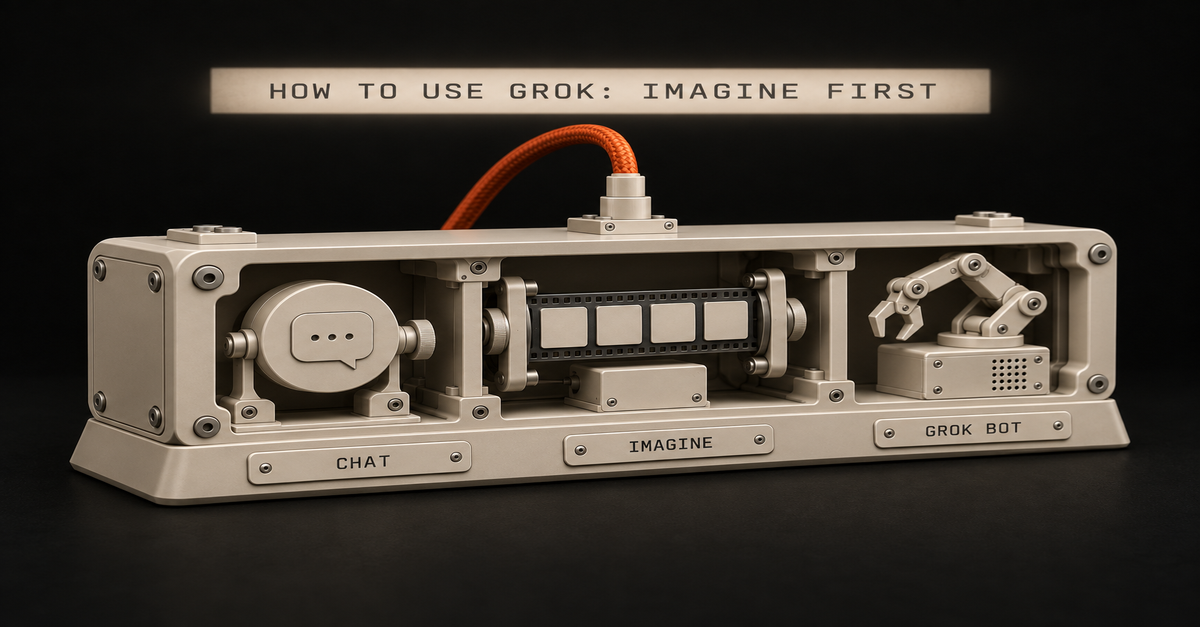
 Chris Alarcon