Most people set up Cowork backwards. They install skills, enable plugins, connect Gmail, and a week later the workspace is full of stuff they never use. I said it in my setup video, and the merge didn't change it.
And if you're hunting for the Cowork button a tutorial told you to click, stop. You didn't break anything. Since the September merge, Cowork is just Claude: you describe the job in any conversation, and Claude decides whether it's a quick answer or a task.
Here's what that one job looks like. I ran it on a demo folder of 24 made-up files, on Sonnet 5 with Manual on:A demo folder on my Mac mini, September 25, 2026. One brief, 24 files, 7 folders.
Here's my own Claude today, on my Max account. The only switch left under the box is Manual or Auto:My Claude desktop app, Max plan, September 25, 2026. No Cowork switch, just Manual or Auto.
Where I stand, so you know who's talking: I don't use it at all, but I've used it in tutorials. I've tinkered with it to know what it does and what it can't do.
What I use is Claude Code, and it's so similar to Cowork. It's just like the cousin.
When a job missed for me, on Substack Notes templates, one example fixed it. That's step 5.
So this page is five steps and one job. Forget about these tutorials of screenshots where these are the hundred commands that nobody uses. They're just using them to create content.
What you need before step one (as of September 25, 2026)A paid plan. Claude's pricing page lists "Hand off and schedule tasks" under Pro, which is $20 a month, or $17 a month billed annually. Free gets chat, web search, file creation and code, but no task handoff.
The layout check. Look at your message box. If it shows "Chat" and "Cowork", you're on the old layout: click Cowork and every step below still works. If it doesn't, you're on the new one. Just type.
15 minutes and one folder you don't mind Claude seeing.
A work laptop? Ask IT before you connect a work folder or your work email. Per Anthropic's setup guide, Claude "can only read and write files in folders you've connected".
Skip for now: skills, plugins and schedules. That's the backwards setup from the top of this page.Which app you need depends on what the job touches:The job touches
Web or phone is enough
Desktop app, left openResearch, a doc, a spreadsheet you upload
Yes
Not neededConnected apps like Gmail or Google Drive
Yes
Not neededA folder on your computer
No
YesYour browser or other apps on the computer
No
YesCloud tasks keep running with the laptop closed. Anything that touches local files, your browser or computer use needs the desktop app "open and connected," per the same guide.
My app was still on the old layout a week ago:My Claude settings on Max, September 18, 2026. Cowork was still its own section then.
The full story of the merge is in where your Cowork work went. This page is the steps.
Step 1: Pick the messy folder as your first use case, because you'll see it work
Of the four use cases I kept in my video, this is the one I'd hand it first.
I think the messy folder is probably the first one so you can see how it does it. You'll see the magic visually, the before and after. Like, oh shit, this is the difference.
In that video I pointed Claude at a messy folder and called it handing an intern a junk drawer. I asked it to sort it. I didn't say delete anything.I walk through that one on camera in The Only 4 Claude Cowork Use Cases Worth Keeping (I Deleted the Rest) (12 min). Recorded before the merge.Applicable for: anyone with a Downloads folder, a shared drive dump, or a desktop covered in screenshots. More first jobs, from real users, are in Claude Cowork use cases.
Step 2: Point it at one safe folder, not your whole drive
Claude desktop app > new conversation > Project or folder > Add folder (under the message box, new layout) · Add folder (old layout)
Pick your desktop or somewhere safe. A copy of the messy folder is even better for the first run. Anthropic says Claude asks before permanently deleting files, but a copy means you never have to find out.
Claude asks before it touches the folder. Read that box once, especially on a work laptop:Claude's folder prompt on my Mac mini, September 25, 2026.
The line that matters for work files: "Because this task runs in the cloud, files Claude uses leave your device and are processed on Anthropic's servers." That's the sentence to show IT.
If you used Cowork before, your old folders are already listed under Settings > Trusted folders, and saved work sits under Storage folder, per Anthropic's Cowork and Chat are one Claude article.
Step 3: Brief it like a coworker: outcome, format, inputs
Anthropic's own advice is to give it "Your desired outcome", "The format" and the "Inputs Claude will need". Copy this and swap in your folder:
Outcome: Sort everything in this folder into subfolders by type and month,
so I can find any file in 10 seconds.
Format: Move the files, then list what went where.
Inputs: Only the folder I connected. Don't delete or rename anything.
If you're not sure where a file goes, put it in a folder called "check".The "don't delete" line is the one that matters. It's the same move from my video: sort it, don't clean it out.
Step 4: Leave it on Manual for the first run
The Manual pill under the message box > Manual
Manual is the default. On my screen it reads "Claude asks before using new tools or opening new sites." Auto "runs on its own and pauses to ask if anything looks unsafe," and Anthropic says Auto "consumes more of your usage limit than the other modes."
First run, you want the questions. They show you how it's thinking about your files. Switch to Auto once the job stops surprising you.
Step 5: Read the plan, let it run, then check the before and after
Send the brief > read the plan it proposes > approve > open the folder
How to tell it did the job and didn't make a confident mess:Every file is in a subfolder you'd have picked yourself.
The "check" folder holds the weird ones instead of Claude guessing.
Nothing is missing. Compare the file count before and after.
Its list of what went where matches what you see in the folder.Claude's report on my test run, Sonnet 5, September 25, 2026.
Check number 3 is not a formality. On my test run, Claude said "All 23 files sorted." The folder held 24, and all 24 were in the right place. The sort was perfect and the count was still wrong, which is why you count.
When it misses, don't re-explain louder. I think there's always gonna be gaps no matter which AI you use at any given time. It's rare, but sometimes the output isn't what I expected.
My example: I wanted templates for Substack Notes, so I had it analyze some of the top notes. The research was good, and the templates were good.
The problem is they were too template. They were filling the blanks. So I had to go back and explain what I'm looking for, showed an example, and it got better.
The start of that job is on disk. I recorded myself scrolling Substack Notes, and Claude turned it into a skill proposal:My Cowork session, September 2026: a recorded Substack Notes demo turned into a skill proposal.
My rule: I feed it an example where I clarify the misunderstanding and then have it go again.
Once the job runs clean twice, then think about repeating it. Ask for a schedule or type /schedule. What runs with the laptop shut is in Claude Cowork scheduled tasks, and turning a job you've taught it into a skill is in how to use Claude skills.
What moved when Cowork joined Claude
If you used Cowork before, these are the things people go looking for, per Anthropic's merge article:Your instructions now live in "Instructions for Claude" under Settings > General.
You can't switch back to the old layout once your account moves.
Incognito chats still use the old mode.
Not there yet: adding from GitHub, branching a conversation, and searching older tasks.
Dispatch is closed to new users.The names confused people. u/seulgimonster on the same thread: "For a new user who hasn't used Claude since its launch suddenly having to learn the differences between Cowork, depatch, chat, code etc was not straightforward."
If you built things in Cowork and wonder whether to move to Claude Code, the split is in Claude Cowork vs Claude Code.
Keep it on Sonnet and Manual so it doesn't eat your plan
Tasks cost more than chat. Anthropic says longer agentic tasks "generally use more than a quick question," and users feel it.
u/iamthe0ther0ne on r/ClaudeAI: "The one downside is that Cowork burns a lot more usage than chat. This is going to hit Pro users hard."
If you're on the twenty-dollar plan, you're gonna live on Sonnet. You're gonna use Opus for planning.My model picker, September 22, 2026. Sonnet 5 is the everyday pick; Max effort warns 4x usage.
And now Opus is so much cheaper. That doesn't mean you should go crazy with it, but you're able to use a little more of it than you were a few weeks ago.
The numbers: Anthropic priced Opus 5.5 at $4 and $20 per million input and output tokens, 20% less than Opus 5, and its tests show 40% lower cost on typical workloads.
That's the API price, though. Anthropic hasn't published how much of your Pro limit one Opus message uses, so "a little more" is a feel, not a number.
Three habits that stretch the plan:Keep related work in one conversation, and start a new one for an unrelated job.
Say "just a quick answer" when that's all you want. u/OkBeautiful4392 put it well: "they need to clarify when exactly 'Claude figures out what it needs'."
Check Settings > Usage before and after a big job. Anthropic says usage "may be measured slightly differently" while the merge rolls out.My Max 20x meters, September 5, 2026, from general use. Yours sit under Settings > Usage.
How the two meters work is in Claude usage limits explained.
One messy folder first, the rest of the setup later
That's the whole setup done the right way round. You don't need the hundred commands, the plugins or the schedules. You need one folder, one job, Manual on, Sonnet on.
Connecting Gmail, Drive and the rest comes after your first job, not before. When you're there, start with the best Claude connectors, and the whole map of Claude for office work is on Claude guides.
So pick the messiest folder you own and give it that one job this week.
FAQ
What does Claude Cowork do?
Claude Cowork takes a job instead of a question: it plans the steps, works through your files, apps and connected tools, and hands back the finished result. Since the September 2026 merge it is no longer a separate mode. You describe the job in any Claude conversation and Claude decides whether it needs a quick answer or a task.
How do I access Claude Cowork now?
Open Claude on web, desktop or mobile and describe the job. If your message box still shows Chat and Cowork options, you are on the old layout and you click Cowork first. If it does not, you are on the new layout and every conversation can take a task.
Is Claude Cowork free?
No. Anthropic's pricing page lists handing off and scheduling tasks under Pro ($20 a month, or $17 a month billed annually) and the plans above it. The free plan gets chat, web search, file creation and code, not task handoff.
Do I need the desktop app to use Claude Cowork?
Only when the job touches files on your computer, your browser or other apps on it, and then the app has to stay open and connected. Research, documents and connected apps like Gmail work from the web or your phone.
Why don't I see the new Claude without the Cowork button?
The rollout is gradual. Anthropic is moving Pro and Max accounts first, over several weeks, with Team and Free following later. Until your account switches, the old Chat and Cowork options stay in the message box and the old steps still work.
Where this comes from
The steps, plans and prices come from Anthropic's help center, pricing page and merge announcement, read September 25, 2026. The screenshots are from my own Claude account.
I don't use Cowork day to day. The folder job and the Substack story are tinkering, and I haven't scheduled a job in the merged app yet.
Published September 25, 2026. Checked that day against Anthropic's help center and pricing page, both linked inline.
I had 60. That's the worst part. I would create them too granular.
Sixty Claude skills. My main skills folder is down to 26 as of September 25, 2026, and I probably gotta delete a few.
So if you went into Settings looking for a Skills button and it wasn't there, you're ahead of where I was. A commenter on one of my TikToks asked it word for word: "But where in settings". Or you found it, turned something on, and now you can't tell if it did anything.
Both are two switches and one test away from fixed. And you don't need to install a single skill to start, because four of them already ship with Claude.The Skills menu inside my Claude composer, September 18, 2026.
That menu is where you end up. Here is how to get there on your account.
What you need (as of September 25, 2026)Any Claude plan. Anthropic's Use skills in Claude page lists Free, Pro, Max, Team and Enterprise.
Code execution switched on. Skills hide without it. That's step one below.
Claude on the web or the desktop app. The switches are in the same place on both.
On a work account: skills can run code and reach other services. Before you upload one from outside, ask IT what's allowed. On Enterprise, an owner turns skills on for everyone.
Skip for now: skill packs, "500 free skills" downloads, and building your own. You'll get there.Anthropic's skills help page, captured September 25, 2026.
Turn on code execution first, because Skills stays hidden without it
Settings > Capabilities > Code execution and file creation, switch it on.
That one toggle is the gate. Anthropic's troubleshooting list puts it first for both "I can't see Skills" and "my skill is greyed out".
On a work plan, the path is different:Team: skills are on by default at the organization level, so you usually go straight to step two.
Enterprise: an owner has to enable both code execution and Skills in Organization settings > Plugins & skills, on the Policy tab. If it's off, that's IT's switch, not yours.Two things that look like bugs and aren't. Since the September 16 update folded Cowork into every chat, your old Cowork skills carried over. If your message box still shows "Chat" and "Cowork" as two options, your account just hasn't moved to the new layout yet.
And incognito chats can't create files or run code, so don't expect a file skill to fire there. That last part is my read of Anthropic's merge notes, not a line they wrote.
Find your skills in Customize > Skills, not in Settings
Left sidebar > Customize > Skills.
This is where people get stuck. Since February, Anthropic groups skills, plugins and connectors under Customize, and that's where the list and the on/off toggles live now.
You'll see your skills in sections: Personal, Shared with you, and Organization on a work plan. The four built-ins are already in there.
You can also reach them mid-chat: the + button in the message box has a Skills submenu. That's the menu in the screenshot at the top of this page.
Ask for a real file and let the 4 built-ins fire on their own
Anthropic's help page lists four built-in skills: Excel, Word, PowerPoint and PDF. With code execution on, you don't call them by name. Ask for the file, and Claude picks the skill.
Give it 15 minutes with something from your actual week. Paste your notes from the last meeting and send this:
Turn these meeting notes into a 5-slide PowerPoint deck for my team.
One slide per decision, a last slide with owners and due dates.
Keep every slide under 30 words.You should get a .pptx file back, not a wall of text in the chat. Swap the ask and the same thing happens with a spreadsheet ("turn this list into an Excel tracker with a status column"), a Word doc or a PDF.
If Claude answers in chat instead of handing you a file, name the skill once: "Use the PowerPoint skill for this." That's the override, not the normal way.Anthropic's enable steps and the four built-ins, September 25, 2026.
Applicable for: ops leads, HR, project managers, teachers, anyone who turns notes into decks and trackers.
Check it fired by asking Claude straight out
A skill that didn't load looks like a normal answer. That's the trap.
Here is how I tell. First, the output quality. You know what good looks like for your own work, and a skipped skill gives you the generic version.
In Claude Code it literally says it's using the skill when it gets invoked. In the Claude app, Anthropic's advice is to review Claude's thinking and look for the skill loading.
Second, I just ask.
If I see the output, I'm like damn it looks bad. Did you use the skill? And it'll tell you why it didn't.
Did you use my [skill name] skill for this? If not, why not,
and what should I change so you use it next time?Usually the fix it points to is the skill's description.
Carrie Loranger, who teaches creators this in her Claude Skills guide, puts it bluntly: "If you do not see a confirmation that the skill loaded, the skill is not running and you are getting a generic Claude response. This is the single most common mistake new users make."
When it doesn't fire, the fix is usually one of these:What you seeWhat's going onFixNo Skills section anywhereCode execution is off, or an Enterprise owner hasn't enabled skillsStep one above, or ask your admin
A shared skill is greyed outShares arrive switched offToggle it on in Customize > Skills after you read it
Skill is on, Claude ignores itThe description doesn't match how you askName it once in the prompt, then rewrite the description in your words
Upload failsZIP too big, folder name doesn't match the skill name, or no skill.md insideRename the folder to match, check skill.md is there, zip again
You can't edit a directory skillDirectory skills are view-onlyDownload a copy, edit it, upload it as your ownInstall one skill on purpose, and read it before you switch it on
Once the built-ins work, you can add more. There are three ways a skill reaches you:The directory. Customize > Skills > + > Browse skills, then Install. These arrive switched on and view-only.
A ZIP file. Customize > Skills > + > Create skill > Upload a skill. A skill is just a folder with a skill.md inside, zipped.
A teammate's share on Team or Enterprise. It shows up under Shared with you, greyed out until you enable it, and it updates when they update it.Anthropic's own line: only install skills from trusted sources, and review a colleague's skill before you enable it.
My take on the rest. As a beginner, you shouldn't be looking for skills. You're asking the wrong questions.
"What are the best skills to install?" means you don't know your own workflow yet. If it was that easy, you'd plug a chip into your AI and it would write your posts for you.
And no one's gonna give away a really high quality skill for free. They'll give you a starting point. A lot of people on GitHub have released decent ones.
We took a framework Andrej Karpathy shared (his LLM wiki pattern) and molded it to our own, instead of installing it whole, because some of it wasn't relevant to us.
I rarely download skills to be honest. The latest one that was actually worth it was Tesseract's video and motion skills, for motion graphics in my long-form and Shorts.
I'd already tried building my own skill for that job, and it was decent. We're keeping the brain of mine and replacing the motion tool it ran on.
Keep the list short, and build your own only after you've done it by hand
Here's where my 60 came from.
I'll create a skill for YouTube descriptions. I'll create a skill for YouTube headline. I'll create a skill for a thumbnail. Now I just have one skill for long form and it has all that embedded in it.
That's why understanding the architecture of a skill matters. A skill is a folder. The skill.md is like the table of contents: the main instructions, pointing to other files in that folder (scripts, reference notes).
That's how one skill handles a complex job instead of ten tiny ones fighting each other.
My rule is still the same one: do the thing by hand two or three times first. You're gonna have to do the process manually and test it and refine it once or twice and then you're gonna build the skill. Otherwise, you're gonna build something and you're at risk that you're never gonna use it again.
When you get there, don't write it from scratch. Anthropic has a skill builder, skill-creator, in the example skills. Use that and call it a day.
What made the architecture click for me was Anthropic's free Introduction to agent skills course. It's six modules taught in Claude Code, and the folder layout is the same one the app uses.
If you're on Pro, Max or Team and use Claude on a Mac, there's also Record a skill in the + menu: you do the task once on screen and Claude drafts the skill from the recording.A Record a skill proposal on my Mac, from a September 2026 test run.
Where to go from here depends on your plan. On Free, Pro or Max, stay on the built-ins until you've asked for a few real files. On Team or Enterprise, check your Skills list before you install anything, because owners can provision skills for everyone.
The full case for when a skill is worth building, and when it's the wrong tool, is in Claude Skills for non coders. For the rest of the Claude setup around it, start at Claude Guides.
Cleanup matters too, and I'm not preaching from a clean list: my Claude app still has an n8n skill switched on from January. Customize > Skills is where you switch one off or delete it.
When I clean up, I don't just delete. I fold the tiny ones together, because a single skill with the proper architecture can not only fit more and be more complex but be better quality.
That's how 60 became 26. You get to skip the 60. Ask Claude for one real file this week, watch a built-in fire, and build your first skill only after you've done that job by hand.
Common questions
Are Claude Skills free?
Yes. Anthropic lists Skills on Free, Pro, Max, Team and Enterprise as of September 2026, as long as code execution and file creation is on. Older pages, including a Short I made in July, say you need a paid plan, but the current help center says otherwise. For what else the $0 plan covers, see Claude's free plan.
Why can't I find Skills in my Claude settings?
Because it moved. Turn on Code execution and file creation in Settings > Capabilities, then open Customize in the left sidebar and click Skills. On Enterprise, an owner has to enable skills first under Organization settings > Plugins & skills.
Do I have to call a Claude skill by name?
No. The Excel, Word, PowerPoint and PDF skills fire on their own when your request needs a file. Naming a skill is the override for when Claude skipped it.
Where did my Cowork skills go after the September update?
They carried over into the merged Claude, per Anthropic's September 16, 2026 release notes. If you still see Chat and Cowork as separate options, your account hasn't moved yet. The full map of what moved is in Claude Cowork is now Claude, and the new workflow is in how to use Claude Cowork.
Do skills I turn on in the Claude app show up in Claude Code?
Yes, one way. Anthropic says app skills sync into Claude Code from version 2.1.273. If Claude Code is next for you, start with how to use Claude Code.
Where this comes from
The click paths, plans and built-ins come from Anthropic's help center and release notes, checked September 25, 2026.
The 60-to-26 story and the "did you use the skill?" check are mine. I haven't tested every skill in the directory, and most of mine run in Claude Code, not the app.
Published September 25, 2026. Last reviewed September 25, 2026 against Anthropic's help center.This post is part of Claude Guides, the hub with every plan decision, task comparison, and setup guide for using Claude without code.
Quick answer: your Cowork tab is gone and your work is not. On September 16, 2026, Anthropic merged Cowork into Claude. It is one app now, and Claude decides for itself whether your request is a quick reply or a long multi-step job. Your chats, projects, artifacts, connectors, and skills are all still there.
Three modes became two. You talk to Claude, or you point Claude Code at a folder. That is the whole map now.
Here is the part to know first: you probably cannot see any of it yet, and that is normal. They're blending it in, which I agree is easier, man. It's just less stuff.
Nothing was deleted, so stop looking for a backup
The first thing most people want to know is whether their work is gone. It is not.
Anthropic's own wording is that when you open the app, "everything is where you left it: your chats, projects, artifacts, connectors, and skills."
That is a merge, not a shutdown. VentureBeat's headline said Anthropic was "killing off" Cowork. The capabilities did not go anywhere. The tab did.
What actually changed on September 16
Anthropic shipped four things at once:The merge. Cowork and chat became one Claude. You no longer pick which tab a task belongs in.
Claude Docs. A document that lives inside the conversation. You ask for it, and you and Claude write it together.
Claude Slides. Presentation drafting you can edit, present from Claude, or download as PowerPoint or PDF.
Claude Design, which now works from inside any conversation with your existing context and skills.All three of the new surfaces are in beta on paid plans.
The reason given is refreshingly plain. Per TechCrunch's report, customers "often struggled to choose the right tab for the right task." So Anthropic removed the choice.
Why you probably cannot see it yet
The rollout is staged, and this is where I can show you something instead of telling you.
Anthropic says the merged experience is reaching Pro and Max plans first, on web, desktop, and mobile "over the coming weeks." Team and Free follow. Enterprise admins get at least 30 days notice.
I pay $200 a month for Claude Max 20x, which puts me in the first wave. Here is my desktop app on September 18, two days after the announcement:My Claude desktop settings, September 18, 2026 (app 2.2553.1): Code and Cowork still separate. The merge hadn't reached me.
And the composer's plus menu on the same account, same day:Same account, same day. No Docs. No Slides. "Over the coming weeks" means what it says.
So if you read the announcement, opened Claude, and found the old layout staring back at you, you are not doing it wrong and you are not missing a setting.
Announcement day and availability day are different days. Almost nobody covering this launch said so.
Three doors became two
The map used to be: chat answers, Cowork does your office work, Claude Code builds software.
Now it is two doors. The way I would put it: Cowork did not die. It stopped being a place you go.What you want
Where you go nowA quick answer, a draft, a summary
Claude. Just ask.A long multi-step job across your connected tools
Claude. It routes itself.A document or a deck
Claude. Docs and Slides appear in the conversation.Something editing real files in a real folder on your machine
Claude CodeIf you were using Cowork for office work, you do not have to relearn anything. You have to unlearn something, which is easier. You describe the outcome and stop choosing the container.
I made the old map on camera before it changed. Watch it as history:The 60-second version, from my Shorts: There are 4 different Claudes. Here's which one does what.Is this better or worse if you do not code?
I think it's better, man. You just have less options.
I used Cowork occasionally for research on my own vault, not as a daily driver. Losing it as its own place cost me nothing. What it bought everyone is fewer decisions.
Fewer options is the feature here. It is less stuff to be wrong about.
I say the same thing about model pickers. When you open an app and there are ten models in a dropdown, you are not going to pick well.
You are barely trying the thing and suddenly you have six choices and no idea what Sol is, or what Astra is, or why you would want either.
That is not power. That is a tax on people who just want the work done.
Where this should end up is one model with an effort dial, auto-switching on its own, doing the cheap thing for cheap tasks and the expensive thing when it matters, more precisely than you would have picked. That would be the best feature: just one model. Cut the rest.
The merge is a step toward that. For the everyday user it means more capability with less to get wrong, and honestly, it is just less stuff in the way.
So when do you still open Claude Code on purpose?
Claude Code is the one separate product left, so here is exactly when I open it.
I open Claude Code when I am building something. An app, a plugin, something custom, a real change to how my video editing works. Not when I want a document.
The difference is what it can touch. Cowork always felt like a thing that makes documents. Claude Code can edit my folder. It has the more advanced capabilities and it is a more seamless experience once you are in it.
I also need to see the folders. If I cannot see the file tree, I feel like I am going to end up with a lot of trash in there.
Honest caveat: I am not the right example here. As daunting as the terminal looks to a lot of people, I've used it for over a year. I'm just used to it at this point.
Ironically I am the one who finds the app awkward. If you do not code and you do not want to look at folders, the merged Claude now handles the long jobs by itself. That door is open and you do not need to walk through the other one.
If you want the longer version of that fork, I keep it updated at Claude Cowork vs Claude Code.
The bit nobody is telling you: your company's AI policy just expired
If you work somewhere with a written AI policy, there is a decent chance it names Cowork, or names modes, or says something like "do not use agentic modes for client data."
That policy now describes a product that does not exist.
Stephen Smith made this argument in a piece called "Claude Stopped Asking Which Mode You Want. Your AI Policy Just Expired." (his post), and he is right, but he wrote it for the people who own the policy.
Here it is for the person who has to live under it: the mode you were told to avoid is no longer a mode you can choose. Claude routes itself now.
You are not breaking the rule on purpose. The rule stopped mapping to the interface. Worth raising before somebody notices it the hard way.
What this costs and who can get itPlan
The merged Claude
Docs, Slides, DesignFree ($0)
Follows later, no date given
NoPro ($20/mo, or $17/mo billed annually)
First wave
Yes, in betaMax (from $100/mo)
First wave
Yes, in betaTeam
Follows later, no date given
Yes, in betaEnterprise
At least 30 days notice
Yes, admin controlledRead off Claude's pricing page on September 18, 2026. Anthropic has not given a date for Team or Free.
One thing worth knowing before you go make a deck: Docs, Slides, and Design work counts against your normal Claude usage limits. There is no separate allowance for it.
What to read nextThe Cowork pages on this site that still describe a separate product are being corrected in order. Start with Claude Cowork vs Claude Code, which is the fork that survived.
If you want the new document surface specifically, I wrote up Claude Docs and Claude Slides separately.
For what the old Cowork was actually good for, and which of those jobs the merged Claude now absorbs, see Claude Cowork use cases.
Everything else about using Claude in a normal job sits under Claude guides.
Prices and limits move. I keep them dated on the AI plan tracker.Frequently asked questions
What happened to Claude Cowork?
On September 16, 2026, Anthropic merged Cowork into the main Claude app. Cowork is no longer a separate place you open. Claude now decides on its own whether your request needs a quick answer or a long multi-step job. Your existing work was not deleted.
Did I lose my Cowork projects and files?
No. Anthropic's announcement says that when you open the app, everything is where you left it: your chats, projects, artifacts, connectors, and skills. The merge changed where the work happens, not whether the work still exists.
Why can't I see the new Claude yet?
The rollout is staged. Anthropic says the merged experience is reaching Pro and Max plans first, on web, desktop, and mobile over the coming weeks, with Team and Free following and Enterprise getting at least 30 days notice. I pay for Max 20x and still had the old layout two days after the announcement.
Is Claude Code going away too?
No. Cowork is the mode that dissolved. You are left with two: Claude, which you talk to, and Claude Code, which you point at a folder. Claude Code is still a separate product with its own settings.
Do I still need Claude Code if I don't code?
Probably not. The merged Claude handles long multi-step jobs by itself now. Claude Code earns its place when you want it editing real files in a real folder on your machine, which is a builder's job, not an office job.
Are Claude Docs and Claude Slides free?
No. Claude's pricing page lists Claude Design, Slides, Docs, and Claude Code as available on Pro and Max and not available on Free. All three of the new surfaces are in beta on paid plans.
Where this comes from
Anthropic's own announcement and pricing page, read September 18, plus TechCrunch's report. The screenshots are my Max account the same day, and all they prove is the merge had not hit me yet.
I have not used Docs or Slides, because I could not open them. When I can, I will say so here.
Published September 18, 2026. Last reviewed September 18, 2026.
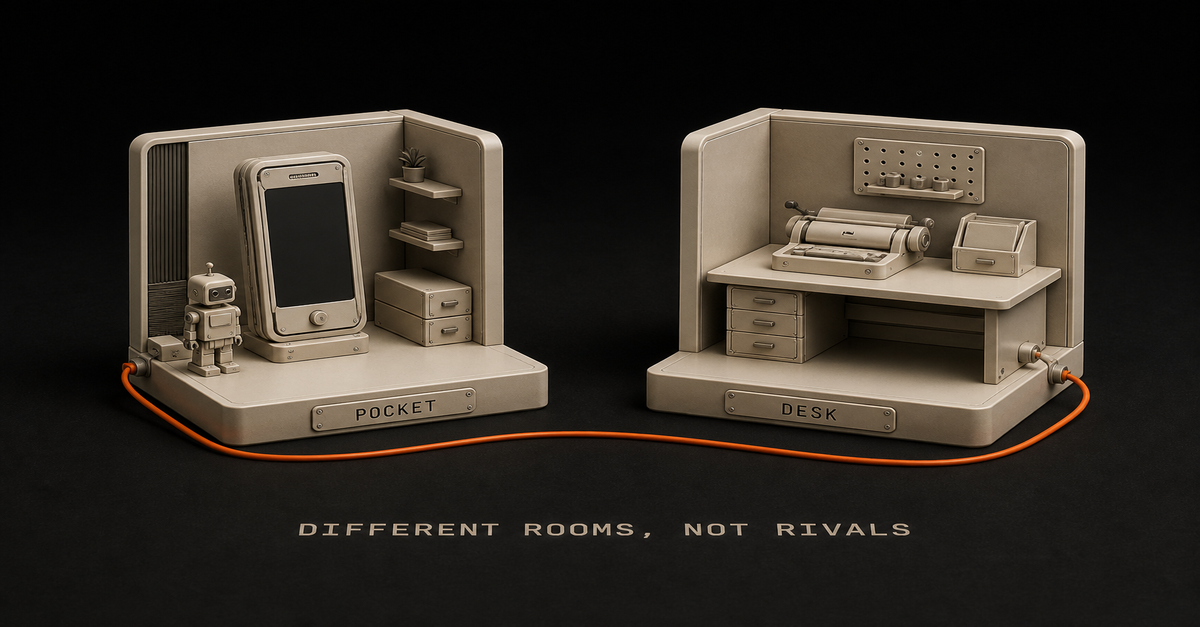
Quick answer: stop asking which one wins. They sit in different rooms of your life. Grok Bot is a teammate with its own computer in xAI's cloud that you text from your phone: monitoring, scraping, routines, the always-on stuff.
Claude Cowork is the worker at your actual desk, inside your real files and projects, where careful work happens. I pay for both, $100 SuperGrok Plus and a paid Claude plan, and I use both daily. Here's how I actually split them.
My split, if you want it in one line: Grok Bot carries your pocket. Cowork carries your desk.
Published August 28, 2026. Last reviewed August 2026 against xAI's and Anthropic's live pages.
Quick decisionYour situation
PickYou want an assistant you text from your phone that works while you sleep
Grok BotYour work lives in documents, folders, and real projects on your machine
Claude CoworkYou bounced off agent tools because setup was too technical
Grok BotYou already pay for Claude Pro or Max
Cowork first; it is already included$30 is your whole experiment budget
Grok Bot on SuperGrokYou are actually choosing between the chatbots
Different page: Grok vs ClaudeGrok Bot is a cloud teammate with its own computer and its own usage pool
Launched August 11, 2026, early beta. Per the launch post: "your team of always-on agents. They have their own computer, work inside tools and apps like you do, and keep working 24/7."
The computer is a real machine in xAI's cloud, so jobs do not stall when you step away. You teach a bot by doing a workflow once while it watches; it saves it as a routine and reruns it on its own.
Two facts every comparison page misses, both official:Entry is $30, not $200. xAI's pricing page lists "Grok Bot access" on the SuperGrok tier as of August 28. The enterprise-paywall story ranking around the web is stale.
Its usage is separate. The launch post states bot work "won't count against your existing usage." That matched my week: bots running, chat usage untouched. Details: Grok usage limits explained.Access rides SuperGrok or Cursor plans; the closest OpenAI equivalent is ChatGPT Work, covered in Cowork vs ChatGPT Work.
Claude Cowork is the worker inside your own files, and it now has its own browser
Per Claude's Cowork page: give it a goal and "it works across your files and tools," then delivers work for review. It ships on every paid Claude plan from $20 Pro up, on macOS and Windows desktop, web, and iOS and Android.
And the objection everyone still repeats is dead: Cowork now has a browser built into it, separate from your own logins and tabs, and scheduled tasks run unattended with your laptop closed.
If what you know about Cowork is six months old, it's out of date. Where it sits next to Claude's coding tool is its own question: Claude Cowork vs Claude Code.
Where Grok Bot wins: the pocket and the clock
My real setup after week one: a bot called Partner manages a small team, with each bot on its own computer with its own skills. They read my channel analytics and come back with specific calls.
Another bot scrapes AI news for me three times a day. I built all of it in plain English, and I check on it from my phone. (Full week-one story with the roster screenshot: What is Grok Bot.)
This is the OpenClaw dream with the pain removed. OpenClaw was the first "AI on the go" moment and I loved it, but it was buggy and too scary for most people.
Grok Bot is that idea with an actual dedicated computer, a stronger model, a really good mobile app that syncs with desktop, and a dedicated usage pool. For the people who could not survive OpenClaw setup, this is the answer, hands down.The pocket side of the split: my real bot team in the Grok Bot macOS app, captured August 28.
Where Cowork wins: the desk
This is a real Cowork session from my week:Cowork watched a 48-second screen recording of a workflow I do by hand, then drafted a reusable version of it and put it up for my approval. It also caught a conflict between two of my own saved preferences and told me which one it followed.
Look at what's happening in that screenshot, because no feature grid shows you this. Cowork watched me work for 48 seconds and figured out what I was trying to get done from the clicks.
Then it proposed a permanent automation and caught two of my own preferences fighting each other. That's Cowork making real calls inside my actual system, with my actual files.
That's where Grok Bot lost to Claude in my week. When the task was deep, multi-step, and touched things I care about, I did not even consider handing it to a bot in someone else's cloud.
Claude is stingier with usage, and I feel that. But one 48-second recording turned into a reusable skill, and no phone bot did anything like that for me all week.
New to running Claude as a work tool? Start here: Claude guides.
The honest costs on both sides
Grok Bot's honest costs: it is early beta and acts like it. My lead-scout experiment produced nothing in week one and I may kill it. And the way it works, your logins live on a cloud computer that acts as you. Think before you hand it accounts that matter.
Cowork's honest costs: Claude usage. Anthropic is the stingy one of the two, and even the current 50% usage boost is an extension, not a promise.
Meanwhile my Grok limits have reset weekly, sometimes more than once, and bot work does not touch the chat pool. If your bet is "who gives me more machine per dollar," xAI is playing that game harder. If it is "who does the most careful work," that is Claude.The receipt for the usage claim: my SuperGrok Plus billing screen, August 28, "Reset Available" badge showing.
The comparison creators are circling the same fight: Simon Scrapes titled his review "Did Grok Bot Just Overtake Claude?" and Riley Brown ran a three-way super-app test. Watch both. You'll notice the fight always comes down to which room of your life the tool sits in.
Claude Cowork vs Grok Bot: which one to start withYou already pay for Claude: open Cowork today; it is in your plan. Start with one folder and one recurring task.
You do not pay for anything yet and want the assistant feeling: SuperGrok at $30. It is the cheapest real agent on the market right now.
You are me, running a one-person operation around a full job: both, split by room. Pocket work to Grok Bot, desk work to Cowork.How I know what is on this page
Product facts: xAI's launch post and pricing page, and Claude's official Cowork pages, all read August 28, 2026, dated on my AI plan tracker.
The verdicts: my own two paid accounts and my own week, including the Cowork session screenshot above and the bot team on the Grok side. Where a claim is mine and not official, like how my own bots behave day to day, I have said so.
Quick answer: one question decides it. Does this task need a file that lives on your laptop's hard drive? If no, fire it off from your phone and shut the lid. If yes, your desktop app has to stay open, and the laptop has to stay plugged in.
That second half is the part that bites. The task does not stop when your laptop sleeps or your battery dies, and it does not error out when it loses your files. It just gets worse without telling you.
If you searched "claude cowork on phone," "how to use claude cowork mobile," or "claude cowork dispatch vs cloud," this page settles the decision first, then untangles the two different things both called "Cowork on your phone."
The one question that decides everything: does it touch a local file?
Everything else on this page is a footnote to this rule.
Anthropic's cross-device help article states it in one sentence: "A session in the cloud can read and write files in folders you've connected on your computer only while the desktop app is open on that computer. If the app is closed, the session keeps running but can't reach your local files."
Notice that the session keeps running. It does not stop, and it does not tell you.What the task needs
Laptop can be shut?
WhyEmail, calendar, Slack, Drive (connectors)
Yes
Cloud session reaches them over the internetWeb research and summarizing
Yes
Nothing local involvedWriting, drafting, restructuring text you paste in
Yes
The context is in the promptA folder on your hard drive (Downloads, a local vault, project files)
No
Needs the desktop app open on that machineAnything editing a video, a design file, or a local export
No
The file only exists on your machineLive artifacts and browser/computer use
No
Desktop-only per the help centerThe shorthand I already use for scheduled tasks holds here too: cloud in, cloud out; local files, local machine. That is my rule, and the surface you start from does not change it.
I unpacked the scheduling half of it in Claude Cowork scheduled tasks; this page is the same rule applied to which device you are holding.The 60-second version, from my Shorts: 5 Claude Cowork connectors that do your boring work for you.Keep the laptop plugged in, or the run dies mid-task
This is my actual hack, and nobody writes it down.
When I take work on the go, it is light tasks. The heavy stuff, editing my shorts and long-form videos, takes a long time and I am on it, so I let that run and step away. But I still take it with me, because Claude hits judgment calls.
It will stop and ask something like "Chris, you don't have the screenshot, do you want to use this," and then just sit there. Not running. Waiting.
That is why I go mobile at all. I don't do the work from my phone. I just make sure I am not the bottleneck when it needs a decision.
Anthropic frames the same thing in the Cowork web and mobile launch post: "When Claude reaches a call only you can make, it asks, and the question reaches your phone."
So here is the hack: have the computer on and plugged in.
If it fades away, if it goes to sleep, you are done. If the battery dies, you are done. Power is the whole thing.
What goes wrong for me is simple: I come back and the session is dead. I have not had it hand me a confidently wrong answer.
And the mechanics back the hack up. Anthropic's Dispatch help article lists the requirements plainly: "Your computer must be awake and the app must be open for Claude to work on tasks." The setup flow even offers a toggle to keep your computer awake. Anthropic built a button for it, so it's a real problem.
One more trick worth stealing, because it is the thing that surprised me most: ask it for the file path. When it finishes a video render, I ask for the link and it hands me the path from the laptop.
Click it, and I can watch the output on my phone. You do not need the file to be in the cloud to check the work.
The silent failure: your phone task looks finished and used none of your documents
The ranking pages skip this part, and it's the expensive one.
A normal software failure announces itself. This one does not. Your session keeps running with its connectors and skills, and hands you a polished, confident answer built on none of your actual files.
u/Secure_Sorbet_8671 named it in a PSA thread on r/ClaudeCowork: "The big one is local files.
You connect folders on the desktop and a session only reaches them while the desktop app is open, so if your context lives in a local vault like mine, anything you fire off from the phone with the laptop shut has your connectors and skills but none of your files."
The interface does not save you either. u/Gh0stw0lf on the same subreddit put it bluntly: "They have projects on your computer that have local files be unable to do that and the UI doesn't clearly point that out."
So the defensive habit is simple and it costs you nothing.Before you shut the lid, ask yourself which folder this task will open. If you can name one, leave the desktop app running.
If you fire something off from the phone and the output feels generically correct, check whether it ever named one of your real files.
For anything pointed at a local folder, treat "laptop plugged in and app open" as part of the prompt.That's the trap. It looks finished, and it did the wrong job.
Dispatch and cloud sessions are two different products, and only one survives the lid
Half the pages ranking for this query describe a world that ended on July 7, 2026. Here is the current split.Dispatch
Cowork cloud sessionWhere the work runs
Your own desktop
Anthropic's serversLaptop can be asleep?
No, must be awake with the app open
Yes, work continues in the backgroundPlans
Pro or Max
Max, Team, Enterprise; rolling out to ProThreads
One continuous thread, no way to start or manage a second
Normal sessions you start and resumeBest mental model
Remote control of your machine
A machine you do not ownDispatch is remote control. Per the Dispatch help article, it needs an awake computer, an open app, a Pro or Max plan, and an active internet connection on both devices.
It also has a limit you should know before you build a habit on it: "There's no way to start a new thread or manage multiple threads." It is one long conversation you keep messaging.
Cloud sessions are the opposite. The Cowork launch post says it directly: "Work continues in the background. Close your laptop and Claude keeps going."
I had a hunch about this and asked to be fact-checked on it, and the hunch was right. With Dispatch you invoke a session on the machine and then walk away from it. Starting fresh from the phone gives you a new cloud session. That's a separate thing from what is on your desk.
That gap is exactly what bugs me about it, and it is why I have been leaning on Codex and GPT's remote work for on-the-go sessions lately. I do not have to invoke anything first. I can just say I want to start something new and start.
That is my preference, not a benchmark. If your work is knowledge work sitting in connectors, Cowork cloud sessions handle it fine and you never touch Dispatch.
Anthropic's own line for the split, from the Dispatch doc: "Development tasks run in Claude Code; knowledge work runs in Cowork." If you are still deciding which cockpit you belong in, Claude Cowork vs Claude Code is the upstream decision.
If Cowork isn't on your phone, it's your plan, not you
A lot of people are doing nothing wrong and still seeing nothing.
u/tenaciousdweeb, on r/ClaudeCowork: "I have the Pro plan and I've tried everything and still no Cowork for me on mobile. I feel like I'm the only one who can't use it. I'm so frustrated."
That is the rollout, not a settings problem. Anthropic's help center, as of August 7, 2026: "Claude Cowork is in beta on web and mobile for Max, Team, and Enterprise plans, and will be rolling out to Pro plans over the next several weeks."
Three things to stop doing while you wait.Stop looking for a separate app. There isn't one. Cowork lives inside the regular Claude mobile app.
Stop expecting desktop sessions to appear on your phone. u/jaylan101 hit this: "Also my desktop cowork sessions don't show up on mobile so I don't see how pass off works." Resume behavior across surfaces is improving but is not a guarantee today.
Stop shopping for a second computer. The "buy a Mac Mini as your always-on host" advice still ranks and still gets repeated, and for cloud-eligible work it is now an expensive answer to a solved problem. You need an awake machine for local files. That is it.If you do have Dispatch on Pro but not mobile Cowork, that mismatch is documented, not a bug. Different features, different plan requirements.
The doubled limits ended August 5, so a phone habit costs more than it did last week
Know this before you get comfortable firing off tasks all day.
Anthropic's launch post extended doubled Cowork usage limits "through August 5." That window closed two days before this was published. Whatever consumption felt like in late July is not what it feels like now.
This matters more on mobile for a boring reason: your phone makes it way too easy to fire off another task while you wait in line. And each one is multi-step agent work, not a chat message.
You don't have to use it less. Just stop re-firing.
Ask for a status update on the session that is already running instead of starting a parallel one. If you want the full picture of what burns capacity and how the tiers actually behave, Claude usage limits explained covers it.
What Anthropic's own page promises, and what it quietly requires
Here is the pitch, straight from Anthropic's Cowork page, captured on July 9, 2026:"Steer from anywhere" is true, but it leaves a lot out.
Steering from anywhere is real: you can watch progress, answer the judgment calls, and redirect from your phone. u/strraand described exactly this on r/ClaudeCowork: "I can close the lid, go for a walk with my dog and still be able to follow the progress and adjust from my phone."
Working from anywhere comes with a condition. The condition is the local-file rule at the top of this page, and the small print for it lives in the help center, not on the marketing page.
What I would actually send from my phone first
Do not start with your most important task. Start with one where you would notice immediately if it went sideways.Best first phone task: something built entirely on connectors. Have it read your inbox and calendar and tell you what actually needs you today. Nothing local, so the lid can be shut the whole time.
The one I run most: a heavy job I started at the desk, that I then babysit from my phone so I can unblock it the second it hits a judgment call. Laptop open, plugged in, sleep off.
The trick worth copying: when it produces a file, ask for the path or link. You can open it on your phone and check the work without going back to the desk.
What I would not send from the phone: anything pointed at a local folder that I am not physically near. The problem is it doesn't fail loudly.
Skip entirely for now: anything that depends on a live browser login or a desktop-only artifact. Those still want you at the machine.For the full menu of jobs worth handing over in the first place, 20 real Claude Cowork use cases has the list, and the connector-driven ones are your phone-safe candidates.
How this was checked
Product facts come from Anthropic's own pages, linked inline at each claim: the cross-device help article, the Dispatch help article, and the Cowork web and mobile launch post. User reports are public Reddit threads, linked where quoted.
The plugged-in rule, the judgment-call babysitting pattern, and the file-path trick are my own working habits, labeled as mine.
I have not personally been handed a wrong answer by the local-file trap, so that section is built from Anthropic's documented behavior and named community reports, not from a story of mine. My failure mode has been the session dying with the machine, which is why the power hack is the part I actually enforce.
Things Anthropic does not document, so this page does not claim them: exact rollout dates by country or plan, what happens to an in-flight local-file task at the moment you close the app, and whether the doubled-limit promo affected anything beyond the Cowork limit.
Published and last reviewed August 7, 2026. Product facts checked against Anthropic's support center and launch post on that date. Cowork on web and mobile is in beta for Max, Team, and Enterprise with Pro rolling out; doubled Cowork usage limits ended August 5, 2026. These products change often, and the linked official pages are the source of truth.This post is part of Claude Guides, the hub with every plan decision, task comparison, and setup guide for using Claude without code.
Quick answer: pick by billing model, not by features. Claude Cowork draws from the Claude plan you already pay for, $17/month annual or $20 monthly on Pro, with nothing extra to buy. ChatGPT Work bills as metered credits from a pool it shares with three other agents.
Feature-wise they do the same job. The differences that will actually bite you are the ones nobody on this search result page has written down yet.
My rule for the four surfaces: Chat answers. Cowork and ChatGPT Work do your office work. Claude Code and Codex build software.
That extends the split from Claude Cowork vs Claude Code, where the rule was "Chat answers. Cowork does your office work. Claude Code builds software." OpenAI has now shipped its own version of the same three-lane structure, which is why this comparison exists at all.
Four things people get wrong about these two, then my pick.
The comparison in one tableClaude Cowork
ChatGPT WorkWhat it is
Agent for non-coding knowledge work
"An agent designed for longer, multi-step work and finished deliverables"Announced
Early 2026, GA on paid plans
July 9, 2026, rolling out over "the coming days"Where it executes
Remotely, on Anthropic's servers
Cloud, same as CodexLocal file access
Through the Claude Desktop app only
Desktop app only. Web and mobile cannotHow you pay
Included in your plan allocation. No separate SKU
Metered credits from a shared agentic poolShares its budget with
Nothing. It is your plan
Codex, ChatGPT for Excel, Workspace AgentsEntry price
Pro $17/mo annual, $20 monthly. Max from $100/mo
Included with eligible paid accounts, per OpenAI's rollout note. Credits meteredSibling surfaces
Chat, Cowork, Claude Code
Chat, Work, CodexCompliance API coverage
Not captured, per Anthropic's docs
Follows standard ChatGPT workspace controlsTwo products, same job, four corrections needed before the table above means anything.
Correction 1: ChatGPT agent mode is retired, so most comparisons are describing a dead product
Search this topic today and you will get a stack of articles comparing Claude Cowork to "ChatGPT agent mode."
That product is gone.
OpenAI's help center says it in one line: "ChatGPT agent is no longer available. Use ChatGPT Work for longer, multi-step tasks and finished deliverables." The same page notes that Operator, the earlier browser-driving agent, was folded into agent mode before that, and "the Operator website is no longer accessible."
So the lineage runs Operator, then agent mode, then ChatGPT Work. Two renames in about a year.
The product you are actually comparing against Cowork is ChatGPT Work, announced July 9, 2026. ChatGPT now has three surfaces: Chat for conversation, Work for multi-step deliverables, Codex for software. If that structure sounds familiar, it is the same three-lane split Anthropic shipped with Chat, Cowork, and Claude Code.
One practical note before you go looking for it: OpenAI says ChatGPT Work "is gradually rolling out to eligible accounts over the coming days." If it is not in your account yet, that is why.
Correction 2: the local vs cloud story is backwards in both directions
You will see this claim everywhere, including in the AI summaries at the top of this search: Claude Cowork is the local-first one, ChatGPT is the cloud one.
It is backwards.
Anthropic's own getting-started documentation states that "Cowork runs your tasks remotely (in beta). Claude's work runs on Anthropic's servers, in an isolated environment."
The local part is a bridge, not the execution: "When a task needs something on your computer, like a local file or your browser, Claude reaches it through the Claude Desktop app on that computer."
Meanwhile OpenAI's documentation is equally blunt about its own limit: ChatGPT "Work on web and mobile cannot directly access files on your computer." Local file access requires the desktop app, and on the free and Go tiers it is listed as "Limited (desktop app)" on OpenAI's pricing page.
Read those two side by side and the real picture is boring: both products execute in the cloud and reach your local files through a desktop app. Neither one is running on your laptop.
A dated correction to my own earlier post
This is where I have to correct my own page, because the same mistake is on it.
Claude Cowork vs Claude Code, published July 9, 2026, closes with the line that Cowork's "home-field advantage is working directly on your local files and folders." That line needs an update as of July 2026.
Anthropic's current documentation describes remote execution on their servers with the desktop app acting as the bridge to local files. That's a very different setup from "works directly on your local files."
What that means in practice: tasks built on connectors run in the cloud without your machine, and tasks pointed at a local folder still need an awake desktop. Same for ChatGPT Work.
If a comparison tells you one of these is the "local" option, it has not read either company's docs this month.Correction 3: the billing models are structurally different, and that is the actual decision
Everything above is small stuff next to this. The two products charge you in really different ways.
Claude Cowork draws down the plan you already have. Anthropic's Cowork docs list it as "available for paid plans (Pro, Max, Team, Enterprise)" with no separate purchase.
There is no Cowork SKU. What there is, printed in the same docs: "Working on tasks with Cowork consumes more of your usage allocation than chatting with Claude," and specifically that "auto mode consumes more of your usage limit than the other modes."
That matches the verdict from Claude Cowork vs Claude Code: "Claude Cowork consumes limits faster than Chat," and Claude Pro caps you two ways, a 5-hour session limit plus a separate weekly cap. The plan-sizing conclusion there still holds.
The $20 tier is sized for chat-first use with some agent work on the side. If Cowork becomes your daily workhorse, that is what the Max tiers from $100/month are for, which is the same upgrade trigger covered in Claude Max vs ChatGPT Pro.
ChatGPT Work meters credits from a shared pool. OpenAI's Codex plan-usage article states that "usage from Codex, ChatGPT Work, ChatGPT for Excel, and Workspace Agents draws from the same agentic usage and credit pool when those features are available on your plan." Work follows the same usage structure as Codex.
Stop on that for a second, because it's the biggest practical difference on this page.
If you use Codex for a build, ChatGPT for Excel on a spreadsheet, and ChatGPT Work on a report, all three are eating the same budget. Heavy use of any one starves the other two. Cowork doesn't have that problem. The only thing it competes with is your own Claude chat usage.
So skip "which is cheaper." The question to ask: do you want one metered pool shared across four agents, or one plan allocation that agent work drains faster than chat?
Nobody has published a real usage number, including me
Somebody on r/ClaudeCowork asked the exact right question and got nothing back. u/Proper_Club8511:As per title, does anyone have any information on the effective difference in usage between these two? I would like to know which is more efficient in general tasks. i.e. given the same task, and the same tier of plan (Pro), which would use more/less and by how much.That thread produced no useful answer.
That's the question this page is here to answer, and the answer is that no public number exists. Neither company publishes numeric quotas. The metering units are not even comparable: Cowork burns a plan allocation, ChatGPT Work burns credits from a shared pool. There is no exchange rate.
Anyone handing you a "Cowork uses 2x more" figure invented it.
What the burn actually feels like on the Claude side
I cannot give you a Cowork-vs-Work efficiency number (nobody honestly can yet; the Reddit thread asking got zero useful answers).
What I can tell you from daily use: Cowork burns more than chat because it does more. It is interactive, it reads reference files, it reads my wiki before it acts. That's the work you are paying for.
I don't really feel Cowork chores. Where I feel a dent is heavy coding sessions in Claude Code, like editing my video-editing pipeline. If you are on a $20 plan, the efficiency rule that matters: plan with the big model, execute with the cheaper one (Opus to plan, Sonnet to execute).
I skip that dance because I am on the $200 Max plan and just run Opus. And watch the open-ended autonomous runs: telling an agent "here's a goal, go" on something vague is the fastest way to torch a week's allocation on any plan.
Where ChatGPT Work genuinely wins
This page leans Claude, so read this section as me arguing the other side. ChatGPT Work has real advantages, and two of them are structural.
One: the agent budget is portable across the whole stack. That shared pool is a downside when four agents fight over it and an upside when you want flexibility. A week where you do no coding means all of it goes to Work. Cowork cannot borrow budget from anywhere.
Two: it lands inside an account most workplaces already have. ChatGPT's enterprise footprint is bigger. If your company already pays for ChatGPT, ChatGPT Work arrives on your existing account with your existing admin controls and your existing Workspace Agents, no new vendor review. That matters a lot when procurement is what's actually slowing you down.
Three: three surfaces, one login. Chat, Work, and Codex live in one product with one billing relationship. Running Claude means Chat, Cowork, and Claude Code plus, if you also pay for ChatGPT, a second subscription.
There is also a real argument that Cowork's agent behavior is less predictable. u/jmillionair3 put it well on r/AI_Agents:Seems like GPT is going for more of a build and agent and deploy it places, and cowork deploys agents at its own discretion to carry out tasks but more or less similar in nature. What am I missing?They're not missing much, and that's a fair read.
ChatGPT's model leans toward agents you configure and place. Cowork's leans toward describing an outcome and letting Claude decide the steps. Neither one is better on paper. If you want to see exactly what the second style produces in practice, 20 real Claude Cowork use cases has the community receipts.The 60-second version, from my Shorts: What to hand ChatGPT Work first (OpenAI's own advice).Where Claude Cowork genuinely wins
No separate meter to think about. Cowork is in the plan. You are not watching a credit balance while deciding whether a task is worth running, and you are not rationing between four agents. For someone who just wants the Monday report to happen, not having to think about it matters more than it sounds.
A more mature scheduled-task story. Cowork's recurring tasks run remotely on their schedule, hourly through weekly, even with the laptop closed, with the local-files exception noted above.
It is generally available, not rolling out. Cowork is live on Pro, Max, Team, and Enterprise today. ChatGPT Work is still arriving on eligible accounts, with Cowork's own web and mobile beta rolling out starting with Max.
And a caution against over-committing to either: portability is worth something. u/backhand_snipe on r/ClaudeCowork, writing about switching to ChatGPT Work:Because my workflows and historical decisions lived in plaintext on my machine rather than locked deep inside Claude's proprietary backend, I was completely platform-agnosticThat's the lesson I'd take from this whole page: keep your prompts, context files, and standard operating procedures in plain text you own. Then switching costs you an afternoon instead of a year.
Their stated reason for leaving was not features either:The real catalyst for me jumping ship today was growing frustration with Anthropic. The constant teasing of Fable 5's availability, the moving target dates (July 9th, then the 12th, now the 19th), and the resetting limits just felt like being dragged along as a customer.Trusting the roadmap is a real reason to pick one. I'm calling it out because this page otherwise leans Claude.Cowork winning on the desk: I recorded the task once, and it drafted the repeatable version.
Correction 4: Cowork activity is not captured in the Compliance API
If you are evaluating this for a team rather than yourself, stop here first.
Anthropic's own Cowork documentation states it plainly: "Cowork activity is not captured in the Compliance API at this time."
For an individual professional, that is a footnote. For anyone in a regulated industry, or anyone whose security team requires an audit trail of what AI touched which documents, it could be a dealbreaker, and it is the first question a reviewer will ask.
It does not mean Cowork is unsafe. It means the audit surface your organization may require does not exist for it yet. Check before you roll it out to a team, not after.
None of the pages currently ranking for this comparison mention it. It matters more than anything else on this page.
How this comparison was built
Here's how I built it, because it changes how much you should trust the verdict.
No head-to-head first-party test was run, and I will not fake one. I live in Claude Cowork and Claude Code daily; I have not run ChatGPT Work on anything real.
So read it for what it is: a comparison built on the docs and real users, from someone with a lot of hours on one side only. ChatGPT Work also only started rolling out on July 9, 2026, and a real test needs both products in one account doing identical work.
What this page is built from:Primary documentation, linked inline at every claim that matters: Anthropic's Cowork help articles and pricing page, OpenAI's help center for ChatGPT Work, the retired agent mode notice, and the agentic billing article.
Real user threads, named and linked, from r/ClaudeCowork and r/AI_Agents.
My own published Cowork verdicts, linked to their source posts, including the correction to one of them above.What it is not: a benchmark. When a usage number gets published or I run both against the same task, this page gets updated and the date at the bottom changes.
Pick your lineYou already pay for Claude Pro or Max and mostly do document, email, and report work: Cowork. It is included, it is generally available, and the scheduled tasks are the feature that makes it stick.
Your company already runs on ChatGPT and procurement is your real bottleneck: ChatGPT Work. Same job, no new vendor review.
You code and do office work in roughly equal measure: ChatGPT's shared pool across Work and Codex is more flexible than paying for Claude twice over.
You are on a $20 plan and agent work is becoming daily: the plan is your constraint, not the product. Read Claude Max vs ChatGPT Pro before switching tools, because switching will not fix a sizing problem.
You are evaluating for a regulated team: start with the Compliance API gap above. Feature comparisons are premature until that clears.
You have never used either: start with whichever subscription you already have. They do the same job, and the cost of picking wrong is one afternoon, provided you keep your prompts and context in plain text.For what it is worth, here is how the split actually shakes out in my week, across the two ecosystems: ChatGPT is my well-rounded everyday generalist (general questions, quick lookups, and QA-ing Claude's output), and Claude is where the real work happens: creative work, scripts, content, building and refining the systems.
Cowork does the office work, Claude Code builds the software. Pick the ecosystem that matches the bulk of YOUR week and you will not be far wrong.
Common questions
Is ChatGPT Work the same as ChatGPT agent mode?
No. Agent mode is retired. OpenAI's help center states that ChatGPT agent is no longer available and points users to ChatGPT Work for longer, multi-step tasks. Operator was absorbed into agent mode before it was retired, so both older names now resolve to ChatGPT Work.
Does Claude Cowork run on my computer or in the cloud?
In the cloud. Anthropic states that Cowork runs tasks remotely on their servers in an isolated environment. When a task needs a local file or your browser, Claude reaches it through the Claude Desktop app on that machine, which makes the desktop a bridge rather than the place the work happens.
Do I have to pay extra for Claude Cowork or ChatGPT Work?
Neither has a separate subscription. Cowork is included on all paid Claude plans, starting at $17/month annual or $20 monthly for Pro, and draws from that plan's allocation. ChatGPT Work is included with eligible paid ChatGPT accounts but meters credits from an agentic pool shared with Codex, ChatGPT for Excel, and Workspace Agents.
Which uses fewer credits for the same task?
No public number exists. Neither company publishes numeric quotas, and the two products meter in non-comparable units, a plan allocation versus a shared credit pool. Anthropic does say that Cowork's auto mode consumes more of your limit than its other modes, which is the one concrete lever you control.
Should I switch from Claude Cowork to ChatGPT Work?
Only for a structural reason: your company already runs on ChatGPT, you want one agent budget shared with Codex, or you need an audit trail Cowork's Compliance API gap cannot provide. Feature parity is close enough that switching for features alone is not worth the setup cost.Published July 18, 2026. Checked against Claude pricing, OpenAI's Work help article, agent notice and billing article. No head-to-head test.This post is part of Claude Guides, the hub with every plan decision, task comparison, and setup guide for using Claude without code.
Every guide ranking for this query teaches you to build a skill in the first five minutes. Folder, frontmatter, ZIP, done. That order is backwards. It's why most non-coders try Skills once and then just stop.
The build step is the last step.
My rule for this one: you are going to change your mind, so run the task manually until you stop changing it, and only then write it down.
That is the rule I landed on in the Claude vs ChatGPT for Excel breakdown. Here's the cool part: Anthropic's own docs agree with it, not with the tutorials. More on that in a second.I walk through this on camera in The 5 Levels of Claude Code Skills (Most People Are Stuck on Level 2) (17 min).A Skill Is a Folder of Instructions Claude Picks Up Only When It Needs Them
Anthropic's definition is one sentence: Skills are folders of instructions, scripts, and resources that Claude loads dynamically to improve performance on specialized tasks.
The key word is dynamically. Per the same page, when you ask Claude to complete a task, it reviews available skills, loads relevant ones, and applies their instructions.
So a skill is not always-on. It sits there until a task matches, then fires.
That is also why the description field matters more than anything else you write. A skill needs two things in its frontmatter: a name capped at 64 characters and a description capped at 200.
Anthropic's skill-creation docs call the description critical, because Claude uses it to decide when to invoke your skill. A perfect procedure with a vague description never runs.
Skills, Projects, and Custom Instructions Do Three Different Jobs
Most of the confusion on this query is people building a skill when they wanted a Project. Anthropic draws the line themselves in the Skills doc: Projects provide static background knowledge that is always loaded, while Skills provide specialized procedures that activate dynamically.What it is
When it loads
Use it forCustom instructions
Standing preferences
Every conversation, always
Tone, format defaults, how you want to be addressedProjects
Static background knowledge
Always, inside that Project
Client docs, brand guide, product spec, past reportsSkills
A procedure with steps
Only when a task matches the description
A repeatable process you run the same way every timeThe quick test: if the answer is stuff Claude should know, that is a Project. If it is how Claude should do a thing, that is a skill. If it is how you like to be talked to, that is custom instructions.
Getting this wrong costs you weeks, because a badly-scoped skill fails silently. It just never triggers.
Anthropic's Own Trigger for Building a Skill Is Retrospective
This is the line that should end the "build your first skill in 5 minutes" genre. From Anthropic's skills documentation: create a skill when you keep pasting the same instructions, checklist, or multi-step procedure into chat, or when a section of your standing instructions file has grown into a procedure rather than a fact.
Look at the tense. When you keep pasting. That means repetition you already lived through.
The tutorials teach it the other way around: have an idea, encode it, ship it. Anthropic's trigger needs you to have already done the thing enough times to be annoyed by doing it again.
And that difference matters. If you encode a procedure you haven't tested, you didn't save time. You installed a wrong answer that fires on its own and looks confident every time. You won't catch it, because the output will look fine.
Anthropic's own doc backs this up. So build the skill second.
Why You Can't Find Skills in Your Settings (the Code Execution Gate)
If Skills is missing from your Claude settings, you almost certainly have not turned on code execution, and no tutorial mentions this.
Skills are available for users on Free, Pro, Max, Team, and Enterprise plans, per Anthropic, so the plan is rarely the problem. The gate is a setting you have to flip.Free, Pro, and Max: open Settings, go to Capabilities, turn on "Code execution and file creation." Then Skills appears under Customize.
Team and Enterprise: an Owner has to enable it first in Organization settings under Skills. If you are not an Owner, you can't turn this on yourself. Ask.Yes, a non-technical person has to turn on something called code execution. That's just what it's called, and flipping it is the whole job.
Where skills work once it is on: claude.ai on web, desktop, and mobile; Claude Code; Claude Cowork; the Microsoft 365 add-ins for Excel, PowerPoint, Word, and Outlook; and the API.
One trap before you plan around Cowork. Cowork is paid only, on Pro, Max, Team, and Enterprise per the Cowork docs, which is a narrower list than Skills itself.
And per Anthropic's skills docs, Cowork sessions and cloud sessions, including routines, do not read the skills folder on your machine. Both interactive and scheduled Cowork sessions load the skills enabled for your claude.ai account, synced at session start.
Translation: a skill saved locally will not show up in your scheduled Cowork run. It has to live on your account.
Start With the Skills Anthropic Already Built for You
You can get real value out of Skills without ever writing one. For a non-coder, that changes the whole question.
Anthropic ships built-in claude.ai skills for Excel spreadsheet creation and manipulation, Word document creation, PowerPoint presentation generation, and PDF creation and processing. Partner skills from Notion, Figma, and Atlassian sit in the Skills Directory.
That covers a large share of what actually lands in a normal work inbox. Deck, doc, spreadsheet, PDF.
So your first week looks like this: turn on code execution, browse the directory, use the bundled skills on real work, and author nothing. If you never get past this step, Skills still paid for itself.The 60-second version, from my Shorts: Stop installing random Claude skills. These 5 actually hand you the file.The Graduation Ladder: Manual Chat, Then Reps, Then Encode, Then Schedule
The right order is a ladder with four rungs, and every rung has to earn the next one.Run it manually in chat. Paste the input, describe what you want, read the output.
Do it again, several times, and change your mind out loud. This is the rung people skip.
Stop changing your mind. When the format holds across runs, you finally know what the procedure is.
Write it down as a skill, then automate it.My inbox automation is the worked example, and I published the sequence in the Claude Cowork scheduled tasks breakdown. I ran the inbox summary manually first.
I started by asking for what I wanted without really knowing what I needed. Then I changed the format run by run: I need this, I do not need this, I like this format. Only once it kept doing the job right did I move it onto a schedule.
The manual reps weren't wasted time. They told me what the automation had to do.
My other rule from the Excel breakdown works the same way: start with one simple skill and keep doing everything else manually until you trust it. One skill you trust beats five you're babysitting.
If you are still deciding where any of this fits in your week, the Claude Guides pillar lays out which lane each task belongs in before you automate anything.
The Signal You're Done Iterating
The real tell is having a clear goal and knowing what good looks like. And the only way you know what good looks like is that you've done the work by hand yourself.
With my own skills, I judge it like this: I use the product, so I can read an output and place it. This is good enough. This is on par with what I would have done.
This is better than I would have done it. That scale only exists in your head because of the manual reps. Skip them and you literally cannot know when the skill is done, because you have no standard to judge against.
In practice: after each manual run, note whether you edited the output. When runs stop surprising you and you catch yourself saying "on par with mine," you have the green light.
And be practical about it. You are not going to spend five weeks perfecting a skill while shipping nothing. Get it good enough to use, ship with it, and keep refining.
Realistically that's a week or two of tweaking when you have time. Either way the work keeps moving. Run it manually while the skill catches up, or keep refining until it clears your bar. Once it's in use, it pays for itself on real output you're QA-ing anyway.
What Actually Goes in Your First Skill
Your first skill should be the most boring repeatable thing you do, not the most impressive.
Good first candidates share a shape: same input type every time, same output format every time, and a judgment call you have already made and settled.The weekly status update you write from the same three sources
The way you reformat a client's messy export before you look at it
The specific structure your boss wants meeting follow-ups in
The checklist you run before sending anything externalWrite it as instructions, not an essay. Steps, the format you want, and one line about what to do when input is missing. Then spend real effort on the description field, because that line decides whether the skill ever fires.
Three No-Code Ways to Actually Create One
There is a terminal-free upload path, a skill whose job is writing skills, and since July 21, 2026, a way to record yourself doing the task and let Claude write the skill from the recording.
The upload path. Create the skill folder, package it as a ZIP, then go to Customize, Skills, the plus button, Create skill, Upload a skill.
One thing that trips people up: the skill folder must be the ZIP root, and per Anthropic's skill guide, files should not sit directly in the ZIP root. Folder in the ZIP, not loose files.
skill-creator. Anthropic maintains a skill that authors skills. Its own description reads: create new skills, modify and improve existing skills, and measure skill performance. Use when users want to create a skill from scratch, edit, or optimize an existing skill. If writing structured instructions is the part you dread, hand that part to it.
Record a skill. This one landed on July 21, 2026, after this page first went up, and it is the most non-coder path of the three.
In Cowork on Claude for Mac, click the plus button in the composer and pick "Record a skill" (or go to Customize, Skills, Add, "Record your screen"). Do the task the way you normally do it, talk through it if you want, click Done.
Per Anthropic's skill guide, Claude then "starts a Cowork task and reviews the recording, then proposes a skill" for you to approve before it is saved. It is Pro, Max, and Team only, Mac only, and a recording runs about 10 minutes.A test run on my Mac mini: I recorded myself turning a Monday brief into a three-line summary in TextEdit, and Claude watched the 15 steps and proposed a skill that does the same thing with file reads and writes instead. That is the part that matters for this page: it built the skill from a task I had already done by hand, which is exactly the order I am arguing for.
Two cautions from the same doc. Everything on your screen is captured while you record, so no passwords, no private tabs. And the video is not kept; what is saved afterward is a set of screenshots from the session, which you can open under the "Recorded demonstration" step in the task.
One correction while you are here. The tip going around LinkedIn, where you open an old Cowork chat and prompt Claude to turn the conversation into a Skill, is not documented by Anthropic anywhere in its support material. It may work. It is not a supported path, so do not build your plan on it.
After the Skill Exists, Verify It Like You Do Not Trust It
When a skill runs on its own, nobody reads it closely. That's exactly when wrong output sticks around the longest.
The habit I keep from the Excel breakdown is trust but verify: run the automated version in parallel with your manual process until it matches your answers, and when a number matters, paste the output into a second tool and ask it to QA the first.
Spot-check numbers against the source. Read the whole thing on the first few automated runs even when you are sure it is fine.
Skills take the typing off you. The review step is still yours.
If you want to see what the finished automated versions look like in practice, the 20 real Claude Cowork use cases page is the catalog of what people actually run on a schedule.
When a Skill Is the Wrong Tool
Skills are the wrong call more often than the tutorials admit, and knowing when saves you the most time.One-off tasks. If you will do it twice this quarter, just prompt it. Encoding costs more than the task.
Anything still changing. New process, new client, new format the team is still arguing about. Encode it and you will be maintaining a stale procedure inside a folder you forget exists.
Judgment calls. Deciding what to include is not a procedure. Formatting what you already decided is. Skills automate the second one.
Stuff that is really reference material. If you want Claude to know things, put them in a Project. Skills hold procedures, not facts.
Work where being wrong is expensive and unreviewed. Anything financial, legal, or client-facing that would go out without a human reading it. Keep a person on that.It always breaks the same way: you encode too early, then trust output that slowly drifted from what you meant.
Frequently Asked Questions
Do Claude Skills require coding?
No. Anthropic ships built-in skills on claude.ai for Excel, Word, PowerPoint, and PDF work, plus partner skills from Notion, Figma, and Atlassian in the Skills Directory, and using them requires no authoring at all.
Creating a custom skill also has a no-terminal path, and since July 2026 a record-your-screen path in Cowork on Mac: package the skill folder as a ZIP and upload it through Customize, Skills, Create skill.
Why is Skills missing from my Claude settings?
Skills sit behind the code execution capability. On Free, Pro, and Max, open Settings, go to Capabilities, and enable "Code execution and file creation," after which Skills appears under Customize. On Team and Enterprise, an Owner has to enable Skills in Organization settings before any individual user can see it.
When should I create a Claude Skill instead of just prompting?
Anthropic's stated trigger is repetition you have already experienced: create a skill when you keep pasting the same instructions, checklist, or multi-step procedure into chat.
If you have not run the task manually enough times that two consecutive runs need no edits, prompting is still the right tool and a skill would just lock in a guess.
Are Claude Skills available on the free plan?
Yes. Skills are available for users on Free, Pro, Max, Team, and Enterprise plans, though code execution must be enabled first. Claude Cowork is stricter and paid-only, on Pro, Max, Team, and Enterprise, so a free user can use skills in chat but not run them on a Cowork schedule.
Do my local skills work in Claude Cowork?
No. Anthropic states that Cowork sessions and cloud sessions, including routines, do not read the skills folder stored on your machine. Both interactive and scheduled Cowork sessions load the skills enabled for your claude.ai account, synced at session start, so a skill has to live on your account to run there.
Do This in This OrderThis week: enable code execution, then use the bundled Excel, Word, PowerPoint, and PDF skills on real work. Author nothing.
Weeks two through four: pick your single most repetitive task and run it manually in chat every time it comes up, changing the format whenever it annoys you.
When two runs in a row need no edits: write it down as one skill, with real effort spent on the description field.
Only then: put it on a schedule, and read the first few automated outputs like you do not trust them.
If the process is still changing, or the call is a judgment call: do not build the skill. Keep prompting.The tutorials sell you the last step first because it's the only step that looks like progress. The point is, the reps are the work. The skill comes last.
Published and last reviewed July 18, 2026. Product capabilities, plan tiers, and setup paths checked that day against Anthropic's official support and developer documentation, all linked inline. The claim that a Cowork conversation can be converted into a skill in one click is explicitly not documented by Anthropic and is flagged as unverified above. These products change often; the official pages are the source of truth.
Quick answer: yes, Claude Cowork scheduled tasks now run remotely, which means they fire on their schedule even when your laptop is asleep and the app is closed. The one exception is a task that needs your local files or apps, which still has to run on your awake machine.
That one fact is what makes recurring Cowork tasks dependable. It's also the thing half the articles on this page still get wrong.
If you searched "claude cowork scheduled tasks," "do cowork tasks run when my computer is closed," or "how to schedule a task in claude cowork," this page settles it: the closed-laptop question first, then the 60-second setup, then what to schedule so the feature earns its keep.I walk through this on camera in 8 Claude Routines That Run My Business While I Sleep (20 min).Yes, they run with your laptop closed (with one exception)
This is the big one, so it goes first.
A lot of pages you will find on this exact search still say scheduled tasks "only run while your computer is awake." That was true at launch. It is not true now.
Anthropic's current help center is explicit. From the scheduled tasks help article: "Scheduled tasks run remotely, so they run on their cadence even when your computer is asleep or the Claude Desktop app is closed."
Their cross-device help page says the same thing a second way: scheduled tasks "no longer need your computer to be awake."
So the morning brief lands whether or not you opened your laptop. That is the difference between a nice demo and a system you can rely on.
The exception is in the same help article: "If a scheduled task requires local files or apps, it will only run locally." A remote run happens on Anthropic's servers, so it can reach your connectors (email, calendar, Slack, Drive) and files saved to your Claude account, but it cannot reach a folder sitting on your hard drive.
Point a task at your Downloads folder and it becomes a local task again, which means your machine has to be awake for it.
The clean rule: connectors and cloud files run in the cloud, your local folders run on your desk. My shorthand for it is "cloud in, cloud out; local files, local machine."
Design your recurring tasks around connectors and you get the closed-laptop magic. Design them around a local folder and you are back to leaving the lid open.
How to set one up (about 60 seconds)
You do not write any code. Two paths, both in the app.
Open the Scheduled section in the left sidebar, then click New task in the upper right. From there:Set up manually. Enter a task name, the prompt (what you want it to do), an approval mode, a frequency, and optionally a model and a folder. Click Save.
Create with Claude. Claude asks you a few multiple-choice questions, then proposes a task name, a schedule, and what it will do. You click Schedule to confirm.Frequency options, straight from the help article: hourly, daily, weekly, on weekdays, or manually. That covers almost every real recurring chore.
One detail that trips people up: each scheduled run is its own fresh Cowork session. It does not remember your last chat.
So everything the task needs to know goes in the prompt, in a connected tool, or in a file it can open. Write the instruction as if the task has never met you, because on every run, it hasn't.
You manage the whole thing from that same Scheduled screen: review upcoming and past runs, edit the instructions or schedule, pause a task, resume it, delete it, or run it on demand when you do not want to wait for the next cycle.
The first thing I scheduled: my inbox
Hands down, inbox. It organizes, archives the junk, unsubscribes, and pings me about the stuff that matters: this person reached out, this bill needs to be paid.
But the part worth copying is how I got there: I ran it manually first. I described what I wanted without fully understanding what I actually needed, let it run, and iterated. Okay, I need this part.
I do not need that. I like this format better. Once it did the job right repeatedly, and only then, I put it on a schedule and stopped babysitting it. It eventually graduated off Cowork entirely onto my always-on machine, but Cowork is where I tested it.
Run it manually until the output stops surprising you. Then schedule it. That's it.
What to actually schedule (the recurring stuff that compounds)
Don't schedule something clever. Schedule something boring that you do every week anyway. That's what turns Cowork from a tool into staff, and it's the part most articles skip.
Anthropic's own launch note put it well: "You set it up once, a morning brief, weekly spreadsheet updates, Friday team recaps, and Claude handles it automatically." Real users landed on the same handful of jobs.The recurring job
How often
Runs closed?Morning email + calendar brief
Daily / weekdays
Yes (connectors)Weekly metrics or content review
Weekly
Yes (connectors/cloud files)Monday expense report from forwarded receipts
Weekly
Yes (connectors)7am digest of your industry sources
Daily
Yes (web + connectors)Sort/rename a local Downloads folder
Weekly
No (local files, needs awake machine)Monthly LinkedIn profile health check
Weekly / monthly
Yes (web)Notice the split maps exactly to the exception above. The jobs that run with the lid closed all pull from connectors or the web. The one that needs an awake machine is the one pointed at a local folder.
For the full list of what people run, 20 real Claude Cowork use cases has the receipts, and every recurring one there is a scheduled-task candidate.The 60-second version, from my Shorts: 3 FREE Claude Tasks That Run Your Business On Autopilot.The best scheduled task: a weekly review that does the research first
The recurring task I'd copy is the one I run myself, documented in the Cowork use cases breakdown: a weekly content and metrics review. Mine answers three questions: how did the content perform, are we trending the right direction, and why or why not.
This is that weekly audit, straight from my system. Verdict first, graded against my own playbooks:The part that makes it good, the rule I gave in that post: have it do the research BEFORE proposing changes, because sometimes the right answer is "nothing is broken, keep going, put in the volume." A scheduled review that jumps straight to "here are 5 changes" every week trains you to keep changing things for no reason.
One that checks the data first and is allowed to say "no change needed" is the one you keep.
The gotchas nobody warns you about
Scheduled tasks are good. But three real snags show up in the community threads, and you should know them before you trust one overnight.
Fresh session means re-auth on some tasks. One user set up a daily task that scrapes an authenticated site in the browser and hit a wall: "because scheduled sessions start in a new chat window it prompts for browser access every time, which defeats the purpose of scheduled/automated runs."
Anything that needs a live browser login is a weak fit for unattended scheduling right now.
Silent overnight failures. Another user chaining tasks flagged the honest hard part: "what happens when a scheduled agent fails silently at 3am.
Still figuring out reliable error propagation." Anthropic's help article does not document retry behavior, so treat a critical task as "check the result," not "trust it blind." Read the past-runs list on the Scheduled screen for anything you actually depend on.
It burns your plan faster than chat. Anthropic says this directly in its consumption guide: "A single Cowork task or Claude Code debug session can consume many more tokens than chat."
A task running every morning is doing multi-step work every morning. On the $20 Pro plan, a few heavy daily tasks will meet the weekly cap. That is plan sizing, not a bug, and it is the exact signal covered in Claude Max vs ChatGPT Pro.
What I refuse to schedule: content
The place scheduling has burned me every single time is content. I used to fantasize about a fully automated content pipeline: I put everything in, it generates, and my only job is to review at the end. It does not work that way. And honestly, it is not as fun. It is mindless.
I tried scripting entire 20 to 30 minute videos. You sound robotic reading it, and you lose track of what you are even talking about. What actually works is the opposite: the system generates the outline and the research, and I riff the substance.
I wing it in a controlled way. I enjoy it more and I know what I am talking about. My newsletter gets repurposed from that long-form, so it is already in my voice. Same pattern on Substack: I pick the topic, I riff, I approve the outline and the research.
The rule that came out of all that burn: creating content has to be more me; the system's job is to help me create it faster. That is the difference between AI slop and having a ghostwriter partner who understands your vision.
Schedule the deterministic stuff (pull the analytics, scrape the competitors, prep the research) and keep the substance human.
Cowork or Claude Code for scheduling?
If you write code, you might wonder whether to rig this up in a terminal instead. For recurring office chores, you almost never should.
My take, from Claude Cowork vs Claude Code: scheduled tasks are cleaner in Cowork than anything I have rigged up in the terminal, and I live in Claude Code all day. You define the cadence once and it just runs, no cron file, no script, no install.
The simple rule: Cowork does your office work, Claude Code builds software. A weekly report is office work. Keep it in Cowork.
What I would schedule first
If you have never made one, do not overthink the first task.Easiest win: a daily or weekday morning brief that reads your email and calendar and hands you the day. It runs on connectors, so it fires with your laptop closed.
The compounding win: a weekly review that checks your real numbers and is explicitly allowed to say "nothing is broken." Research first, changes second.
The reminder that works for me: my content day is Friday, so a Friday task kicks off the first steps on its own. It pulls candidate topics and starts the research without waiting for me. I cannot forget content day, because the work is already sitting there when I show up. If you batch anything weekly, give the batch day a task that runs the boring first hour for you.
Skip for now: anything pointed at a local folder or needing a live browser login, until you are okay leaving your machine awake for it.Build one, watch its first two runs on the Scheduled screen, then add a second.
If you want ready-made prompts that make good first scheduled tasks, grab the 15 workday AI prompts at /start. Most of them run fine on the $20 tier and turn into recurring tasks in one click.
How this was checked
Product facts here are from Anthropic's official help center, linked inline at each claim: the scheduled tasks article, the cross-device article, and the consumption guide. User reports are public Reddit threads, linked where quoted.
A few things Anthropic does not document, so this page does not claim them: exact timezone/DST handling, retry behavior on a failed run, and whether scheduled-task completion pushes a notification. Where users report a gotcha, it is labeled as a community observation, not official behavior.
Published and last reviewed July 17, 2026. Product facts checked against Anthropic's support center on that date. Cowork's scheduled tasks are available on all paid plans and, per the current help center, run remotely even when your computer is asleep, with local-file tasks as the documented exception. These products change often; the linked official pages are the source of truth.This post is part of Claude Guides, the hub with every plan decision, task comparison, and setup guide for using Claude without code.
Quick answer: people use Claude Cowork for the boring work that eats their week: sorting files, triaging email, building the same report every Monday, prepping taxes, tracking home repairs, tailoring resumes.
Not science fiction. Chores.
This is a complete, organized list of 20 real use cases, pulled from what actual users report doing (linked, so you can verify every one) plus the ones I run myself.
The community's own words, from the biggest use-case thread: "No '50x your productivity' hype please, just real, everyday use cases." Agreed. If you searched "claude cowork use cases," "cowork examples," or "what do people use Claude Cowork for," this is the reference. Steal freely.I walk through this on camera in The Only 4 Claude Cowork Use Cases Worth Keeping (I Deleted the Rest) (12 min).The map: 7 categories of real Cowork workCategory
The chores
Best first pick?Files and documents
Downloads cleanup, renaming by content, pulling data out of PDFs
✅ easiest winInbox and comms
Email triage, drafts in your voice, calendar wrangling
Start day 2Recurring reports
Monday expense report, weekly metrics, morning brief
The compounding oneResearch and monitoring
Competitor watch, topic digests, multi-document synthesisMoney and admin
Receipts to spreadsheet, tax-prep summaries
Seasonal heroCareer
Resume tailoring, job radar, LinkedIn upkeep
Quiet compounderPersonal ops
Home maintenance log, personal CRM, insurance questions
Sleeper hitsEverything below runs in plain English. No terminal, no code. Cowork is included on every paid Claude plan and, as of July 2026, its scheduled tasks run remotely, even with your laptop asleep.
Files and documents: the easiest first win
1. Clean the Downloads folder. The most-reported first use case, and for good reason. One user on r/ClaudeAI had Cowork organize their Downloads folder in 5 minutes and called it a day of work saved.
A blogger stress-tested it on 2,200 files: sorted into 11 folders in about 20 minutes, including renaming 50 "Untitled" images and 17 generically named documents by reading their contents.
Honest number from that test: about 70% of the auto-names were right. So it's a great assistant, but you still want to skim what it did.
2. Rename files by what is inside them. Not by filename. It opens each file, reads it, names it properly. Users in the big use-case thread describe exactly this workflow for the "sort the chaos" problem.
3. Pull specific data out of a pile of PDFs into one table. Contracts, invoices, statements in a folder → one clean Markdown or Excel table with the fields you asked for. Same thread, multiple reports.
4. Turn messy project folders into master documents. One engineer, in an r/ClaudeAI thread, had Cowork scan a folder from a production-line commissioning, categorize everything, and produce a master bill of materials for the maintenance team. Same move works on any documentation dump.
5. The insurance folder. One user dropped four insurance policies, including a 240-page health policy, into a folder and now just asks questions against it, per the thread. Pretty much every household could use this folder.
One caution from experienced users: go folder by folder, not "reorganize my whole computer."
Inbox and comms: the daily grind, delegated
6. Email and calendar triage. One r/ClaudeAI user put it in the most relatable way possible: the fancy agentic stuff was over his head, so he just uses Cowork for handling emails and organizing calendars.
That's the right place to start. This is also my own #1: my inbox gets checked multiple times a day by the system, and it is exactly the kind of chore I hand Cowork.
7. Status updates drafted in your voice. One user has Cowork read the project folder and draft the update so all that is left is pressing send. The trick: it writes FROM your files, so the update is accurate, not generic.
8. Gmail into a tracking spreadsheet. Sales and customer-success people report having Cowork categorize emails (opportunity, lead, rejection) and update their sheet or CRM. If your pipeline lives in your inbox, start here.
9. Synthesize the noise. Teams chats, meeting notes, emails, scattered docs, dumped and synthesized on a schedule into one readable brief. One user built a Getting Things Done dashboard that pulls together overdue Asana tasks and unread email.
Recurring reports: where Cowork stops being a tool and becomes staff
This is the category most articles miss, and it is the best one. Type /schedule inside any task, set the schedule once, done. It runs even when your computer is asleep.
10. The Monday expense report. One user forwards anything resembling a receipt; Cowork stores them all week and sends an expense report every Monday morning. The same user's summary of the whole product: "It really is like a junior assistant."
11. The 7am digest. Same user gets a daily email summarizing highlights from the subreddits they care about. Swap in your industry sources.
12. Weekly analytics review. This one is mine, and my advice is: do not make it complicated. Mine answers three questions: how did my content perform, are we trending the right direction, and why or why not.
Here is a real one from this week, verbatim from my system:The one thing I have learned: have it do the research BEFORE proposing changes, because sometimes the answer is "nothing is broken, keep going, put in the volume." A flat week doesn't mean you need to change everything.
13. The auto-updating deliverable. One user maintains a revenue model that updates itself with the latest forecasts, slides included. Cowork writes real Excel, PowerPoint, and Word files, so "the deck" can just always be current.
Research and monitoring: your standing scouts
14. Watch for specific signals. One user has Cowork scan public sources for phrases that signal frustration with a product category, logging date, source, and exact wording. That is a lead machine or a product-research machine, depending on your job.
15. Deep-mine your own archive. Podcast host Aakash Gupta ran Cowork across years of his own transcripts to find where guests directly contradicted each other, then had it build the "10 most quotable insights" into a Keynote deck, edited directly in the app.
If you have an archive (calls, docs, posts), there's probably good stuff in there you've never pulled out.
16. Conference prep. Attendee list + a data source + Cowork = bios and talking points for everyone you want to meet, read on the plane.
Money and admin: the seasonal hero
17. Tax prep from raw transactions. A user in a Claude community group downloaded a year of bank and credit-card transactions, handed them to Cowork, and got back an annual summary for tax prep, in minutes instead of days.
A LinkedIn user reported the same move saving roughly 5 hours. Pair it with use case #10 and next year's version builds itself weekly.
Career: the quiet compounder (even if you are not job hunting)
18. The recurring LinkedIn health check. My favorite move for employed people. Have Cowork pull your LinkedIn profile on a schedule and grade it: is your headline current, is your bio dry, when did you last post? Simple report, monthly or biweekly.
Why bother? Recruiters find active profiles, so people reach out while you sleep.
And this is exactly the task you would forget: Cowork won't.
19. The job-search folder. Users run a folder system: resume, cover letters, and Cowork tailors per job description. Fair warning from that thread: review before sending, it can oversell you. A lighter version even if you are happy where you are: a monthly "what roles like mine are trending" radar.
Personal ops: the sleeper hits
20. The home maintenance tracker. The best "I did not know it could do that" story in the threads: a homeowner had Cowork sift 10 years of email for every repair (plumber, electrician, stucco), log dates, contractors, and costs, then build a maintenance schedule synced to Google Calendar.
That's the house admin, handed off. Honorable mentions from the same community: a personal CRM for keeping up with your network, and the insurance folder from #5.The 60-second version, from my Shorts: Claude Cowork can plan your entire trip: the 3-step setup.The move that beats all 20: reverse-prompt it
Here is what I tell everyone who asks "but what would I use it for?"
Do not guess. Tell Cowork your situation: who you are, what you are good at, what you hate doing, your goals, your roadblocks.
Then ask IT for the best opportunities to take work off your plate. Save that context as an "about me" file so it remembers, and build the top two or three suggestions as scheduled tasks.
My content chores won't match yours, but the method works for anyone. Hand off a boring task once and it keeps paying off.
If you think visually: riff out loud and have Cowork sketch and document your workflows. The old version of this was an afternoon in Canva. Now you just talk it through and the docs come out of that.
The honest limitsIt burns your allowance faster than chat. Agentic work is multi-step work. On the $20 Pro plan, heavy daily Cowork use will meet the weekly cap. That just means your plan is too small. If you are hitting it weekly, that is the exact signal covered in Claude Max vs ChatGPT Pro.
It is a strong assistant, not an infallible one. The 2,200-file test above hit ~70% naming accuracy. Skim its work, especially anything outbound.
Chat memory does not carry over into Cowork (outside projects), so give tasks their context.Facts current as of July 2026, checked against Anthropic's Cowork page: included on all paid plans, on desktop (macOS, Windows, Linux, ChromeOS) and the web with mobile in beta, scheduled tasks run remotely, and connectors cover email, calendar, Slack, Drive, and more.
Still deciding between the two cockpits? That is its own decision: Claude Cowork vs Claude Code. And if you want ready-made starting prompts for your workday, grab the 15 workday AI prompts at /start: most of them make good first Cowork tasks.
Published and last reviewed July 12, 2026. Every use case links to its source thread or article; community-reported details verified against the linked threads at publish time.This post is part of Claude Guides, the hub with every plan decision, task comparison, and setup guide for using Claude without code.
Quick answer: you cannot pick Cowork anymore. On September 16, 2026, Anthropic merged Cowork into Claude. There are two doors left: Claude, which you talk to, and Claude Code, which you point at a folder.
If you do not write code, the answer is Claude, and you no longer have to choose a tab to get agentic work done.
Searching for "cowork vs code", "Claude Code vs Cowork", or "when to use Claude Cowork vs Claude Code"? You are in the right place. Half the comparison stopped existing two days ago.
The rule on this page expired on September 16
This page used to teach a three-way fork, and I am going to retire it in public instead of just editing it away.
The old rule was: Chat answers. Cowork does your office work. Claude Code builds software.
Cowork is no longer a place you go, so that rule is dead. Here is the replacement.
Claude does the work. Claude Code builds the thing that does the work. That's my two-door rule, and it is the whole page now.
The one question that picks between them: does this job need to edit real files in a real folder on my machine? If no, stay in Claude. If yes, that is Claude Code.
Everything Cowork used to do, Claude now routes to itself. Anthropic says it decides whether your request needs a quick reply, connected tools, extended execution, or document creation, without you picking a container. Per TechCrunch's report, customers "often struggled to choose the right tab for the right task," so Anthropic removed the choice.
And nothing was deleted. Anthropic's wording: "everything is where you left it: your chats, projects, artifacts, connectors, and skills."
If you landed here because your Cowork tab vanished and you want the full story of where it went, that is Claude Cowork is now Claude. This page is about the fork that survived.
But it has not actually reached most accounts yet
Heads up before you go looking for a changed app.
The rollout is staged: Pro and Max first, on web, desktop, and mobile, "over the coming weeks," with Team and Free following.
I pay $200 a month for Max 20x, which puts me in the first wave. Here is my settings window on September 18, two days after the announcement:My Claude desktop app, September 18, 2026, version 2.2553.1. Two days after the merge was announced, Claude Code and Cowork are both still sitting there as separate sections.
So what Anthropic announced and what my app shows are not the same thing this week. The merge is announced. My paid account still shows the old shape. Both screenshots on this page are real and dated, because that is the only honest way to cover a staged rollout.
Plan for the two-door world. Do not panic when your app still shows three.
The earlier correction: the terminal fork is dead
The earlier version of this page told you the answer came down to one question: do you want to click, or do you want to type commands.
That was the whole thesis and it is no longer true.
Claude Code ships in the desktop app. From Anthropic's own Cowork FAQ: Claude Code "is available in the terminal, in the desktop..." So it has two front doors: the terminal and the desktop app.
Here is what that looks like on my own machine.My Claude desktop app, September 5, 2026, before the merge was announced. Claude Code and Cowork are sibling tabs in the same settings window. There is no terminal in this picture.
So if you have been avoiding Claude Code because you do not want to live in a command line, that reason has expired. You may still not want it. Just not for that reason.
The difference in one tableClaude (Cowork merged in)
Claude CodeWhat you hand it
A job to finish
Something to buildWhere it lives
Web, desktop app, mobile
Terminal and desktop appWhere tasks run
Anthropic's servers; the desktop app bridges your local files
SameBuilt for
Files, docs, email, reports, browser work, documents and decks
Software: code, plugins, custom systemsSetup required
None. It is the app
None on desktop; a terminal install if you want the CLIBest at
Delegated and recurring work, scheduled tasks
Complex builds, custom scripts, full step-by-step visibilityIncluded on
Every plan, including Free. The merged experience reaches Pro and Max first
Pro and Max. Not FreeSame AI engine?
Yes
YesBoth come with your paid plan, so you are not buying anything. You are just picking which door to open.
Same engine, different job
People treat Chat, Cowork, and Claude Code like a power ladder: Chat is the starter tier, Code is the pro tier, Cowork sits in the middle. That model is wrong, and it is the biggest thing I see people get confused about.
Anthropic could not be more direct about it:"Cowork and Code run on the same engine. Both are Claude Code underneath."And the replacement fork, in Anthropic's own words: "Cowork is for delegating to Claude. Code is for building software with Claude. Most knowledge workers will live in Chat and Cowork."
This gets debated constantly. u/SilverConsistent9222 on r/Anthropic put the trap well: "They're often discussed as if one is an upgrade over the other. That's not really accurate. They operate in different environments."
The loudest version of the confusion is a thread titled "What's the point of Cowork when you have Claude Code?", which pulled 316 upvotes and 149 comments on r/ClaudeAI. People keep asking because the click-versus-terminal answer never really answered it.
The cleanest rule of thumb I have seen came out of u/Talley-Ho's thread on the same question: codebase goes to Code, everything else file-based goes to Cowork.What Cowork gave you, and where it went
This list should have been on this page all along, and almost no other page that ranks for this shows it. Per Anthropic's Cowork documentation before the merge:Access local folders with no upload step
Navigate your logged-in browser through Claude in Chrome
Reach desktop apps via computer use
Delegate parallel work, several jobs at once
Run tasks on a scheduleAll of that is now just Claude. Anthropic says your connectors and skills came across untouched, and the routing that used to require picking the Cowork tab happens on its own.
So the merge was not a feature cut. Everything on that list survived. Only the Cowork tab went away.
One caveat that still holds: several of these were never only a Cowork thing anyway. Claude Code can do most of them too. The difference is that Cowork had them ready out of the box, and in Claude Code you set them up yourself.
One more bit of history: since August 26, 2026, Cowork had its own browser built into the desktop app. Three weeks later it stopped being its own thing.
The computer-use item is the one I would think about most, because it has nothing to do with avoiding a terminal.
Quick note on my own setup: I have a shorts pipeline that logs into my Mac mini, takes screenshots, clicks around and opens real apps to run experiments.
That one runs in Claude Code, not Cowork. I bring it up because it is the kind of work Cowork's computer use opened up to people who never open a terminal. Cowork did not run it.
Scheduled tasks are the least-hyped item on that list and probably the most useful. You set the schedule once and it just runs.People use this for boring, useful things. A product manager, u/RusticGroundSloth on r/ClaudeCowork, described his setup:"there's a 'director' cowork project that pulls all of my Teams and Email from the last 24 hours every morning at 6:00 a.m... Claude Cowork has essentially become my project/program manager and is saving me HUGE amounts of time... I realize a bunch of this could probably be done in Claude Code but it was extremely easy to set up in Cowork and I haven't had to think about it since."That last part is the point. It could have been done in Code. It just was not worth doing in Code.The 60-second version, from my Shorts: You don't need Claude Code. Cowork does 90% of it.Everything Cowork hands a non-coder lives behind this one plus button: files, a screen recording that becomes a skill, your skills, your connectors, plugins. None of it is a terminal.
Where Claude Code still wins
Code is for building things. That line still holds.
If you live in Claude every day, you are going to do most things. You will get your job done, you will build skills, you will run some pretty powerful workflows. That covers most knowledge work.
But if you want to code, hence the name, that is where Claude Code starts. Build a game. Build an app.
And "an app" is broader than it sounds. I have a skill that edits my videos. That is not an app in the App Store sense, but it is a real piece of software with many moving parts, and that is Claude Code work.
The other thing Code gives you is visibility into every step the agent takes. That is why developers will not give it up, and it is a fair reason for a non-developer to move over too, eventually.
What I still open it for, now that Claude handles the long jobs
Now that the merged Claude routes multi-step work by itself, this is what is still left on my side.
Coding. Complex workflows. Brainstorming that turns into something I have to build.
Stuff like an app, a plugin, a custom skill, or refining the system that edits my videos. Those are Claude Code jobs because they need something that can edit my folder, not something that can make me a document.
The biggest one right now is not a piece of software at all. I am building a second brain that is actually a second brain, and feeding it daily. Where I learn something, what I read, what I pull out of a YouTube video.
That never used to get written down. It would be an inspiration-spur moment, I would go update the system, and then it could get reversed later and the reasoning was just gone.
Unreferenceable.
Now there is a system that grows with me, and when I go to make something I have somewhere to make it from. That is a lot of work to get where I want it. It is also the thing I would not try to run out of a chat window.
The common thread in all of those: I need to see the folders. If I cannot see the file tree, I feel like I am going to end up with a lot of trash in there.
Which is why you should ignore a whole category of online takes. Developers keep posting some version of what u/gatsbtc1 wrote: "Everything cowork can do, so can code. And code is so much more robust."
That is true, but it does not matter for you. Everything a car does, a manual transmission race car also does. You still do not need to learn to heel-toe shift to get groceries.
How I actually split them, and why I am the wrong model
Here's the honest part, including the bit that does not flatter me.
I do not switch between them mid-job. I want to be straight about that, because "tell me about a job that moved from one to the other" is a great question and I do not have a story for it. I use both. I do not toggle.
For me, it is Claude Code, because it does everything I need and I am already fluent in it. Going from Claude Code back to Cowork would feel like a downgrade from what I am used to.
But that is a fact about my history, not about the products.
The reason I got good at Claude Code is that I decided to, so I could make YouTube videos about it. And getting there was rough. I would see the hype, watch technical people using it, and think: I am pretty technical, why can I not get into this?
I did not even know what Claude Code was. I knew it was in the terminal. Did I have to install something? I did not know what a CLI meant.
This was over a year ago, maybe six months after it first came out, when I was mostly living in n8n.
When it finally clicked, it clicked hard. It just made sense to me. But I am comfortable staring at a terminal window, and I do not recommend that path for everybody.
What I want you to take from this: if I were starting today, and Cowork existed, I would probably have started there. The transition I made was painful and it was only worth it because I had a specific reason.
You probably do not need to repeat it.
I think the reason for having both is pretty clear: if Claude is your main driver, Claude Code is there for when something gets serious. It is the same shape as ChatGPT Work and Codex on the other side of the market. Nobody thinks that pairing is strange.
The usage gotcha nobody warns beginners about
Anthropic printed this in plain sight on its Cowork documentation and almost no comparison article mentioned it: agentic work consumes your limits faster than plain chat does.
The merge did not change that. It removed the tab. The usage math is the same. One task that sorts a folder of 30 files is not one message; it is dozens of steps, each drawing on your allowance. Now that Claude routes those jobs itself, it is easier to start one without noticing.
Documents and decks almost certainly count too, since they are the same kind of multi-step work, but I could not find Anthropic publishing a specific rule for them, so I am not going to make one up. Check your own meters after a long deck session rather than trusting anyone's number, including mine.
Claude Pro caps you two ways: a rolling five-hour session limit plus a separate weekly cap. On the $20 plan, heavy agentic use will hit that, and it will feel like the product is broken.
It is not. The $20 tier is sized for chat-first use with some agent work on the side.
On the narrower question people keep asking, whether Cowork and Claude Code burn your plan at different rates, there is a 27-upvote thread asking exactly that.
I am not going to give you a ratio, because Anthropic publishes no multiplier and every number going around is somebody's estimate from their own usage. What is documented is that both draw from the same pool as your chat.
If either one becomes your daily workhorse, that is what Claude Pro vs Max is about.
When does a job leave the chat window at all?
A lot of people who land here are actually asking the earlier question: when does a job leave the chat window at all?I walk through that one on camera in the Chat vs Cowork video (11 min).The line Anthropic drew before the merge still helps, even though you no longer pick between them: a conversation is something you steer turn by turn, and a delegation is something you hand over.
A conversation gives you text you will read. A delegation gives you a finished file or an action taken.
The difference now is that you do not choose. You describe the outcome and Claude decides which one it is.
Which one should you open?You do not write code: Claude. Just describe the outcome. You do not pick a mode anymore.
Your work is documents, email, spreadsheets and reports: Claude. That is what the merge was for, and Docs and Slides now live in the same conversation.
You want a chore to just happen every morning: Claude. Scheduled tasks came along with everything else.
You want Claude to click around real apps or your browser: Claude. Claude Code can be driven to do this too, but you no longer need a separate surface for it.
You are building software, a plugin, an app, or a complex reusable skill: Claude Code.
The job has to edit real files in a real folder on your machine: Claude Code. This is the whole test.
You want every step the agent takes to be visible: Claude Code, terminal or desktop, your choice.
You avoided Claude Code because of the terminal: that reason is gone. Try the desktop tab before you decide.
You cannot find Cowork and thought you broke something: you did not. Here is where it went.So does a non-coder ever actually need Claude Code?
Honestly? Mostly no, and less so after the merge than before it.
The reason a non-coder used to eye Claude Code was that they wanted the long agentic jobs. Claude does those now, by itself, without you learning anything. That was the main reason, and now it is gone, which is a good thing.
What is left on the other side is real builder work. If your sentence is "I want to build a thing," that is Claude Code. If your sentence is "I want this done," that is Claude.
I am the wrong person to make the terminal sound scary, and also the wrong person to make it sound necessary. I have used it for over a year, so it is just where I am comfortable now.
I have tried living in the app and I bounce off it, which is the opposite of most people's problem. Do not copy my setup. Copy the test: files in a folder, or not.
Where this comes from
The engine and capability facts are Anthropic's pre-merge Cowork docs, read September 5, cited as history now. Merge facts are Anthropic's September 16 announcement and TechCrunch. Plan rows are claude.com/pricing, read September 18. The screenshots are my own machine on those dates.
I run both daily, so the preference is mine. I have not measured usage between the two, and I left that number out on purpose.
If you want somewhere concrete to start today, grab the 15 workday AI prompts at /start: they are built for exactly the kind of tasks you would now hand straight to Claude.
For adjacent decisions: Claude Cowork vs ChatGPT Work for the cross-vendor version, Claude Cowork use cases for what to actually run first, and Claude Cowork scheduled tasks for the recurring-work setup.
Correction log: what this page has said, and when
This page has now had its central rule replaced twice. Both times in public, with the date.July 9, 2026. The thesis was that the fork is clicking versus typing commands. Wrong.
September 5, 2026. Replaced it after Anthropic made Claude Code available in the desktop app, with a screenshot of my own settings window as proof. The new thesis was a three-way rule: Chat answers, Cowork does your office work, Claude Code builds software.
September 18, 2026. Anthropic merged Cowork into Claude on September 16, so the three-way rule lasted eleven days. Replaced with the two-door rule: Claude does the work, Claude Code builds the thing that does the work. Added a dated screenshot showing the merge had not yet reached my paid Max account, updated the comparison table and plan rows, corrected the FAQ wording that treated Cowork as a separate plan inclusion, and pointed the "where did Cowork go" intent at its own page.Not many pages show you their own rule expiring. This one has dated proof on both sides, twice.
Published July 9, 2026. Updated September 18, 2026 for the merge. The correction log above has the dates.
This post is part of Claude Guides, the hub with every plan decision, task comparison, and setup guide for using Claude without code.

 Chris Alarcon