In this article
- 1 The Quick Answer, by What You Write
- 2 The Models You Are Actually Comparing (July 2026)
- 3 Claude Writes More Like a Person Out of the Box
- 4 Where ChatGPT Genuinely Wins for Writers
- 5 Instruction-Following Is the Real Divide
- 6 What Neither Tool Does For You
- 7 How This Was Compared
- 8 Pick By The Writer You Are
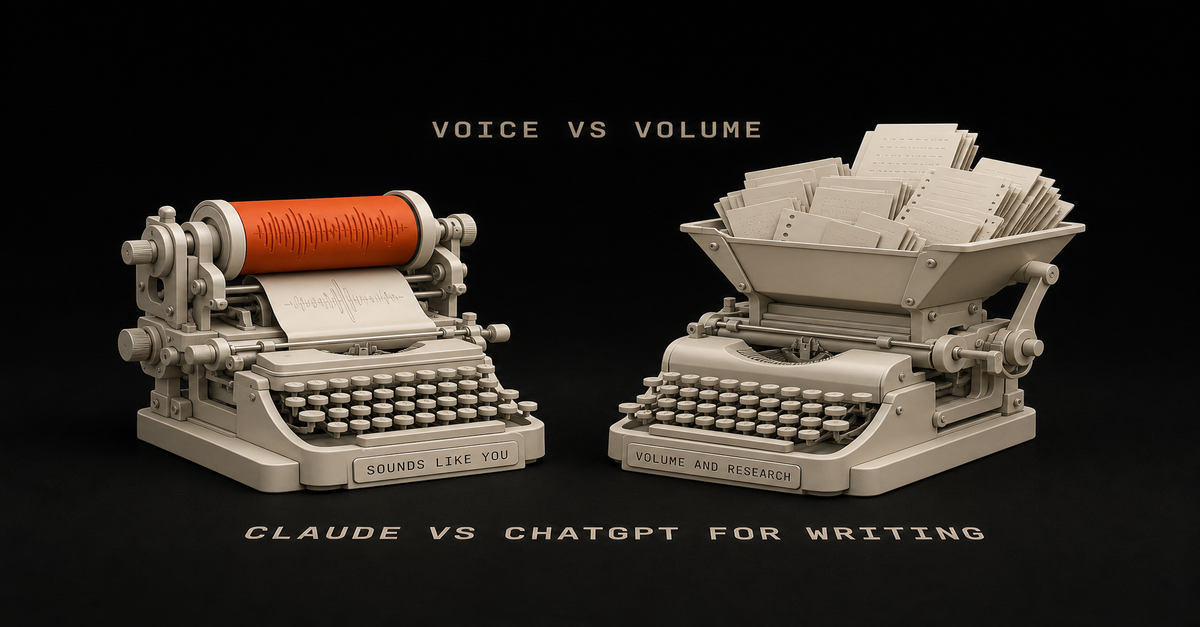
For writing, Claude is the better pick when the words have to sound like a specific person and follow your instructions exactly.
Pick ChatGPT when you need volume, versatility, or writing bundled with research and data in one tool. Most people who write seriously and can justify it end up keeping both and routing by task.
Whether you typed “claude vs chatgpt for writing” or “chatgpt vs claude for writing,” that is the short answer.
The rest of this page is the evidence: what real users say after months on each, the current model names and prices as of July 2026, a decision table, and a verdict by the kind of writer you are.
The Quick Answer, by What You Write
Skip ahead if you already know both tools. This is where most people who used both end up.
| What you are writing | Better pick | Why |
|---|---|---|
| In your own voice or brand voice | Claude | Holds tone with less prompting; reads warmer by default |
| Long documents and reports | Claude | Keeps the thread and follows document-wide instructions |
| Strict-format or constrained writing | Claude | Obeys “one sentence only” and similar rules more reliably |
| Research-heavy or data-driven pieces | ChatGPT | Stronger at pulling, calculating, and citing inside the draft |
| High volume, fast iteration | ChatGPT | More generous practical limits, more general-purpose |
| Writing plus files, PDFs, and math | ChatGPT | Better all-in-one for mixed tasks |
Both tools are good now. The difference is in the defaults, and that matters when you write every day.
The Models You Are Actually Comparing (July 2026)
Comparisons go stale fast because the model names change. Here is what each side ships right now.
| Claude | ChatGPT | |
|---|---|---|
| Writing flagship | Opus (warmest voice), with Sonnet, Haiku, and Fable | GPT-5.5 (Instant and Thinking) |
| $20 tier | Claude Pro, per claude.com/pricing | ChatGPT Plus, per OpenAI’s tiers page |
| Default writing feel | Natural, holds voice, follows constraints | Competent, versatile, more generic before tuning |
| Voice control feature | Styles | Custom instructions |
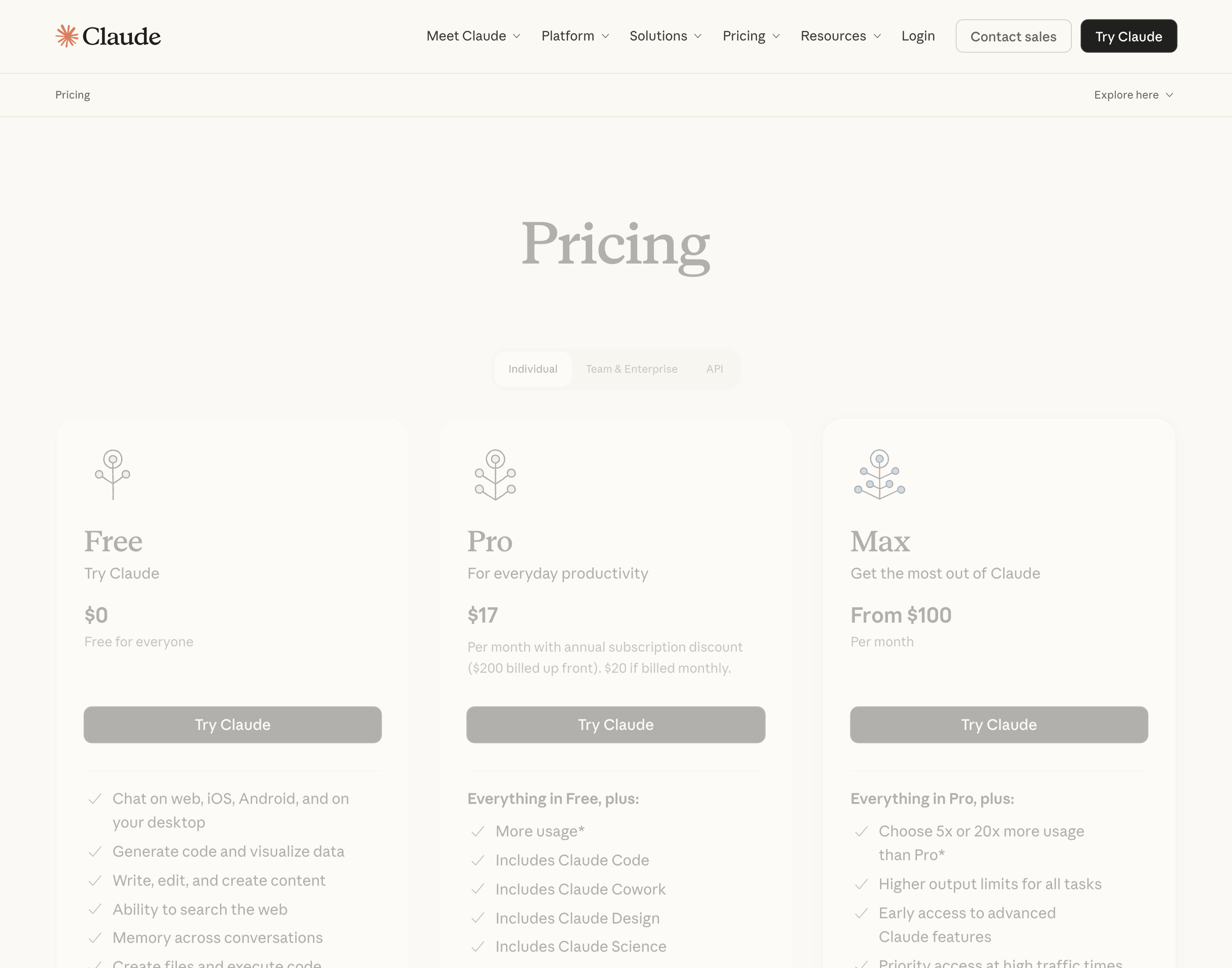
Anthropic’s own pricing page lists “Write, edit, and create content” as a core Claude capability, and the Pro tier runs $17 per month billed annually or $20 monthly:
If either name is new to you, start with the plain-English money comparison first: Claude Pro vs ChatGPT Plus breaks down the $20 tiers, and Claude Max vs ChatGPT Pro covers the $100 ones. This page is only about the writing.
Claude Writes More Like a Person Out of the Box
People who paid for both and wrote with both keep saying the same thing: Claude sounds less like AI by default.
In a four-month “paid for both” comparison on r/ClaudeAI, one user put the writing call plainly: for long-form writing, analysis, and structured documents, “claude wins… its not close”.
The same post named the reason writers care most about, which is obedience: “tell it ‘respond in 1 sentence’ and it actually does. gpt-5 negotiates.” That line explains a lot of the frustration writers have with ChatGPT drafts that just ignore a length or format instruction.
A reply from u/Ashtonator28 in that thread became a clean way to remember the split: “anthropic accidentally built a brilliant coworker. openai accidentally built a very competent butler,” per the r/ClaudeAI thread.
Voice is what matters here. Claude’s Opus model reads a little warmer. It tends to hold the same tone across a long piece instead of drifting into that flat, hedge-everything style that gives AI writing away.
The 60-second version, from my Shorts: Claude vs ChatGPT for Writing (Use Both Like This).
Where ChatGPT Genuinely Wins for Writers
This isn’t a Claude infomercial. ChatGPT wins some real writing jobs, and I’m not going to pretend it doesn’t.
The other side comes from a real-estate and tax professional, u/Free-Writer-1123 on r/claude, who pushed back on the Claude hype after using both on actual client work: “ChatGPT has been the most-versatile with higher correct rate of answer.
Better at reviewing text from PDF… I keep reading how awesome Claude is, but I have much different user experience than most.”
That’s the pattern. Sometimes the writing is wrapped around other work: reading a PDF, running the numbers, pulling research, then dropping it into a draft. There, ChatGPT often wins the whole task because it does it all in one place, even if Claude would win the prose alone.
ChatGPT also wins on sheer volume. Its practical limits run more generous, so if your job is to produce a lot of drafts fast and iterate, you will hit fewer walls. For a marketer pushing out ten variations of ad copy before lunch, that matters more than a slightly warmer sentence.
And the gap in voice narrows with effort. A saved custom instruction or a strong reusable style prompt pulls ChatGPT much closer to a personal voice. The difference is mostly at the default setting. With no tuning, Claude starts ahead.
Instruction-Following Is the Real Divide
Forget the vibes. The difference writers can actually measure is simple: Claude does what you told it, and ChatGPT negotiates.
Writers feel this constantly. You ask for three sentences and get five. You say “no bullet points” and the next draft is a bulleted list. You set a tone and it slips back to corporate-neutral by paragraph four.
The reports lean one way. An accountant, u/MrNariyoshiMiyagi, ran both on real client work and found Claude cleaner on a strict task: “Claude was phenomenal.
The calculations were clean… ChatGPT, on the same prompt, made a complete mess.” That’s numbers, not prose, but it’s the same thing: Claude sticks to the rule you set.
For writing, the constraint is usually voice, length, or format. If your drafts live or die on those, the tool that obeys them saves you the most editing time.
What Neither Tool Does For You
People talk about both of these like they replace a writer. They don’t.
Claude reads warmer, but it still produces confident filler when it has nothing real to say. ChatGPT is versatile, but it will happily invent a citation or a statistic in a research-heavy draft. Neither one fact-checks itself.
The teacher u/FATJIZZUSONABIKE, in the same r/claude discussion, praised Claude’s output in that thread as “so detailed and inspired that I’ve barely had to adapt anything,” but the words that matter are “barely” and “adapt.” Even the best case is a strong first draft you still own and edit.
So the AI writes the draft, and you decide what stays. Whichever tool you pick, the last pass is yours.
How This Was Compared
This verdict is built from public, linked sources, not a private benchmark. The picks come from multiple “paid for both” threads on r/ClaudeAI, r/claude, and r/ChatGPTPro where users wrote real work with each tool over weeks or months, plus the official product pages for current model names and pricing.
Model names and prices were checked on July 12, 2026 against claude.com/pricing and OpenAI’s official tiers page. Both companies change these often, so their pages are the source of truth if a number here has aged.
No coding benchmarks were used, on purpose. SWE-bench and Elo scores say nothing about whether a paragraph sounds like you.
Pick By The Writer You Are
There’s no winner for everyone. It depends on what you write.
- You write in a distinct voice (brand, personal, fiction): Claude. It holds tone with the least prompting and reads warmer out of the box.
- You write long, structured documents: Claude. It keeps the thread and follows document-wide rules.
- Your drafts must obey strict format or length rules: Claude. It stops negotiating with your instructions.
- Your writing is wrapped in research, data, or PDFs: ChatGPT. Having it all in one tool wins the whole task.
- You produce high volume and iterate fast: ChatGPT. More generous practical limits, fewer walls.
- You write seriously every day and can justify it: both, and route by task. Claude for the voice-critical drafts, ChatGPT for the research-heavy and high-volume ones. Many writers who tried to pick one ended up keeping both for exactly this reason.
If you can only run one and your work is mostly writing where tone and instruction-following matter, start with Claude. If your writing is one part of a mixed workload full of files, data, and research, start with ChatGPT.
Then read the $20 tier breakdown before you pay, because the plan you choose changes how much writing you can actually get done.
Published and last reviewed July 12, 2026. Model names and pricing checked that day against claude.com/pricing and OpenAI’s official tiers page. User quotes are drawn from public Reddit threads, linked inline. These products change often; the official pages are the source of truth.
This post is part of Claude Guides, the hub with every plan decision, task comparison, and setup guide for using Claude without code.

Written by
Chris AlarconChris Alarcon shows people who don’t code the boring Claude setup that actually works. He runs his one-person operation on these systems and shares every workflow, prompt, and tool combo in public. Start with the 15 prompts he uses every day.
The boring setup
It still won't know you tomorrow.
The Setup is one folder. Drop it into a Project, answer three questions, and Claude or ChatGPT writes your memory file and your voice file itself. It stops forgetting you, stops sounding like AI, and runs three real jobs by name. Twenty minutes tonight. No code. $39, 30-day refund.
See The Setup →The 15 AI prompts I actually use every day
I tested hundreds and kept the 15 that survived. You get them right away, then one short email from me every Tuesday.