In this article
- 1 The fact most comparisons get wrong: the ladders match on price, not on access
- 2 What changed on September 29: a $500 tier and a smaller $200
- 3 What changed on September 3: GPT-6 Astra and a 4x split inside ChatGPT Pro
- 4 The “20x” argument you should know about before you pay $200
- 5 The real upgrade trigger: agents burn tokens, chat does not
- 6 The dial I had been ignoring: Opus 5 and effort settings
- 7 Where each one earns its $100+
- 8 The cheaper play most people should try first
- 9 Your habits matter more than the price tag
- 10 Verdict: pick by what your week looks like
- 11 Where this comes from
- 12 Published July 12, 2026. Updated October 2, 2026, after DevDay added Pro $500 and cut Pro $200; live prices are on the plan tracker.
Which plan should you buy? Tap 3, get the verdict
Quick answer: the $100+ tiers are for people whose AI builds things while they do something else.
If your AI use is chat, even heavy chat, keep your $20 plan. If you run agents (coding sessions, automated workflows, research swarms), you will meet the caps, and the upgrade question answers itself.
I pay for both stacks, $200 each. Claude Max sits at the 20x step.
ChatGPT Pro dropped to $100 for a while so I could pay for Grok Bot. Then OpenAI launched dots, its new always-on agents, at DevDay on September 29.
I pay $200 for OpenAI now because of the dots release. I’m gonna switch over from Grok Bot. Grok Bot was good, and I like the multi-agent. I just feel like dots are gonna be cleaner, just because it’s in the ecosystem.
The one-liner I stand behind: Claude Max is for building. ChatGPT Pro is for research and volume. The upgrade trigger is agents, not chat.
Searching “claude max vs chatgpt pro” or “chatgpt pro vs claude max”? Here is the comparison from someone actually paying for both, with the numbers as of October 2, 2026.
Comparing Claude’s own two tiers instead? That is a different question, and it has its own page: Claude Pro vs Claude Max.
Not sure which one you are? Book 15 minutes with me, tell me what your week looks like, and I’ll tell you which plan to pay for and which chores to hand it first. I pay for both, so it’s a straight answer. If it’s for a team, that’s this page.
The fact most comparisons get wrong: the ladders match on price, not on access
These two ladders were the same shape when this page went up in July. They still share two price points, $100 and $200. What you get at each one stopped matching in September, and on September 29 OpenAI added a third rung at $500 and shrank the $200 one.
| Claude Max | ChatGPT Pro | |
|---|---|---|
| $100/month | 5x Pro’s usage per 5-hour session | 5x the usage of Plus ($20) |
| $200/month | 20x Pro’s usage per 5-hour session | 10x Plus since DevDay, per OpenAI’s Codex lead (was 20x; existing subscribers keep 20x through Oct 29) |
| $500/month | No Claude tier | 25x Plus, plus Astra Ultrafast in Codex and ChatGPT Work |
| What’s included | Everything in Pro: Claude Code, Claude Design, Slides and Docs, Research, projects, plus higher output limits | Pro models, Codex, ChatGPT Work, deep research, image creation, memory, file uploads; dots rolling out to Pro |
| “Unlimited”? | No. Session + weekly caps | No. Metered at every tier |
| Published exact quotas? | No numeric quotas on the official page | Only for the Pro models, per week |
| Newest model, $100 tier | Fable up to 50% of weekly limits | 50 GPT-6 Pro messages/week, shared with Sol Pro |
| Newest model, $200 tier | Fable up to 50% of weekly limits (same) | 200 GPT-6 Pro messages/week before DevDay; reported to drop to 100 |
| Annual billing? | No. Monthly only | No. Monthly only, all three tiers |
| Ads? | None | None. Ads are Free and Go only |
At $200 the two plans no longer match even on paper: 20x against 10x. They were never the same unit anyway. Claude counts against one Pro session of five hours; ChatGPT counts against the Plus allowance.
OpenAI’s ladder is now a straight line. $100 buys 5x, $200 buys 10x, $500 buys 25x, so every Plus-sized chunk costs $20 at every tier. The old $200 at 20x was the one bulk discount on that ladder, and it’s the part that got cut.
Claude Max 20x still sells 20 Pro-sized sessions for 10 times Pro’s price. The weekly cap means you won’t see all of it, which the section on the “20x” argument below covers.
ChatGPT Pro was famously “the $200 unlimited plan.” That era is over: OpenAI’s help center sells every Pro tier as more usage than Plus, and Claude Max does the same against Pro. Articles still selling “unlimited GPT” are describing last year’s product.
Neither company lets you pay annually at the top tier. OpenAI states it plainly: “Currently, we do not support annual billing or the option to pay for multiple months in advance for ChatGPT Go, Plus, or Pro subscriptions.” Anthropic’s Max help page says: “The Max plan is currently available as a monthly subscription only.”
So it is $100 or $200 every month on Claude, and $100, $200 or $500 on ChatGPT, with no discount for committing. Claude Pro has an annual option at $17 a month.
The top tiers do not.
And support will not top you up. OpenAI’s help page: “OpenAI Support does not reset ChatGPT or Codex usage limits.”
Two real feature gates exist. On Claude, Fable 5 and Fable 5.1 are included on Max up to 50% of your weekly limits on both steps, cost separate usage credits on Pro, and are unavailable on Free. On ChatGPT, Ultrafast is $500 only. Everywhere else in this comparison, money buys capacity, not capability.
What changed on September 29: a $500 tier and a smaller $200
OpenAI announced it at DevDay on Tuesday, September 29, 2026. Three things moved on the ChatGPT side, and nothing moved on Claude’s.
- Pro $500 is new. OpenAI’s DevDay recap says it “offers our highest usage allowance at 25 times the ChatGPT Plus allowance and includes access to Ultrafast.” Ultrafast is a faster mode for GPT-6 Astra, and per OpenAI’s DevDay notes it runs in Codex and ChatGPT Work. This is the plan people were calling “ChatGPT Pro Max.”
- Pro $200 got smaller. Tibo Sottiaux, who runs Codex at OpenAI, put it at “Pro 200 = 10X” Plus, down from 20x, as relayed on OpenAI’s community forum. Engadget reports GPT-6 Pro in chat drops from 200 to 100 messages a week. OpenAI’s help page says existing $200 subscribers keep their old allowance through October 29, same price.
- Pro $100 did not change. Still 5x Plus.

@thsottiaux · Sep 29, 2026
As we increase the floor, we are changing the relative difference between plans to be
Plus = 1X Pro 100 = 5X Pro 200 = 10X
…If you have an existing plan you will keep the 20X multiplier for a bit and also receive a lot of additional credits…
Would I pay $500? I cannot afford it. That’s where I cap. I’m not making that much money yet, so I wish I could do the $500.
My read: it’s for people already making real money from AI who live in Codex all day. I worked through all three tiers in ChatGPT Pro $100 vs $200.
The $200 cut is the part people are mad about. In my week, I don’t really feel it. It feels like it could run forever. I moved my OpenAI tasks to GPT-6.1 Sol, which OpenAI shipped at DevDay with “near-Astra performance at a lower cost” in Codex, ChatGPT Work and the API.
It does run out. On October 2 I was down to about 2% of my ChatGPT allowance. I don’t buy credits. A reset is coming, so I wait.
What changed on September 3: GPT-6 Astra and a 4x split inside ChatGPT Pro
OpenAI shipped GPT-6 Astra on September 3, 2026. In the ChatGPT picker it is branded GPT-6 Pro, and OpenAI’s help center published a weekly allowance: 50 messages on Pro $100, in one pool shared with GPT-5.6 Sol Pro, and 200 on Pro $200.
That 4x gap between the two tiers was this section’s whole story for a month. DevDay on September 29 narrowed it, and the new gate is Ultrafast on the $500 tier. The plan-by-surface question is in which ChatGPT plans get GPT-6 Astra.
Claude Max has no equivalent. Fable sits at 50% of weekly limits on both Max steps, so Anthropic’s tiers still differ only in how much.
A month ago I said ask me again in a month whether Astra moved my split. It held, and here is what it looks like now.
When I want my LinkedIn numbers turned into something I can read, I go to Claude: “Claude, give me something visual, give me this chart. Look at my analytics from LinkedIn and make it more visual. I want to see how I’m performing week over week or month over month.”
Then ChatGPT gets the result: “Take this analysis that Claude did, the chart, and research our top three competitors and see what they’re doing that I’m not.” That’s my play. Claude builds the picture, ChatGPT does the research.
The “20x” argument you should know about before you pay $200
I’d want someone to tell me this before spending $200 on the Claude side, and it is currently the loudest complaint in the Claude community.
Anthropic’s multipliers are per session, not per week. Its own pricing page says so:
You get everything in Pro, plus more usage: choose from 5x or 20x the usage of Pro per 5-hour session.
Paid plans then have weekly caps layered on top, and those weekly caps do not scale by the same factor.
So the practical weekly throughput a Max 20x subscriber gets is not 20 times a Pro subscriber’s. There is now litigation over it.
Kahn v. Anthropic, filed June 14, 2026 in the US District Court for the Northern District of California, alleges the weekly figure lands closer to six to eight times for Max 20x and nearer three and a half for Max 5x.
Those numbers are an unproven allegation in an active case, not a finding, and I am not going to pretend to know the real multiplier.
But the mechanism is not in dispute, because Anthropic publishes it.
I am not telling you to skip Max. I pay for the 20x tier and it earns its place in my week. Lately I hit my limit, but I burned it to the ground. For the first time it lasted longer. I’m running more tasks.
I am telling you that “20x” describes a five-hour window, and if you budget your week around it you will be disappointed. In September I said OpenAI was truer to its 20x. DevDay ended that argument.
The real upgrade trigger: agents burn tokens, chat does not
Here is the pattern across every “why am I hitting limits” thread, and my own bill.
Chat barely moves the meter. Agents devour it. One user on the $200 Max tier, u/jayplay90, reported: “I barely did anything and it ate 24% of me weekly usage on Claude max 20x.” Other users report burning half a weekly allowance in a single day without writing any code.
That is not malfunction. That is what agentic work is: one instruction fans out into hundreds of model calls.
My own upgrade moment was exactly this. It started when I realized Claude Code does far more than code: it edits my YouTube videos. I was spending 20 to 60 minutes per video cutting repeated takes by hand.
Now an agent transcribes the raw footage, reads the transcript, decides which takes are keepers, plans the cuts, executes them with FFmpeg, and drops the finished video in a folder.
I say “edit” and step away. Out of my last 14 videos, maybe 3 needed tweaks. Here is this week’s actual output folder:
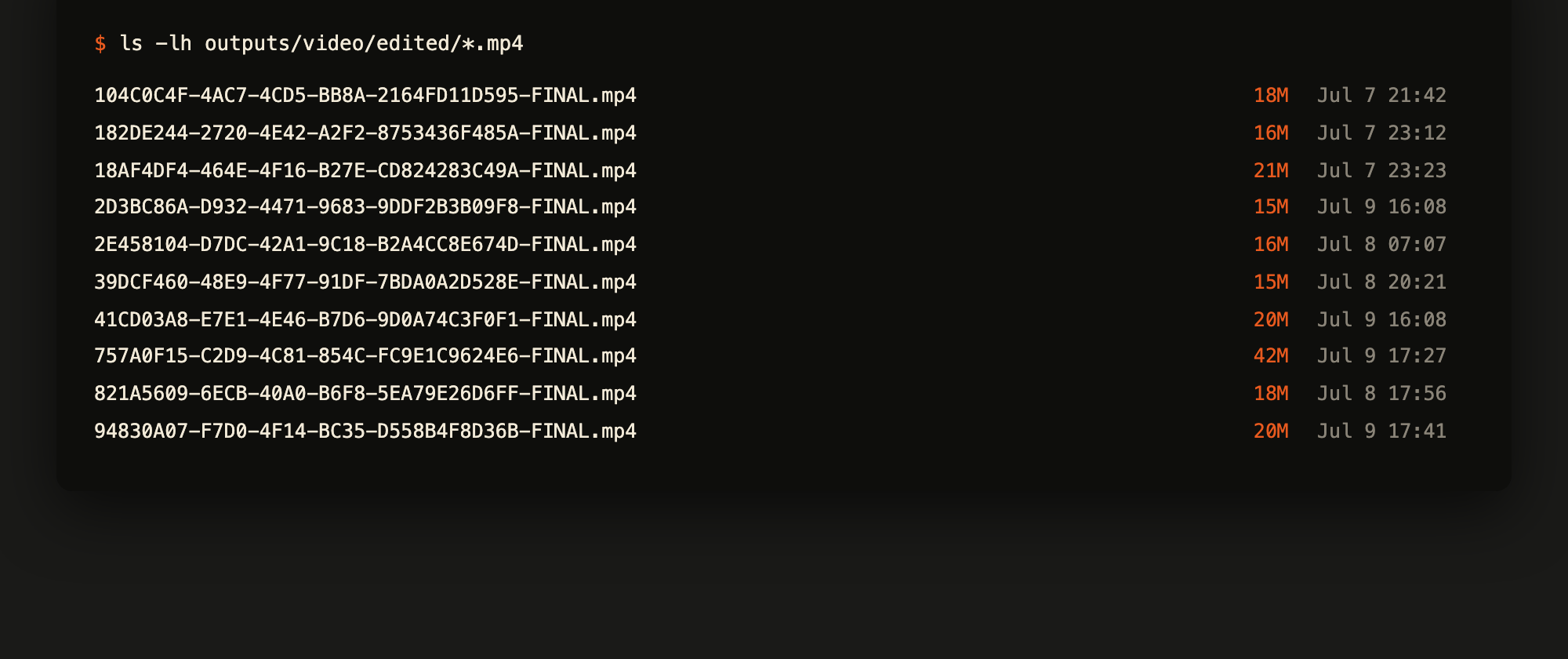
Building that system is what pushed me up the ladder. Refining a workflow means testing, rebuilding, and re-running it over and over. Add competitor research with three or four sub-agents running simultaneously, and you burn through a $100 allowance fast.
I kept hitting the cap, got tired of waiting for resets mid-build, and moved to the $200 tier. Straight from my phone:
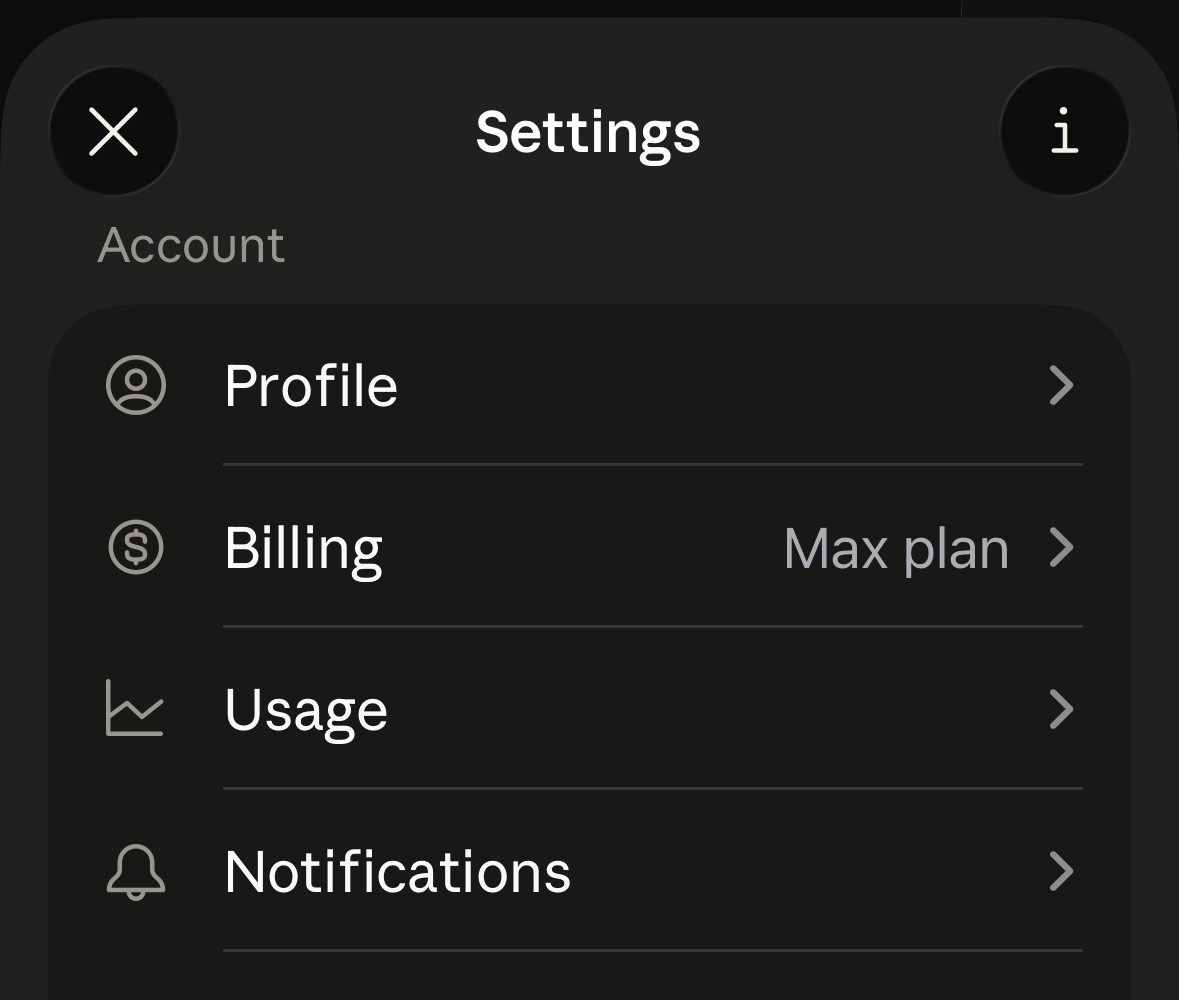
My Claude billing screen, July 2026.
One discipline that stretches any tier further: which model you run matters more than which tier you buy. A $100 Max user who rarely hits limits, u/xAdakis, put it plainly.
Heavy users burning out their caps “are more than likely using Opus, which is more token heavy… I rarely hit my limits using Sonnet all the time for heavy coding and agentic workflows.” Run the efficient model as your daily driver and save the heavyweight for the work that deserves it.
The dial I had been ignoring: Opus 5 and effort settings
This page went up on July 12. Opus 5 shipped on July 24, described in Anthropic’s announcement as a step change for the Opus tier powering long-running agents.
Since then both sides moved again: GPT-6 Astra shipped September 3, Opus 5.5 became the current Opus on September 22, and GPT-6.1 Sol arrived at DevDay on September 29.
So does that change the “Claude builds, GPT reviews” split? Not the split. Something else.
Opus 5 is amazing, and I’m only realizing the power after a week or two of using it. The thing I had wrong was the effort setting. I was running it on medium. Medium to high is a big difference.
A real example. My YouTube descriptions were coming out slightly off. In the past I would have reached for Fable, the top model, for any skill tweaking. This was minor, so I went back and forth with Opus on high instead, and it caught the problem and fixed the skill.
Another time I had Opus generate a plan and handed it to Fable for QA. Fable agreed with it.
Run high, and Opus is arguably matching the top model on some of this work. What actually changed in my week is that I moved my content builds, video scripts and LinkedIn posts, from Opus medium to Opus high.
What changed is the effort dial, and it is the knob most people have not touched. Same model, same subscription, noticeably different output.
Where each one earns its $100+
Claude Max: the builder and the writer. For work that needs judgment and instruction-following, the receipts keep coming from non-developers. One accountant, u/MrNariyoshiMiyagi, ran both $100 tiers side by side on real client work.
“Claude was phenomenal. The calculations were clean… ChatGPT, on the same prompt, made a complete mess of the numbers.”
And for content, my own verdict is simple: if you are creating in your own voice, Claude just writes better. Both models feel human to talk to now; Opus runs a little warmer.
ChatGPT Pro: the researcher and the volume machine. At $100 the practical limits still run generous, which is why users paying $200 on both sides report leaning on GPT for sheer volume. Those reports predate DevDay.
That trade shows up cleanly in one pre-DevDay summary on r/Anthropic, comparing the two $100 tiers: “Usage on chatGPT is much more generous with the latest price cuts. But claude is definitely less hands on for me, i find GPT requires a lot of [steering].”
More volume, more steering. That is the honest shape of it.
In my stack, ChatGPT’s side (Codex, OpenAI’s agent app) is also the better scheduler of boring, repetitive automations: my inbox triage and LinkedIn engagement queues run there because they execute consistently. And it is a phenomenal coder in its own right. I pay its bill too, back at $200 after a stretch on $100. This screen is older, from July:
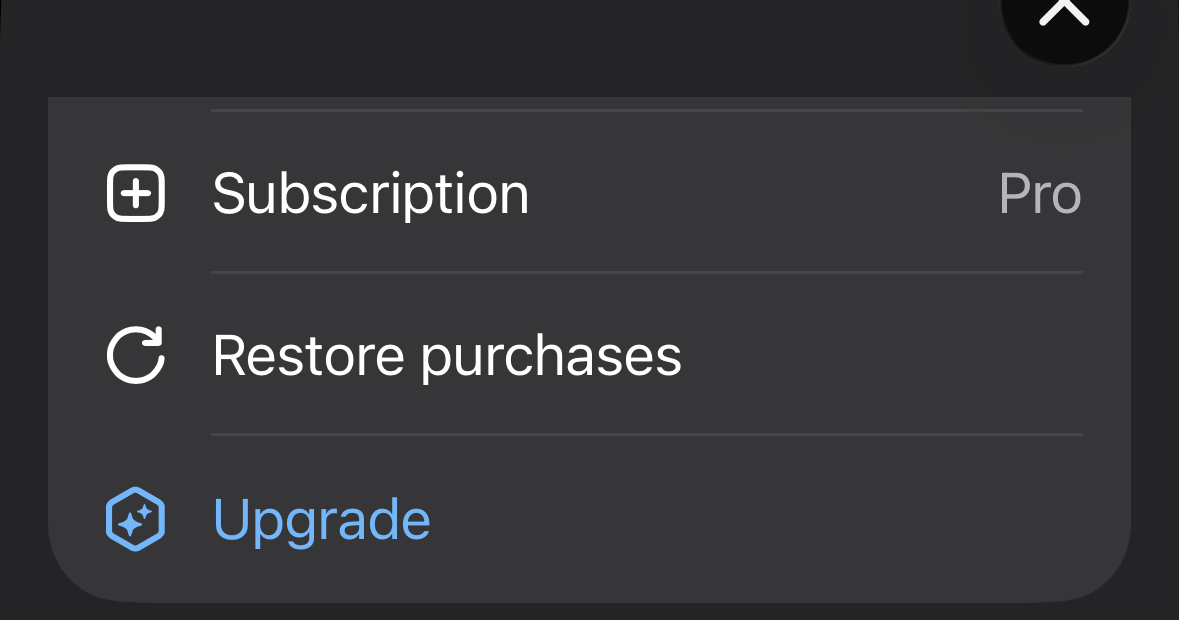
My ChatGPT subscription, July 2026. It shows Pro, not which tier.
They work best as a team. My setup runs a custom MCP connection (plain English: a bridge I built so the two AIs can talk to each other), and quote me on this: when Claude builds something, it sends the work across for QA automatically, like a sparring partner.
It beats using a sub-agent of the same model, because the second opinion comes from a genuinely different brain.
u/cc_apt107, who pays for both ChatGPT Pro and Claude Max, landed on the same division back in 2025 and it still holds: “Claude is MUCH more ‘coachable’ and context aware… I find myself using ChatGPT 5 more than Codex. It is really, really good at enhancing Claude’s plans… But I rarely let GPT touch code.”
Claude executes. GPT reviews and researches. Every serious both-payer I have found converges on some version of that split.
The cheaper play most people should try first
Before either $100 tier: $20 on both. Separate allowances, two toolsets, $40 total. It is one of r/claude’s most-upvoted plan questions for a reason, and I wrote the full breakdown of the $20 tiers in Claude Pro vs ChatGPT Plus.
A month later, with people actively shopping these $100 tiers, I still stand behind it. Unless you have a serious workflow and the budget, just try the $20. When you hit the limit you’ll feel it, and then you just upgrade. It’s really easy.
Let the wall make the decision, not the comparison table.
The same conclusion shows up in the community. In an r/ClaudeAI thread on how people handle the gap between the $20 plan and Max, the most popular serious answer was a multi-model strategy: keep the $20 Claude Pro plan for the heavy lifting and supplement it with a second cheap plan rather than jumping a tier.
The honest counterpoint from that same $20-on-both thread, because it is real: one user found that “switching between models mid-workflow just to save $60 sounds good on paper but the context switching kills productivity more than the token limit does.”
If your work lives in ONE deep tool all day, one big tier beats two small ones.
Two practical receipts before you buy:
- Do not subscribe through the Apple App Store. Community threads consistently warn the in-app price runs ~$125 for the $100 tier because of Apple’s cut. Subscribe on the web.
- The one-month sprint is legit. Upgrading for a single month to build something specific, then dropping back down, is a strategy real users run. These are monthly toggles, not marriages.
Your habits matter more than the price tag
Since there is no annual discount on either side, the only lever left is how efficiently you spend what you buy. This turned out to be worth more than the tier difference for me.
Two things did most of the work.
I run a context meter in my status line so I can eyeball how loaded a session is.
And I have a hook that fires around 500k of context: it writes a next-steps markdown file in the project folder, I close the window, open a fresh one, say “read the next-steps file,” and resume with zero context but the same knowledge.
Before I built those habits I was burning 20-30% of my top-model usage in a single day. I am not sitting at 500k of context paying for it on every message anymore.
The subscription price matters less than your habits. I measured this properly across nine weeks of my own logs, and the numbers are in my real Claude Code usage.
Verdict: pick by what your week looks like
- You chat, plan, draft, think: stay on $20. Truly. The caps you would pay to remove are not the ones limiting you.
- You are starting to run agents (Claude Code, tasks you hand off to Claude, scheduled automations): $100 Claude Max, and run the efficient model as your default driver.
- You build daily and hate waiting for resets: $200 Max. That was my trigger: serious building means testing fast, and waiting for a weekly reset mid-build is the most expensive thing on this page.
- Your volume is research, review, and everyday everything: ChatGPT Pro at $100 still carries a lot. At $200 you now buy twice that, not four times.
- AI already pays you and you live in Codex: that is who Pro $500 is for. Not me, not yet.
- AI runs your whole operation: both, split the labor: Claude builds and writes, GPT reviews, researches, and runs the boring reliable stuff. That is my actual setup, $200 on each side.
Two adjacent paths worth naming before you commit: Google’s Gemini tiers compete hard on price for chat-first users, and if your usage is truly spiky, both companies’ pay-as-you-go APIs can beat a subscription. For teams, Claude Team and ChatGPT Business are the per-seat versions of this same decision.
Choosing between the two Claude Max steps rather than across vendors? That split is Claude Max 5x vs 20x. What do agents actually do all day for a non-developer? That list exists: 20 real Claude Cowork use cases. And the 15 workday AI prompts at /start run fine on the $20 tiers.
So who wins at $200 now? I think it’s hard. I think you get more out of Opus 5.5 now, so it’s really hard. OpenAI shrank its $200 and I still went back to it, for dots and for GPT-6.1 Sol.
My rule hasn’t moved: the upgrade trigger is agents, not chat. Start at $20, let the wall tell you when, and move up on the side you keep hitting.
Where this comes from
I checked Anthropic’s pricing and Max pages, OpenAI’s DevDay notes and Engadget on October 2, 2026. The 10x is from OpenAI’s Codex lead on its forum, the 100 a week from Engadget; neither is on OpenAI’s help page.
The billing screens are mine, from July. The 2% and my limits are my own read, and I haven’t used Pro $500.
Published July 12, 2026. Updated October 2, 2026, after DevDay added Pro $500 and cut Pro $200; live prices are on the plan tracker.
This post is part of Claude Guides, the hub with every plan decision, task comparison, and setup guide for using Claude without code.
Make your limit last
I burned 50% of my weekly Claude limit in one day. On the biggest plan.
These are the 4 fixes I use now so it lasts the whole week: a one-screen model cheat sheet and two rules you paste in. No code. They show up right here, and I'll email you the day your plan changes.

Written by
Chris AlarconChris Alarcon shows people who don’t code the boring Claude setup that actually works. He runs his one-person operation on these systems and shares every workflow, prompt, and tool combo in public. Start with the 15 prompts he uses every day.
Picked a plan? Now set it up
Whichever plan you buy, it still won't know you tomorrow.
The Setup is one folder. Drop it into a Project, answer three questions, and Claude or ChatGPT stops forgetting you, stops sounding like AI, and runs three real jobs by name. Twenty minutes tonight. No code. $39, 30-day refund.
See The Setup →