
Quick answer: I pay for both, every month, and use both every day. If you can only justify one $20 subscription for work, take ChatGPT Plus: it is more general, you will use it for more things, and its limits bend instead of break. Take Claude Pro instead when your work is depth: long documents, serious writing, analysis where the AI must do exactly what you said. The honest one-liner: Claude wins quality per message. ChatGPT wins messages. Real workloads want both.
If you searched “claude pro vs chatgpt plus” or “chatgpt plus vs claude pro,” here is the comparison I wish existed when I started paying for these: current numbers from the official pages (July 2026), what real users say after months on each, and a verdict by the kind of person you are, not a fake universal winner.
The two plans in one table (July 2026, official pages)
| Claude Pro | ChatGPT Plus | |
|---|---|---|
| Price | $17/mo billed annually ($200 up front), or $20 monthly | $20/mo, no annual option |
| Usage limit style | 5-hour session limit + a separate weekly cap | Up to 160 GPT-5.5 messages per 3 hours |
| When you hit the limit | Hard stop until reset | Downgrades to a smaller model, keeps working |
| What shares the allowance | One bucket: chat + Claude Code + Cowork | Chat; the Codex coding agent has its own pool |
| Models | Fable, Opus, Sonnet, Haiku | GPT-5.5 Instant and Thinking |
| Included agent tools | Claude Code, Cowork, Design, Research, unlimited projects | Agent mode, custom GPTs, scheduled automations |
| Upgrade path | Max: $100 (5x) or $200 (20x) | Pro tiers: 5x and 20x Plus usage |
Two structural details matter more than any benchmark. First, the limit style: Claude stops you; ChatGPT demotes you. A hard stop mid-workday feels very different from quietly getting a smaller model. Second, the bucket: on Claude, every product drains one allowance, so a heavy agent session eats your chat capacity too.
The complaint you will actually feel: Claude’s weekly cap
The single loudest pain in the Claude community right now is the $20 tier’s weekly limit. In a heavily upvoted r/ClaudeAI thread with close to 300 comments, “Claude Pro feels amazing, but the limits are a joke”, u/iameastblood says it plainly: “Even though I use it quite sparingly, my weekly limit is already mostly drained by mid-week (currently sitting at 74% used)… it feels like I’m paying for a premium service I can barely use.”
The consensus across those roughly 300 comments is uncomfortable but consistent: for heavy users, the $20 Pro plan works like a trial tier, and serious daily use points to Max at $100 and up.
Here is the de-blame part, because the complaints usually read like user error and they are not: the $20 tiers are designed differently on purpose. Claude Pro sells you a smaller amount of a very deep tool. ChatGPT Plus sells you a large amount of a very general tool. Neither is a scam. They are different bets, and you should pick the bet that matches your work.
Where each one actually wins (from people doing real work)
The pattern across every long-term comparison I have read, and my own daily use, is consistent:
Claude wins on depth and obedience. The best summary I have seen comes from a four-month “paid for both” comparison on r/ClaudeAI: for long-form writing, analysis, and structured documents, “claude wins… its not close.” The same post nails instruction-following: “tell it ‘respond in 1 sentence’ and it actually does. gpt-5 negotiates.” And a reply from u/Ashtonator28 became my favorite one-line review of both companies: “anthropic accidentally built a brilliant coworker. openai accidentally built a very competent butler.”
ChatGPT wins on versatility and volume. A real-estate and tax professional, u/Free-Writer-1123 on r/claude, pushed back on the Claude hype after using both on actual client work: “ChatGPT has been the most-versatile with higher correct rate of answer. Better at reviewing text from PDF. Better at calculating for loans… I keep reading how awesome Claude is, but I have much different user experience than most.” In the same thread, a teacher (u/FATJIZZUSONABIKE) countered that Claude’s lesson plans were “so detailed and inspired that I’ve barely had to adapt anything.” Both are right. That is the whole point: depth versus breadth.
My own week looks like this. ChatGPT earns its subscription on the general layer: quick scripts, research, everyday questions, and its scheduled automations, which are genuinely excellent and feel like Cowork on steroids. I also keep its Codex coding agent wired in as a sparring partner that reviews and stress-tests work my main tools produce. Claude earns its subscription on the deep layer: the writing, the systems, the long careful work where instruction-following is everything.
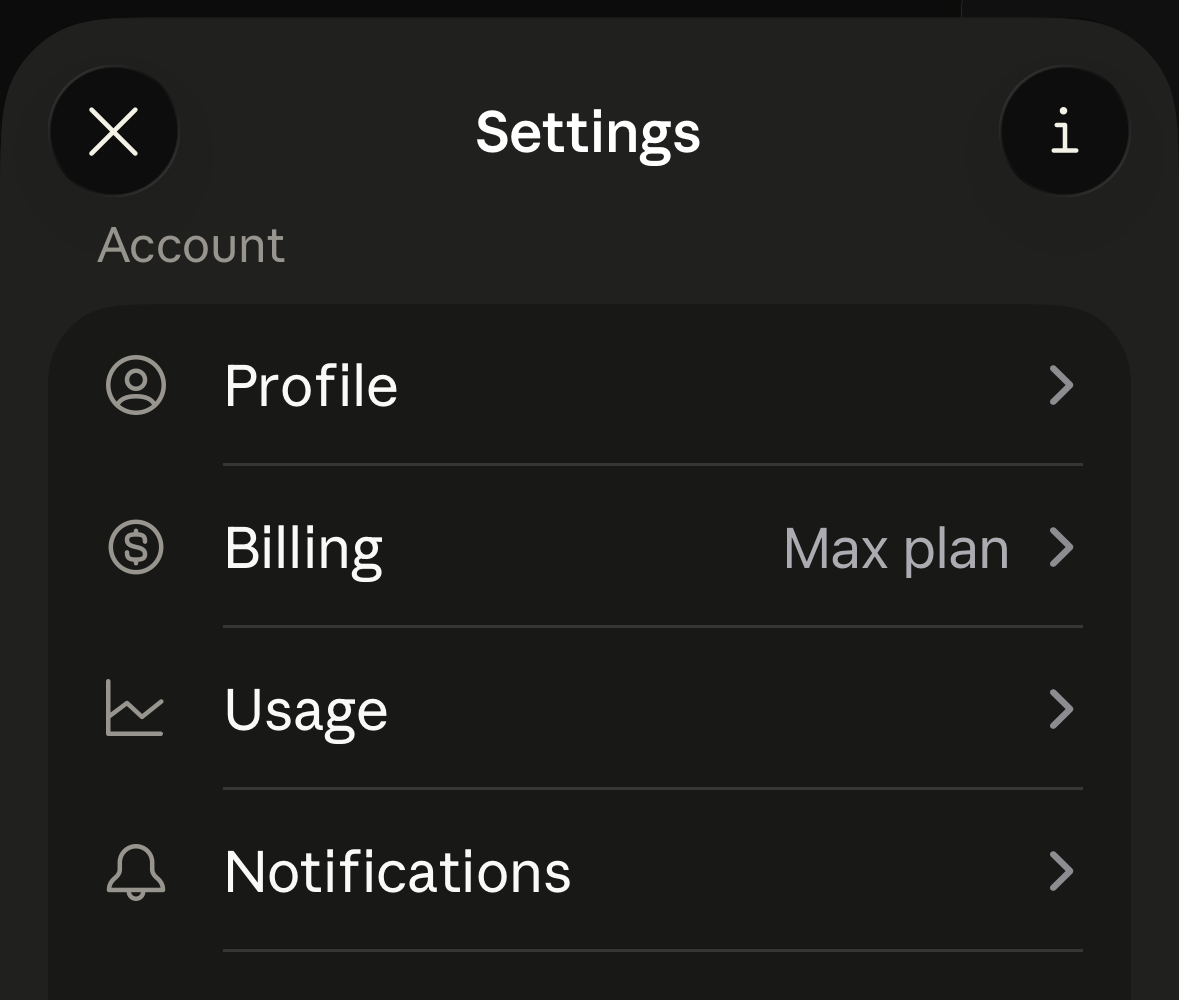
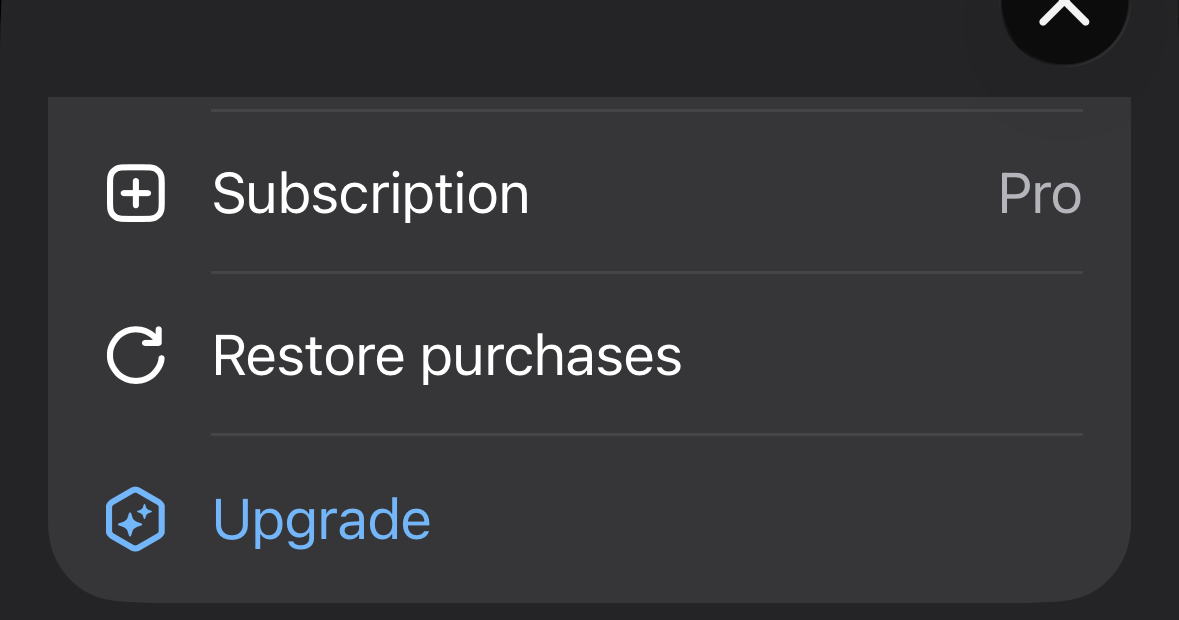
Full disclosure, since this post is about the $20 tiers: these days I pay for the top of both stacks, Claude Max and ChatGPT Pro, because AI runs my entire operation. The split logic in this post is exactly how I route work between them; the top tiers just give the same split bigger buckets. Straight from my phone:
The move nobody prices out: $40 across both beats $100 on one
Here is the configuration question that keeps showing up in the forums: one $100 plan, or two $20 plans?
For most working professionals, two $20 plans win, and not just on price. The reason is the limits math. The two allowances are completely separate, so splitting your workload means you almost never hit a wall on either side. I stopped hitting limits entirely once I split my work this way: the general, high-volume load goes to ChatGPT, the deep work goes to Claude, and each subscription only carries half my day.
You also get insurance. When one tool has a bad day, and they all have bad days, the other is right there.
The $100+ tiers make sense at the point where ONE of the tools has become your primary workhorse and its half of the split is still hitting caps. That is a great problem to have, and you will know when you have it.
Verdict: pick by the person you are
- First AI subscription, general work (email, documents, planning, everyday questions): ChatGPT Plus. It is the better all-rounder and the friendlier on-ramp, and you will use it for personal life too: meal plans, budgets, all of it.
- Your work is writing, analysis, or anything where the output must follow instructions exactly: Claude Pro, and accept that the weekly cap is the price of depth at $20.
- AI does real work for you every single day: both, $40 total. Split the load, double the limits, route each task to its specialist.
- You are already slamming into caps on a split setup: that is the upgrade signal for a $100+ tier on whichever side does your heavy lifting.
The number to remember: 160 messages every 3 hours on one side, one shared weekly bucket on the other. Match that to your actual day and the choice makes itself.
Whichever plan you pick, put it to work the same day: the 15 workday AI prompts at /start run on either tool and cover the exact tasks these subscriptions are for.
If the next question is what to do with these subscriptions once you have them, start with Claude Cowork vs Claude Code for the Claude side, and my breakdown of when you need automation at all for the bigger picture.
Published and last reviewed July 3, 2026. Pricing and limit figures checked that day against claude.com/pricing, the Anthropic usage-limit support page, chatgpt.com/pricing, and OpenAI’s official Plus limits help article. These numbers change often; both companies’ pages are the source of truth.

Written by
Chris AlarconChris Alarcon builds Ship Lean: practical AI systems for people running one-person businesses who need their real work to turn into distribution and revenue. He shares the exact Claude Code, n8n, content, and workflow systems he uses in public.
Work With Me
Turn proof into distribution
If the article exposed a bottleneck, I can help map the system, build the assets, and route it into tools, workflows, AEO content, newsletters, and short-form distribution.
See the offer →Want more workflows like this?
Every Saturday I send one automation workflow you can steal. Real systems, not theory. Join builders turning product work into distribution.
Get Saturday's Workflow →