Quick answer: if you do not write code, Claude Pro at $20 is almost certainly enough, and the advice telling you otherwise was written for developers. The $20 plan does not break when you ask things. It breaks when you start making things.
That distinction is the whole page. Chat, writing, research and reading documents barely move the meter. "Help me build this website" and "edit this video" move it a lot.
So before you spend the extra $80, there is a two-week test worth running. It costs nothing and it usually answers the question for you.
What you are actually buying, so we can stop guessing
The thing that makes this decision feel harder than it is: people assume Max unlocks a whole better Claude.
It mostly does not. The feature list is the same, and between Max 5x and Max 20x it is identical, which I proved row by row on Claude Max 5x vs 20x.
But there is one real gate between Pro and Max, and it would be dishonest to flatten it.Claude Pro
Claude Max 5x
Claude Max 20xPrice
$20/mo, or $17/mo billed annually
$100/mo
$200/moAnnual billing
Yes
No
NoClaude Code included
Yes
Yes
YesFable 5 and 5.1
Not in plan limits. Usage credits only
Included, up to 50% of weekly limits
Included, up to 50% of weekly limitsEverything else
Same
Same
SameWhat extra money buys
Baseline
Capacity
More capacityAnthropic's own plan matrix. The Fable row is the one place Pro and Max genuinely differ.
Since July 19, 2026, the newest model is not part of what $20 buys. You can still use it, you just pay usage credits on top. That is the honest version, and it is covered properly on is Claude Pro worth it.
So the accurate framing is: Max buys capacity, plus in-plan access to the newest model. It does not buy different features, and it does not buy a smarter Claude on the models Pro already includes.
Worth noticing the annual row too. Pro has an annual option and neither Max step does.
How the limits actually work, in one paragraph
Two clocks. A five-hour rolling session window, and a separate weekly limit that applies across all models. You need room in both.
Anthropic does not publish a message count for any tier. Every "you get 45 messages" number you have read is somebody's estimate, usually derived from a coding workload, usually with no date on it.
The full mechanics live on Claude usage limits explained. For this decision, the only thing you need is that the meter measures work done, not messages sent.
The signature of the wall
Here is the part that decides it, and I want to be precise because this is the sentence I would hand someone on the $20 plan.
You are not going to hit the limit by asking chat questions.
Where people start running out is the moment the request changes shape. "Can you help me build a website." "Can you help me edit a video." "Can you create a video." That is when you start burning real credit.
So the useful question is not "how heavy a user am I." It is: does my week contain jobs where Claude is producing an artifact over many steps, or is it mostly answering me?
If it is mostly answering you, Pro is enough. Genuinely. I say that as someone paying $200 a month who would happily take your $80.
The clearest public illustration of the other side is the Claude Max class action, where lead plaintiff Karl Kahn is reported by Engadget to have upgraded to Max 20x for heavy coding and had a single five-hour session consume 15% of his weekly quota.
Read that as workload evidence, not as a plan warning, and remember it is an allegation in a filed complaint rather than a measurement. One session, allegedly 15% of a week, on the most expensive tier available.
If it is even roughly right, it tells you what making things at volume costs. Nothing you do in a chat window comes near it.My own meters, September 5, 2026. This is a Max 20x account on a normal working day, which is the point: even heavy use looks unremarkable until the work changes shape.
The correction I would make before you spend anything
There is a mistake underneath this question that costs more than the $80, and it is thinking about it as a coding decision at all.
If you zone in on code, you get stuck on "I need to build an app" and "I need a website." Those are real use cases. Most people do need a website, and plenty of people could save money building a small app they use regularly.
But that framing hides the actual opportunity. Even if you never write a line, you should understand what code can do for you.
Say you are a video editor and you do not code. Claude can still edit and polish your videos, because underneath it is running scripts and tools rather than typing into a timeline.
I have processes running on ffmpeg and Python that edit my videos. I do not need to understand any of it. I put a video in, a polished video comes out, and I still review it.
That is the thing worth $80, if it applies to you. Not a better chatbot. Hours back.
And the numbers are not close. A simple short takes about an hour to edit properly. Fourteen of those is fourteen hours, and that is just the cutting phase.
Then there is polishing, which is roughly another fifteen. Conservatively, 20 to 30 hours on short-form alone, before you touch long-form.
I spend about 15 minutes checking them, and that is the cutting phase.
If that trade is not worth $80 to you, that is a fair position and I am not going to argue you out of it. You just want to be honest that you are still paying for it. You are paying with your time.
I am not going to relitigate the $100 case here, because it has its own page: is Claude Max worth it. The point for this decision is narrower. The thing that breaks Pro is not code. It is production.
The two-week test
So, the actual thing to do before you spend the extra $80.
Do not measure your usage. You will not learn anything from a percentage, and you will talk yourself into an upgrade you do not need.
Instead, change one habit for two weeks:Stop treating it as a chat. Once a week, hand it a job with an output, not a question. A real one from your actual work. Edit this. Build this. Process these forty files.
Route the routine work down. Do not run the most capable model on things that do not need it. This is the single biggest lever and it is free.
Start fresh sessions. A conversation you never restart forces Claude to re-read an ever-growing history every single turn. That is the most expensive habit there is, and it is a habit, not a plan problem.
Then wait for pain. Not a warning. Actual pain: stopped, mid-task, on something with a deadline, more than once.If two weeks of that never stops you, Pro was enough and you just saved $960 a year.
If it stops you repeatedly, you now know exactly what for, which is the only useful reason to upgrade.
Let the pain tell you
That is my whole rule for this ladder, and it is how I climbed it without regretting a step.
I went free, then the $20 Claude plan, then ChatGPT at $20 as well, then cancelled one because at that point it felt expensive. Back and forth for a while. Eventually $100. Eventually $200, because I kept running out of credits and got tired of waiting.
Not one of those upgrades came from a comparison table. Every one came from a wall.
The same rule governs the step above this one, and I have written out how to apply it at the $100 to $200 line on Claude Max 5x vs 20x.
The step that was clearly wrong
Since I am telling you to let pain decide, here is the one time I did not, and it cost me.
I went to an annual plan on Codex, OpenAI's coding tool, and it was too quick. I had not earned it.
Because I had committed, I spent the whole time trying to justify it, which meant burning the highest available model on every single task.
When I ran Claude, I would have Codex running alongside as a sparring partner, permanently. Not because the work needed it, but because I had so much allowance that spending it felt free.
It still does that job sometimes. But now we are deliberate about which model gets which work.
The lesson is not "avoid annual." It is that buying capacity ahead of need does not just waste money. It teaches you expensive habits, and those habits are what make the next tier feel necessary too.
Which is also why I would tell anyone new to Claude to expect to be inefficient for a few weeks. You will burn far more than you need to, then you will learn the habits. Do not buy a tier to paper over a learning curve you are about to climb anyway.
The cheaper levers, in order
Before $80 a month, all of these are free or cheaper:Model routing. Run the cheap model for routine work by default. Most people have this backwards.
Session hygiene. Fresh sessions rather than dragging one bloated conversation through the whole day.
A project instructions file so you stop re-explaining yourself every session.
A second $20 subscription somewhere else instead of one $100 plan. Two providers at $20 gives you a working day when one meter closes. One provider at $100 does not. If AI does real work in your week, a single vendor is a single point of failure.So, is Pro enough?
For most people reading this: yes, and the fact that you are asking rather than being stopped is itself the answer.
The exception is not "you are a developer." It is "you have started making things, at volume, and the waiting has begun costing you real time." When that is true you will not need a blog post to tell you. You will be annoyed.
At that point the real question is not Pro versus Max, it is which Max. For non-coders, that is is Claude Max worth it.
Still deciding whether to pay at all? That is is Claude Pro worth it. The tier-by-tier gates are on Claude Pro vs Max, and the two-meter mechanics are on Claude usage limits explained. More at Claude Guides.
Published September 10, 2026. Plan prices, the annual-billing gap and the feature parity between the two Max tiers were verified for Claude Max 5x vs 20x against Anthropic's Max plan support article and claude.com/pricing. The 15%-of-a-weekly-quota figure is Engadget's reporting of an allegation in a filed complaint, linked above, not a finding and not my measurement. The meters are my own Max 20x account. The video editing hours are my own workload, not a benchmark. Anthropic publishes no message count for any tier, so this page does not quote one. I looked for non-developer accounts of hitting the Pro wall to include here and could not verify any with a real name and a live link, so that section was left out rather than filled with anonymous paraphrase.
Quick answer: Use Sonnet. Anthropic's own guidance says that if you are not sure which model to pick, start there, and for writing, analysis and everyday multi-step work it is the right call.
Save Opus for problems you have already watched Sonnet struggle with. The real question is which model is the cheapest one that still gets your job right.
And the question itself is out of date. There are not two models. There are four.
That matters, because picking the heavy one by reflex is the most common reason people hit a limit and think Claude is broken.
The short answer, by the job in front of youThe job
Pick
WhySummarize this, pull the dates out, quick lookup
Haiku 4.5
Instant, and the lightest on your limitWrite it, analyze it, work through it, most things
Sonnet 5
Anthropic's stated default. Start hereYou already tried Sonnet and it missed things
Opus 5
Reasoning specialist. Costs more of your limitLong project, many connected steps, few check-ins
Fable 5.1
Heaviest, slowest, and on Pro it costs creditsYou are hitting limits constantly
Go down a model
Not up. This is almost always the fixSonnet vs Opus: start with Sonnet, and there are four models, not two
Whether you searched "Opus vs Sonnet" or "Sonnet vs Opus", the answer is the same, and Anthropic states it outright: start with Sonnet.
The other half of the answer is that the two-model question is out of date. Here is Anthropic's own table, read September 5, 2026.Model
Rate limit use
Anthropic's stated best forHaiku 4.5
Lightest
"Quick answers, summaries, and simple extraction"Sonnet 5
Moderate
"Coding, writing, analysis, and multi-step workflows... your versatile default"Opus 5
Heavy
"Deep research and complex reasoning that genuinely needs sustained thinking"Fable 5.1
Heaviest
"Your largest, most critical projects: long, complex tasks"Read the middle column, not the right one. That is a price list.
Every ranking page treats this as a quality ranking where Fable is the good one and Haiku is the compromise. Anthropic does not describe it that way. It describes four tools with four costs, and it names Sonnet as the one to reach for when you have not thought about it.
There is a fifth Claude model, Mythos, built for cybersecurity and biology research. It is restricted to vetted organisations through Anthropic's trusted access programmes, so it will not appear in your picker and it is not part of this decision.
Why you keep hitting your limit
If most people only read one section of this page, I'd want it to be this one.
Anthropic says it directly: "if you use Opus or Fable on a task that Sonnet or Haiku could handle, you may be using more of your limit unnecessarily."
Your limit is not a message count. It is a token budget running across two windows at once, a rolling five-hour session and a weekly cap.
A heavy model on a light task spends more of that budget for an answer that was not better. Anthropic does not publish how much more, and I am not going to invent a multiplier. The one number it does print is on the Effort control below.
The cleanest version of this I have seen came from a non-coder on r/claude. u/TeachMeThings3209067 wrote:"Yeah I was using Opus 4.6 frequently and hitting my usage limits. Then I realised sonnet was actually good enough for what I wanted to do which was just regular analysis... I am literally just analysing transcripts from meetings."They fixed a limit problem by going down a model. Nothing else changed.
The original poster in that thread, u/LinkDaSquid, landed in the same place:"I even asked Claude itself if I should use Opus instead of Sonnett, and it said to just keep using Sonnett. As a result, my weekly limit barely gets above like 15%."The control nobody mentions: Effort
Open your model picker and look under the model name. There is a second setting, and it changes your limit consumption on the model you already chose.My own Claude picker, September 5, 2026. Note the warning label on Max. Anthropic prints the cost right there and almost no comparison page mentions this setting exists.
Five levels: Low, Medium, High as the default, Extra, and Max. The app flags Max with "1.5x or more usage" in orange, which is Anthropic telling you the price before you pay it.
That gives you a cheaper move than switching models. If Sonnet is close but not quite getting there, raise Effort before you jump to Opus. If Opus is working but draining you, drop Effort before you drop the model.
My actual routing rule
This is how the work gets assigned in my week. It's just what I do, so don't read it as a recommendation for your setup.
Fable is for complex skills. Editing my video skill, generating content for my website, running my SEO work. Anything long and complicated, that is Fable, hands down.
Opus is my everyday driver. Making shorts for YouTube, planning, thinking something through. When I want to plan something out, that is Opus. No reason to spend Fable's budget on it.
Sonnet and Haiku I do not personally use much anymore. I'd rather be straight about that than pretend I run a routing rule I don't.
One caveat that matters if you are on Pro: I am on Max 20x. Running Fable and Opus as freely as I do is affordable at $200 and would not be at $20.
But the history is the useful part. Before Fable existed, my split was Opus and Sonnet: Opus did the planning and the main execution, and Sonnet did all the grunt work, the research, the fetch-and-summarize. That split was good. There are just so many models now that I stopped reaching for the light end.
If you are on Pro and watching your limit, that old split is better advice than what I currently do.
When the heavy model is the wrong tool
This mistake is a cheap one to avoid.
Say you are writing a script. You are not going to use Fable for that. It might nail it, but it is burning tokens for no reason, and it is not even going to be faster.
It will probably be slower.
And that's not just my feeling. Anthropic says the same thing in its own model guide: Fable "takes time to think through problems before answering, so responses take longer, and it uses the most of your rate limit." So you pay twice, once in waiting and once in your limit, for an answer a lighter model would have given you.
One exception: for biology and security topics, Anthropic states that "Claude answers these topics with Opus even if you've picked Fable." If that is your work, just pick Opus yourself instead of getting rerouted without noticing.
Where Opus genuinely earns it
I have spent this page talking you down the ladder, so let me be fair to the top of it.
Opus is not Sonnet with a bigger bill. Anthropic describes it as built for problems that need sustained thinking over time. Its own example is analyzing complex research papers: long specialised documents, picking apart the method, conclusions you will act on.
The best description of the gap came from u/roselan on r/claude:"Everyone can make a good sandwich, but Opus is the 3 Michelin stars Chef."Which is exactly right, and also exactly why you should not order from him every day.
u/Far-Pomelo-1483 put it even shorter: "Only use opus if sonnet can't do it."
The test that settles it in ten minutes
Do not take my routing rule or anybody else's. Anthropic publishes a simple test, and it's more useful than anyone's opinion.Pick a task you already know the answer to. A report you have actually read, a document you wrote.
Run it on the lighter model first.
Start a fresh chat and run the identical prompt on the heavier one.
Compare where the answers differ, not how long they are.That last instruction is Anthropic's own, and it is the part people get wrong. A longer answer feels better and usually is not. You are checking whether the lighter model missed anything you would have caught yourself.
If it did not miss anything, that task belongs on Sonnet. Remember that and stop paying for the upgrade.
What changes on Free, Pro and Max
Model access is gated by plan, and one row surprises people.Plan
Haiku
Sonnet
Opus
FableFree
Yes
Yes
No
NoPro, $20
Yes
Yes
Yes
Usage credits onlyMax 5x and 20x
Yes
Yes
Yes
Included, up to 50% of weekly limitsTeam standard seat
Yes
Yes
Yes
Usage credits onlyTeam premium seat
Yes
Yes
Yes
Included, up to 50% of weekly limitsThe Fable row is the one to notice. On Pro you can use it, but it is not inside your plan limits, so it bills separately on top of the $20. On Max it is included up to half your weekly allowance. Verified against Anthropic's pricing page on September 5, 2026.
How I checked this
The model names, rate-limit ordering, stated use cases, the Effort guidance and the biology and security behavior all come from Anthropic's model selection guide, read September 5, 2026. Plan gating and the Fable rows come from claude.com/pricing, read the same day. The picker screenshot is my own machine on that date.
I have not benchmarked these models against each other and I am not going to pretend otherwise.
Anthropic publishes no speed or quality numbers for chat, so if you read something calling this a measured contest, that's just somebody's opinion. The routing rule above is mine and I have labeled it as mine.The 60-second version, from my Shorts: Claude's 4 models in plain English (and the one you're wasting).So which one should you open?You are not sure: Sonnet. That is Anthropic's answer and it is the right one.
You do not write code and your work is documents, analysis and writing: Sonnet, and you will rarely need more.
Sonnet tried and visibly missed things: Opus, for that task specifically, not as your new default.
You are hitting your limit constantly: go down a model or drop Effort before you spend anything.
You are running one long complex build with few check-ins: Fable, and check whether your plan includes it before you start.If the limits themselves are the real problem, Claude usage limits explained covers the two ceilings, and Claude Pro vs Max covers whether more headroom is worth buying.
If you have not paid for Claude at all yet, and Opus and Fable are the reason you are considering it, start with is Claude Pro worth it. If you are new to the current lineup, Claude 5 explained covers the models themselves.
This post is part of Claude Guides, the hub for using Claude without code.
Published September 5, 2026. Model lineup, rate-limit ordering, plan gating and the Effort control checked that day against Anthropic's model guide and pricing page, both linked inline. Anthropic ships new models often, so check the picker before trusting any list of four.
Quick answer: every feature is identical across Claude Max 5x and Max 20x. Same Fable 5 and Fable 5.1 access, same Opus 5 default, same priority access, same 200k default context window with 1M on Fable 5.1, Opus 5.5, Opus 5, Sonnet 5.5, and Sonnet 5. The only thing $200 buys over $100 is capacity.
That makes this a simpler call than most pages make it sound. You're really just choosing how often you want to wait.
Which leaves one real question: how much capacity is "20x" actually?
Right now there are three answers to that on the table, and they do not agree.Source
What 20x is worthAnthropic, published
20x Pro usage, per five-hour sessionA filed class action, alleged
roughly 6x ProMe, paying for 20x since June
feels like 10x to 15xI started on 5x and moved to 20x. It felt scary at first, damn near expensive. I mined nine weeks of my own logs on the 20x tier, and what I found points down the ladder, not up.
Every feature gate is the same. Here is the proof
Most pages imply 20x is a better product. It is not.Max 5x ($100/mo)
Max 20x ($200/mo)Usage per 5-hour session
5x Pro
20x ProFable 5 and Fable 5.1
50% of weekly limits
50% of weekly limitsOpus 5
Default model
Default modelContext window
200k default; 1M on Fable 5.1, Opus 5.5, Opus 5, Sonnet 5.5, and Sonnet 5
200k default; 1M on Fable 5.1, Opus 5.5, Opus 5, Sonnet 5.5, and Sonnet 5Higher output limits
Yes
YesPriority access at peak
Yes
YesEarly access to features
Yes
YesAnnual billing
No
NoSources: Anthropic's Max plan page for the multipliers and priority access, Claude's pricing page for the Fable 5 and context rows, and the Opus 5 announcement for the default model.
You do not have to take my table for it. Here is Anthropic's own comparison grid, re-checked on September 10, 2026:claude.com/pricing, September 10, 2026. Read Max 5x against Max 20x row by row: it's the same column twice.
The plan cards above that grid say the rest of it out loud.claude.com/pricing, September 10, 2026: "From $100," and "Choose 5x or 20x more usage than Pro."
So what the extra money buys is more usage.
One row I don't see anyone else mention: neither Max step offers annual billing. Claude Pro does, at $17 a month billed as $200 up front. Max is monthly only, at both steps. If you were hoping to soften the jump by committing for a year, that option does not exist.
What the multiplier officially means, and what it does not
This is where the community argument lives, so here's what's published and what isn't.
Anthropic's wording is per session: Max 5x gives "five times more usage per session than the Pro plan," and Max 20x gives "20 times more usage per session." The session window resets every five hours.
On top of that sits a separate weekly limit across all models, which resets at a fixed time each week assigned to your account.Anthropic's Max plan documentation, August 14, 2026. Every benefit except the usage multiplier is identical on both.
What Anthropic does not publish: how the weekly limit scales between the two steps. Or any numeric token or message quota at all, on either step.
That gap is exactly what the threads are arguing about. u/cavebreeze on r/ClaudeAI put the question well on August 9: "I heard several people claim 5x Max isn't a 5x for the weekly limits, but 5x for the 5 hour session limits and around 3x for the actual weekly limits, and that 5 individual pro accounts yield more usage. Has anyone tried this?"
That 3x figure is a user estimate, repeated between users. It's not an Anthropic number and I haven't been able to verify it. What I can check is that the official multiplier describes sessions. The weekly cap is a separate limit, and nobody outside Anthropic has the numbers for it.
Anthropic is being sued over exactly this
That unpublished gap is not just a forum argument any more. It is in a filed complaint.
A proposed class action filed June 14, 2026 alleges Anthropic misled Max subscribers about usage limits. To be clear, these are allegations in a complaint, not findings, and no court has ruled on any of them.
What the complaint alleges, per the reporting:Max 5x delivers roughly 3.5x Pro's Sonnet hours, not five.
Max 20x delivers roughly 6x, not twenty.
Lead plaintiff Karl Kahn of Washington upgraded to 20x for heavy coding, and one five-hour session consumed 15% of his weekly quota.
Claims are false advertising and unfair business practices, with an amount in controversy over $5 million, covering US purchasers of either Max tier since the plans launched in April 2025.Reported by Engadget, Quartz, and tracked at OpenClassActions.Quartz on the June 2026 filing, captured September 5, 2026. The fight: per-session multipliers versus an unpublished weekly ceiling.
Now the part where I have to be fair to Anthropic, because most coverage is not.
Anthropic's published wording has always described the multiplier per five-hour session. That is on the support page, it is quoted higher up this article, and it is not hidden.
What the reporting does not say is what the complaint's figures are measured against, and I have not read the complaint. So I am not going to reconstruct the plaintiffs' arithmetic for them.
What I can say is that both can be true. The wording can be technically accurate and the average subscriber can reasonably have read "20x" as "twenty times the usage," because nobody buys a plan thinking in five-hour windows.
So it's a grey area, and it comes from what Anthropic doesn't publish. You're allowed to be annoyed about that without anyone having lied to you.
What a real 20x meter actually says
So here is the third number, from the only account I can show you.My Max 20x meters, September 5, 2026. My limits were temporarily boosted that week, so this reading flatters me.
I use this thing most days and I run agents. As the guy paying $200 a month, my read is that it's not truly 20x. It might be 10x to 15x.
That's a feel, not a measurement. I have no more access to Anthropic's weekly formula than the plaintiffs do. What I can tell you is that my usage definitely feels like it drains faster than Codex does, which is the closest comparison I run day to day.
So it belongs in the same column as the complaint's numbers, not above them.
That's three numbers for one plan, and the only one with a published method is the one about five-hour windows.
That's why the next section matters more than any of them. What decides whether you should upgrade is your habits.
What it actually takes to exhaust a Max allowance, measured
This part I can back with my own logs.
I mined nine weeks of my Claude Code usage on the 20x tier. The full measurement is its own post, but the number that matters for this decision is this one:
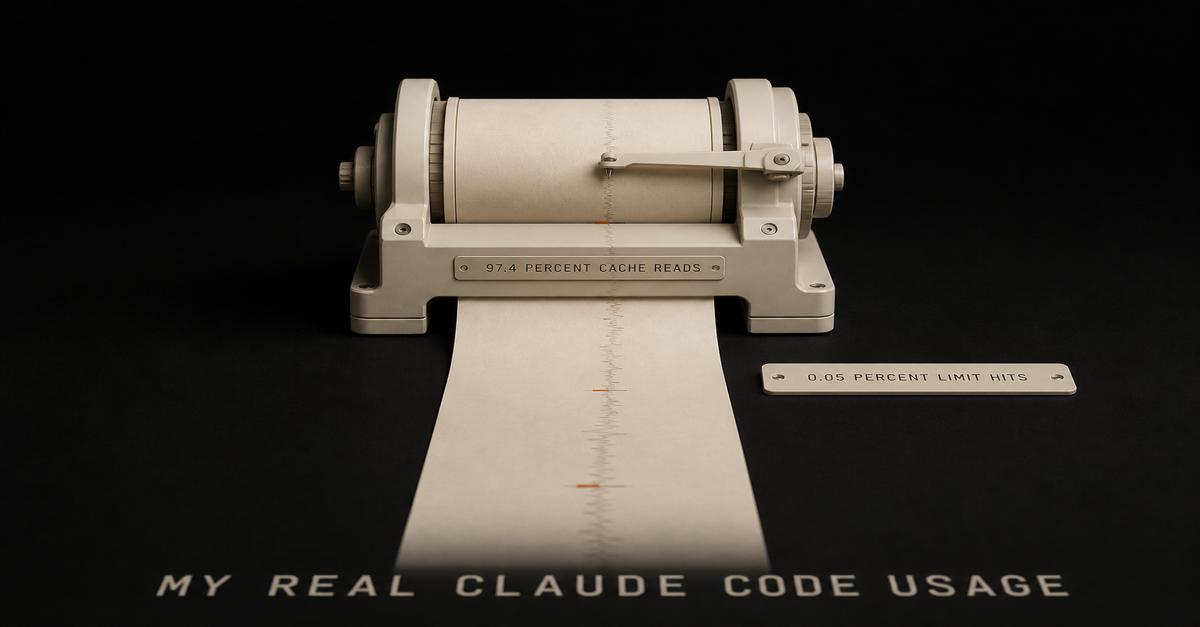
Limit and overload events came to roughly 119 hits across 220,861 log lines. About 0.05%, retries included.
And I am nearly never stopped.
The reason is that 97.4% of my tokens are prompt cache reads, not new work. Agentic work re-reads the same context constantly, and cache reads are far cheaper than fresh input. So heavy usage looks huge, but most of it isn't new work.
So when you read a thread where someone says they blew through a Max allowance, the useful question is not "how many tokens." It is "how much of that was new."
Now the correction I owe you, because my own data could be read as a flex.
I hit the weekly wall during a sloppy stretch in August. On 20x.
That was me spending badly: long sessions riding up toward the maximum context window until they auto-compacted. Terrible habits. If you work that way, you'll hit the wall even at the top step.The 60-second version, from my Shorts: One task ate my whole AI limit, weekly. Here's the fix..Start at 5x unless one of these is true
The default is the lower step. Move up if:You code heavily. Serious apps, games, websites, client work. That burns tokens in a way chat never will.
You are waiting instead of working. Not "I got a warning." Actually stopped, mid-task, on something with a deadline.
You run long agent sessions daily and have already fixed your context habits.And one warning for anyone new to Claude: expect to be inefficient at first. You will burn far more than you need to for a few weeks, and then you'll learn the habits: a decent project instructions file, starting a fresh session around 500k of context, routing routine work to cheaper models.
Don't pay for a bigger tier just to cover those first few weeks of learning.
Why I went to 20x, and whether you should
I started on 5x and I kept running out.
Sometimes I would wait out the five-hour window. And then I got done with it. I'm not waiting; it's unproductive. I just want to edit this video, I just want to build this skill now.
So I upgraded.
Then I did the math on video editing alone. If you hired an editor just to cut your videos, not even adding animation, you're paying more than $200 a month and your turnaround is slower. The arbitrage is there, man, and I'm taking advantage of it.My billing screen: Max 20x at $200 a month, the tier these measurements come from.
But my reason was one expensive job I kept repeating, and I could price it against hiring someone. It wasn't a feeling that the bigger number was safer.
Do not take my word for it. Do not even take your own word for it. Start at the $20 plan and work your way up. That is my rule for this ladder, and it is how I ended up here without regretting a step.
Every one of my upgrades came from hitting a wall.
The two-5x-accounts question, answered honestly
This is the most-discussed idea in this space, and the top-ranked thread on r/ClaudeAI argues two accounts are the better buy for solo builders.
The math that makes it tempting is real: two Max 5x accounts cost $200, and so does one Max 20x.
This is my opinion, not a calculation.
Nobody has settled the account policy question. Community threads flatly contradict each other. On r/ClaudeCode, one top answer warns that accounts get banned for this; another says Anthropic staff have publicly said it is fine.
I could not verify Anthropic's current position, so I am not going to tell you it is safe or unsafe. Read the usage policy yourself before you try it.
Even setting policy aside, I think it is a bad trade. You would be logging out, losing context on in-flight chats, and logging back in throughout the day.
Yes, you can point both at the same repo so nothing is technically lost. But the context switching alone eats whatever allowance you gained. My guess is you come out about even and spend the day managing logins.
And the deal itself favors one account. The multipliers stack on a single subscription. That's my argument for why one 20x beats two 5x at the same price, but it isn't a precise quota comparison. Anthropic doesn't publish the numbers that would let anyone do that math exactly.
If you're really maxed out and this is a real business, running the top model hard on a problem that pays for itself, the aggressive move is a second $200 plan. Not two 5x accounts stitched together to hit the same total.
Two 5x to get the same total? That's asking for inefficiency and honestly asking for trouble.
One billing trap before you switch either way
Users report a real gotcha: downgrading through support rather than in Settings can cost you a legacy price you were grandfathered into.
Change plans in Settings > Billing where you can. Downgrades take effect at the end of your current billing period, and your chats, projects, and files stay with your account either way.
The one thing to measure this week, if you are on 5x
If you are on 5x and trying to decide whether to move up, here's the whole answer, and it's short.
Do not measure anything.
Seriously. You are not going to learn anything useful from a percentage, and staring at a meter is how people talk themselves into $100 a month. The multiplier argument above is interesting, but it shouldn't decide this for you.
So the wall is real even on 20x if your habits are bad. Measure one thing instead: when you run out, can you wait?
Say you are building something simple and you hit the wall. If your reaction is "fine, I have other things to do, I will step away and come back in five hours," then it is not that serious. You have your answer, and it is no.
But if you need it right now, and you can feel that what you just did is the tip of the iceberg and there is a lot more you want to do, you might need to upgrade.
Let the pain tell you. That's the rule, and none of the weekly-limit math above changes it.
If you are still decidingStill on the $20 plan and wondering if it holds? Is Claude Pro enough
Not sure Max is the right family at all? That is Claude Pro vs Claude Max
Not a developer and wondering if any of this applies? Is Claude Max worth it
Want the mechanics of the two meters? Claude usage limits explained
Comparing across vendors at the $100 line? Claude Max vs ChatGPT ProPublished August 14, 2026. Updated September 10, 2026 with the class action, my own meter and a re-captured pricing grid. My 10x to 15x read is an impression, not a measurement.This post is part of Claude Guides, the hub with every plan decision, task comparison, and setup guide for using Claude without code.
Quick answer: I pay $200 a month for Claude Max 20x, I use Claude Code most days, and I almost never hit a usage limit. Across nine weeks of my own logs, limit and overload events account for about 0.05% of 220,861 log lines.
And it's not because I'm careful. 97.4% of my tokens are prompt cache reads, not new work.
Heavy usage looks huge, but most of it is cheap re-reading of the same context. That one fact is missing from every "am I using too much" thread I have read, so I mined my own logs and published the numbers.
One thing up front: these are one person's numbers on the top consumer tier, with specific habits. They are not a benchmark and they are not what your usage will look like.I walk through this on camera in Every Dollar I Spend on AI Automation (Real Numbers) (10 min).How I measured this, and what I cannot prove
The caveats are what make this worth trusting, so they go first, not in a footnote.
Raw verified window: June 11 to August 14, 2026. I streamed all 1,587 session log files and deduped token counts by request ID so retries and repeated writes do not double count.
Lifetime figures: these come from Claude Code's own stats cache covering December 31, 2025 to August 11, 2026. I label them "as reported by the app" everywhere they appear, because the raw logs from before July were rotated out and I cannot independently verify them.
That distinction matters. The headline number people would want me to lead with, 64.4 billion lifetime tokens, is the weakest number I have. The nine-week verified figure is the one I would defend.
One more thing, because it's funny and it says something about log data: my longest recorded "session" runs about nine days. That is not a nine-day session. That is a terminal window I left open.
If a stat below has no caveat attached, it came from the verified window.
The numbers
Verified, nine weeks (June 11 to August 14, 2026):Measure
ValueTotal tokens
11.29BPrompt cache reads
97.4% of tokensGenuinely new output
29.8M tokens (0.26%)Biggest single day
1.29B tokens (August 7, a Friday)Limit / overload events
119 hits across 220,861 log lines (**0.05%**)Median session length
3.2 minutesSessions under 1 minute
~30%90th percentile session
94 minutesMedian messages per session
53As reported by the app (Dec 31, 2025 to Aug 11, 2026): 2,742 sessions across 159 active days, roughly 17 sessions per working day, 64.4B tokens.
Model mix by request, nine weeks:Model
Share of requestsOpus
60%Fable
27.8%Opus 4.8
9.9%Sonnet
2.2%Haiku
0.04%Time of day: activity peaks at 8 AM and again from 3 to 4 PM ET. Dead between 4 and 6 AM.
The 97.4% is the whole story
If you take one thing from this page, take this.
Cache reads are not new work. When an agent works in a repo, it re-reads the same files, the same instructions, and the same conversation over and over. Anthropic caches that, and a cache read costs a fraction of fresh input.
The API price sheet makes the ratio concrete: Opus 5 input runs $5 per million tokens while a cache read runs $0.50. Ten to one.Anthropic's published API rates, captured August 14, 2026. The read row is why 11.29 billion tokens is a much smaller number than it looks.
So "64 billion tokens" is not 64 billion tokens of thinking. It's a little new thinking wrapped in a huge pile of cheap re-reading.
That's why a heavy user like me rarely hits the wall. It is also why the token numbers people post in Reddit threads are almost meaningless without the cache split, and nobody ever posts the cache split.
Median session: 3.2 minutes
The other surprise in my own data was what the sessions looked like.
I expected marathons. I got quick draws.
Half my sessions are under 3.2 minutes and about 30% are under a single minute. The long tail is real, with a 90th percentile of 94 minutes, but the everyday pattern is: open it, ask for the thing, close it.
That's how I actually work. I bring it up because the "power user" picture is usually someone locked in for six hours. Mine looks more like a couple of dozen short visits a day, going by the app-reported session count against active days.
The day the limit taught me routing
This one changed my habits, and it doesn't make me look good.
I was using the top model to QA a skill. Not to build anything. Just to check my work.
I burned more than 20% of my usage in one day. By day two or three I was at roughly 50%. By day four I was at 70 to 80%.
And I started getting stingy. Damn, I thought, I should not be using the top model for that.
The limit never actually blocked me. It taught me routing.
That's what I'd tell anyone panicking about caps: the limit is not a punishment, it is a pricing signal. It tells you when you are spending a top model on a job a cheaper one could do.
My own data could read like bragging, so here's the honest part. I hit the weekly wall this week. On the 20x tier.
That was me riding long sessions up to the maximum context window until they auto-compacted, which is exactly the habit I am about to tell you to fix.
So you can still hit the wall at $200 if your habits slip.
Habit 1: a context meter and a fresh-session handoff
This is the one where most of my spending was hiding.
I run a context meter in my status line. It shows green, yellow, red. Around 500k it gets my attention.
At that point a hook fires and auto-writes a NEXT-STEPS markdown file at the repo root. I close the window, open a fresh session, say "read the next-steps file," and carry on with zero context but the same knowledge.
Two reasons this matters, and the second one surprised me:At 800k context you burn tokens way faster, because every single message re-reads all of it.
Ironically, the quality gets worse. A model buried in 800k of old history is not sharper than one handed a clean brief.Before I built this, I rode sessions until they auto-compacted. That is where the 20%-plus days came from.
Habit 2: subagents, and the payload rule
The main agent stays the brain. Grunt work goes somewhere else.
Research, file sweeps, mechanical checks: I spawn those to subagents. Each one gets its own context window, so five or ten of them can run a large parallel sweep without touching my main session's budget at all.
The catch is real and most people hit it: give them a good payload. Clear instructions and the right tool access up front.
Send a subagent off with a vague one-liner and it will do basic research and hand you garbage back. Running them in parallel costs you nothing, but good results still need a good brief.
Habit 3: model and effort routing
Sonnet 5 is the floor for grunt work. Haiku only for purely mechanical jobs like renaming files.
Opus at medium effort handles routine, deterministic work. A LinkedIn post I build the same way every time does not need more than that.
Opus at high effort is for research and for leveling up skills. Opus hard is amazing, and honestly I underrated it for weeks by leaving it on medium.
The top model comes out only when the problem is really hard.
The part people miss: the effort dial is part of the budget, not just the model name. Moving from medium to high changes both cost and quality, and switching that dial on purpose did more for my output than any model upgrade did.
What a heavy day actually looks like
The biggest day in the verified window was August 7, at 1.29 billion tokens. It was a Friday, and that is not a coincidence.
Friday is content day:Shorts scripts, including scraping competitor comments and X for topics
Blog work driven off Search Console opportunities, both new posts and enriching existing ones
The newsletterThe rest of the week is lighter: analytics reviews asking where we fell short, and tinkering to level up skills.
That tinkering adds up in a way that's easy to miss. My shorts skill started as "generate scripts." Then it found topics. Then it wrote in my voice.
Now it edits the videos. I record 14 shorts in about 45 to 60 minutes, spend roughly 15 minutes editing, and then a polish skill runs for two to three hours autonomously.
Longform editing went from about two hours to 10 or 15 minutes through the same iteration loop. The current hook-animation work I would grade a C, and I expect to get it to an A the same way.
That's what the token count is actually buying. Not chat, but tools that keep getting better.The 60-second version, from my Shorts: My Real Claude Code Agentic OS Runs 6 Weekly Crons.What I would tell you to do with this
Do not use my numbers to justify the $200 plan. Read them the other way. I use it heavily every day on the top tier and I sit at roughly 0.05% limit friction.
That means I have room I am not using, and I still got walled once by bad habits. Habits move this number more than tiers do.
Do not read a big token count as a big workload. Ask for the cache split. Without it the number means nothing.
Fix context before you fix your plan. The fresh-session handoff was worth more to me than a tier upgrade would have been.
If you are choosing between the two Max steps, the measured version of that decision is Claude Max 5x vs 20x. If you are earlier in the ladder, Claude Pro vs Claude Max and Claude usage limits explained cover the mechanics I am measuring against here.
One last thing, and it is the reason I published my own logs instead of another opinion piece.
The only difference between AI slop and us is we actually have our experience. That is my rule, and it is why this page has numbers in it.
Published and last reviewed August 14, 2026. Verified figures come from 1,587 local Claude Code session logs streamed and deduped by request ID over June 11 to August 14, 2026. Lifetime figures are from Claude Code's own stats cache and are labeled as reported by the app throughout. Plan mechanics and API rates checked against claude.com/pricing that day. These are one account's numbers on Max 20x, not a benchmark.This post is part of Claude Guides, the hub with every plan decision, task comparison, and setup guide for using Claude without code.
Quick answer: Claude's free plan is a real $0 Claude: Sonnet 5, web search, memory, files and code, connectors, Skills and up to five Projects. What it does not have is a fixed message count or a published context number. And Anthropic's pricing table lists Claude Docs, Slides and Design, new on September 16, as paid-only.
Those three tools, plus Claude Code and Opus, are what Pro buys now. My rule for when to pay did not change when they launched behind the paywall.
Let the pain talk, man. That's always my rule. If it's painful, pay the 20 bucks, bro.
Anthropic is clear on the message part. Every site printing "30 to 100 messages a day" is guessing, and they are all copying the same guess.
I am on Max at $200 a month, so I am not writing this from the free tier. I am writing it because the free tier is where I started, pasting n8n errors into it until it locked me out, and because the advice around it is mostly invented.
What you actually get for $0
Straight from Claude's pricing page, checked September 25, 2026:Chat on web, iOS, Android, and desktop
Web search, file creation, and code execution
Memory across conversations
Connectors to your apps and tools, plus desktop extensions
Artifacts, Skills, voice mode, and incognito chats
Up to five Projects
Sonnet and Haiku, with Sonnet 5 as the free defaultAnthropic's pricing table, September 25, 2026. Free: no Code, no Design, Slides or Docs, Projects up to five.
That is a much thicker free tier than most articles describe. Memory, file creation, and connectors used to be paid features. They are not anymore.The 60-second version, from my Shorts: Three things people pay a pro for that Claude does free tonight.What should a free user put in those five Projects? My rule there is the same one I use for everything on free. Use the free one, and if you constantly hit free limitations, that's the telltale sign to upgrade. The bigger project knowledge that uses retrieval stays paid, per Anthropic's Projects help page.
What free does not include: Claude Code, Claude Docs, Slides and Design, Claude Science, Research, Claude in Chrome, Claude for Microsoft 365 and Outlook, Opus (Opus 5.5 included), Fable, and more than five Projects. If a tutorial tells you to run Claude Code on free, it is out of date.
September launched Docs, Slides and Design on paid plans only
Three things changed for free users in one week.
On September 16, Anthropic merged Cowork and chat into one Claude. The merge is rolling out on Pro and Max first, and the launch post says "Team and Free plans will follow soon", with no date. The same day, Claude Docs, Claude Slides and Claude Design shipped "in beta on paid plans."
Between September 13 and September 17, the pricing table itself changed. Here are the Free cells, from the archived copies of the page:Free plan row
September 13, 2026
September 17, 2026Projects
No
Up to 5Context window
200k
Up to 1M, varies by modelClaude Design, Slides, Docs
(no row)
No"Extended thinking for complex work" on the Free card
Listed
GoneThen on September 22, Opus 5.5 launched, and the table lists Opus as paid-only. My Opus 5.5 vs Fable page covers which paid plan gets what.
One Anthropic source disagrees. The September 16 release note says "Artifacts, including Claude Design, Claude Slides, and Claude Docs, are available on every plan, including Free." The pricing table, the launch post and both help articles (Claude Docs and Artifacts) say paid. I go with paid until the table changes.
So does a missing tool change my rule? No. If you really need it for slides, then it becomes an obvious question. Maybe you just need it for that month. Then just buy and then quit.
That is the whole move for a one-off deck. Subscribe, make the thing, cancel. If you catch yourself subscribing and cancelling every other month, that is the pain telling you to stay.
The number everyone prints is made up
Here is what ranks for "claude free vs pro" on September 25, 2026. Three pages, one borrowed range, none of it from Anthropic:Source
Claimed free limitAnwesha Roy, gmelius.com (updated July 21, 2026)
"roughly 30–100 messages per day"George Mitchell, aionx.co (updated September 15, 2026)
"30-100 messages per day (varies by demand)" and "Claude Sonnet 4.5 (200K context window)"aitomationacademy.com
"Daily usage 30-100 msgs" and "Context window 200K tokens"Now here is Anthropic, in its own pricing FAQ:"Every plan has usage limits that reset on a rolling five-hour session window, and paid plans add weekly limits on top. Your activity across Claude on web, desktop, mobile, and Claude Code all draws from the same pool. How much you can do depends on the length and complexity of your conversations, the model you choose, and the features you use, so there's no fixed message count. Free covers everyday questions."There it is: "there's no fixed message count."
That one sentence makes most of what ranks for this question wrong. Anthropic does not sell you messages. It sells you a rolling five-hour budget, and how fast you spend it is up to you.
That's my read on Claude free. Once you see it that way, you stop feeling cheated and start knowing what to change.
Anthropic also leaves itself room to change things: "we may limit your usage in other ways, such as weekly and monthly caps or model and feature usage, at our discretion." So even the way it works is not fixed.
You can check where you stand anytime at Settings > Usage.
What actually drains your budget
Four levers, straight from Anthropic's wording, in the order they usually bite:Length of the conversation. Every turn re-reads the whole thread. Message 40 in a long chat costs many times what message 2 cost.
Complexity of the request. A dense document analysis is not the same unit as "what's a good subject line."
The model you use. Heavier models cost more per turn.
The features you use. Web search and file creation add work on top of the reply.That's why the most common complaint on Reddit is really a complaint about long threads.
One user on r/ClaudeAI described it exactly: "i used to never exhaust my tokens, used to take me 1.5-2 hrs of conversation. but now, the tokens get exhausted within a single message???"
Nothing was nerfed. That single message was carrying an hour of history behind it.
Same thing on the paid side. Another r/ClaudeAI user reported: "After my usage limits reset, I sent one prompt. Within 12 minutes, it ate 21% of my 5-hour limit." One prompt ate a fifth of the window.
On the other side, one person actually ran a test on r/ClaudeAI: "I decided to test them limit. I got 100 conversations, each at least 3 messages long yesterday. I didn't get the usage warning."
One hundred conversations, no warning. That is the same free plan other people burn through in an afternoon. The difference is how they use it.
Fix these three habits before you spend $20
This is what I would tell anyone who just got cut off mid-task. Do not open your wallet yet.
Be smart about your context. Do not dump everything into one chat window. Bring one specific use case per conversation. Context is your history of interaction on a topic, and it grows every turn. Ten messages deep, you are re-reading thousands of tokens on every single reply.
Yes, the context window is big. That is exactly why you burn through your usage faster.
Keep chats light. Start a new one when the task changes.
Choose down, not up. My rule wherever I have the choice: you can get away with Haiku for the small mechanical stuff and Sonnet for most real work. Do not reach for Opus on routine tasks. You will burn through your budget fast and often not get a better answer for it.
On free, that choice is already made for you: Sonnet and Haiku only, with Opus and Fable on paid plans. The habit matters the day you start paying, which is when it starts saving you real money.My Max picker, September 22, 2026. Free gets Sonnet and Haiku, not the top two.
Use free Claude for what it is best at. For me that is writing, plus code-related questions. Sign up for both free plans and split the job: Claude for writing, ChatGPT for general everyday research. Two free accounts cost nothing and cover more than one paid account at the same money.
What $20 actually adds
If you work through those habits and still hit walls on work that matters, here is what the money buys, per Anthropic's pricing table on September 25, 2026.Free
Pro ($20/mo, or $17 a month billed annually)Usage
Everyday questions
At least 5x more per 5-hour sessionContext window
No published number (table says "Up to 1M, varies by model")
1M on Opus 5.5, Fable 5.1, Opus 5, Sonnet 5 · 500K on Fable 5, Opus 4.8 to 4.6, Sonnet 4.6 · 200K otherwiseClaude Code
No
YesClaude Docs, Slides, Design
No
Yes (beta)Hand off and schedule tasks
Not yet ("soon")
YesProjects
Up to 5
Yes, plus project RAGResearch
No
YesModels
Sonnet, Haiku
Adds Opus, including Opus 5.5Fable
No
Usage creditsNote the context row, because it has moved twice. For most of 2026 the context window was 200k on Free, Pro, Max 5x and Max 20x alike, and this post said so loudly.
On September 11 I corrected that: Anthropic's context window page gave paid plans bigger windows, and I wrote that free stayed at 200K. Six days later the pricing table stopped printing 200k for any plan. That help page covers paid plans only, so there is no free number to quote.
Honestly, I don't know about the context window. That kind of stuff you can figure out yourself. What changes your day on Pro is more usage, Claude Code, Docs, Slides and Design, and Opus 5.5.
For the full "should I pay" verdict, read Is Claude Pro worth it?
So is free enough for real work? No
I'll be straight with you instead of giving you the comfortable answer.
If you have real workflows, don't depend on the free plan.
For testing, absolutely yes. Test it on writing. A good email rewrite, yes. A few posts here and there, sure. That is a real and useful thing to have for $0, and I would tell anyone to start there.
But something serious? A batch of LinkedIn posts, a full document review, anything with real length? You are probably going to run out mid-task. And running out mid-task is worse than never starting, because now you are waiting on a reset with half a job done.
Here is how it actually went for me. I was on free, and I just found use cases. I would paste my problems in and get away with it for a few tries.
I'd be using n8n workflows and I'd paste errors, and after 20-30 minutes of doing that it'd time me out. Five hours. Sometimes I'd just wait it out.
After a while I got tired of waiting and paid the twenty bucks. I told myself, I just do it for this month, and next thing you know I just kept it for longer than that.
Then Claude Code happened and everything changed. Way more use cases, building skills and agents, and the $20 plan stopped making sense. So I moved to $100. Eventually I hit that ceiling too, and moved to $200.Where that ladder ended for me: Max 20x, on my own account.
Notice the pattern: every upgrade came after the wall, never before it. I never once paid because a comparison table told me to.
Don't upgrade just because you think you need it, especially if you're not sure. So here is how I would split it:If free never stops you, stay free.
If you need a deck or a doc this month, buy the month of Pro and cancel after.
If you hit the five-hour wall every week, stay on Pro. That is the pain talking.Start free. Let the wall tell you when to move.
What to read nextClaude usage limits explained if you want the full mechanics of the two meters
Is Claude Pro worth it? for the honest $20 verdict
Claude Pro vs ChatGPT Plus if you only have one $20 to spend
ChatGPT Free vs Plus for the same question on the ChatGPT side
Claude Pro vs Claude Max if free already stopped being the question
The AI plan tracker for every plan change, datedWhere this comes from
Every plan fact here is from Anthropic's pricing page, help center and announcements, re-read September 25, 2026, plus archived copies of the pricing page from September 13 and 17. The model picker and billing screens are from my own Max 20x account.
I'm not on free today, so I can't show you the inside of it.
Correction logAugust 14, 2026. Published. It said free and paid share one 200k context window.
September 11, 2026. Anthropic documented 1M and 500K windows on paid plans. Retired the parity claim and wrote that free stayed at 200K.
September 25, 2026. Anthropic's table stopped listing 200k for free, so every "free is 200K" line is gone. Added what changed in September: Docs, Slides and Design paid-only, five free Projects, Opus 5.5 paid-only. Rebuilt the free list and the $20 table, replaced the August page-one table and pricing screenshot with today's, added my model picker, my rule for a one-month upgrade, and two FAQs. Changed the SEO title from "Claude Free Plan 2026: What You Get and the Real Limits" and rewrote the description.Published August 14, 2026. Updated September 25, 2026 for the September plan changes, with the dates in the correction log above.This post is part of Claude Guides, the hub with every plan decision, task comparison, and setup guide for using Claude without code.

 Chris Alarcon