In this article
- 1 What you actually get for $0
- 2 September launched Docs, Slides and Design on paid plans only
- 3 The number everyone prints is made up
- 4 What actually drains your budget
- 5 Fix these three habits before you spend $20
- 6 What $20 actually adds
- 7 So is free enough for real work? No
- 8 What to read next
- 9 Where this comes from
- 10 Correction log
Which plan should you buy? Tap 3, get the verdict
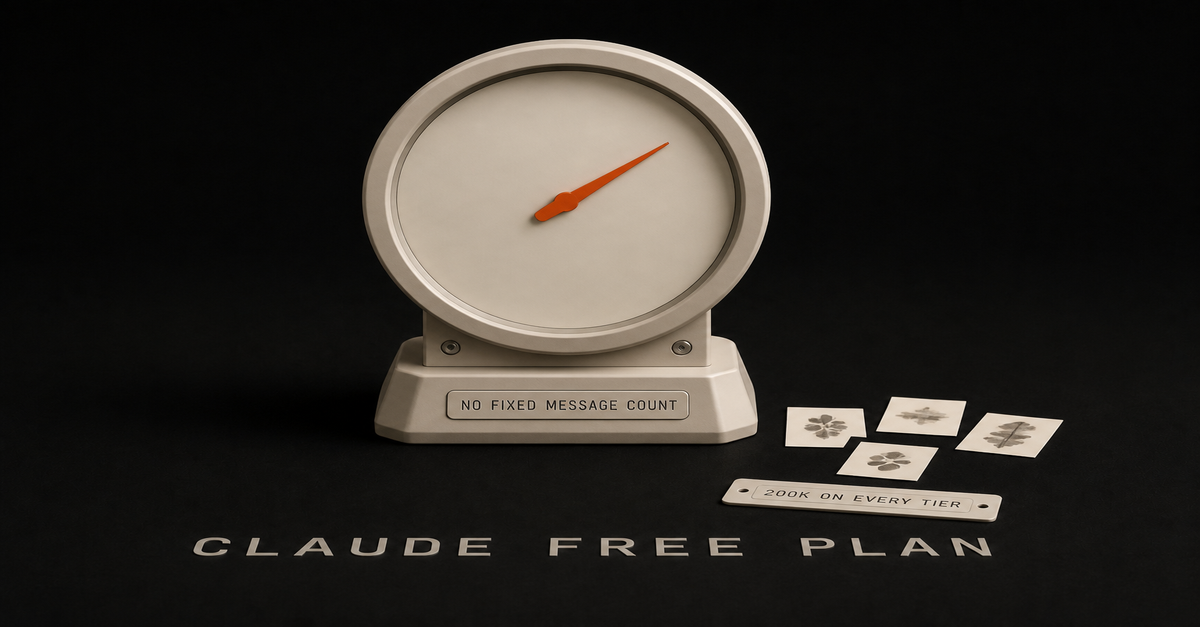
Quick answer: Claude’s free plan is a real $0 Claude: Sonnet 5, web search, memory, files and code, connectors, Skills and up to five Projects. What it does not have is a fixed message count or a published context number. And Anthropic’s pricing table lists Claude Docs, Slides and Design, new on September 16, as paid-only.
Those three tools, plus Claude Code and Opus, are what Pro buys now. My rule for when to pay did not change when they launched behind the paywall.
Let the pain talk, man. That’s always my rule. If it’s painful, pay the 20 bucks, bro.
Anthropic is clear on the message part. Every site printing “30 to 100 messages a day” is guessing, and they are all copying the same guess.
I am on Max at $200 a month, so I am not writing this from the free tier. I am writing it because the free tier is where I started, pasting n8n errors into it until it locked me out, and because the advice around it is mostly invented.
What you actually get for $0
Straight from Claude’s pricing page, checked September 25, 2026:
- Chat on web, iOS, Android, and desktop
- Web search, file creation, and code execution
- Memory across conversations
- Connectors to your apps and tools, plus desktop extensions
- Artifacts, Skills, voice mode, and incognito chats
- Up to five Projects
- Sonnet and Haiku, with Sonnet 5 as the free default
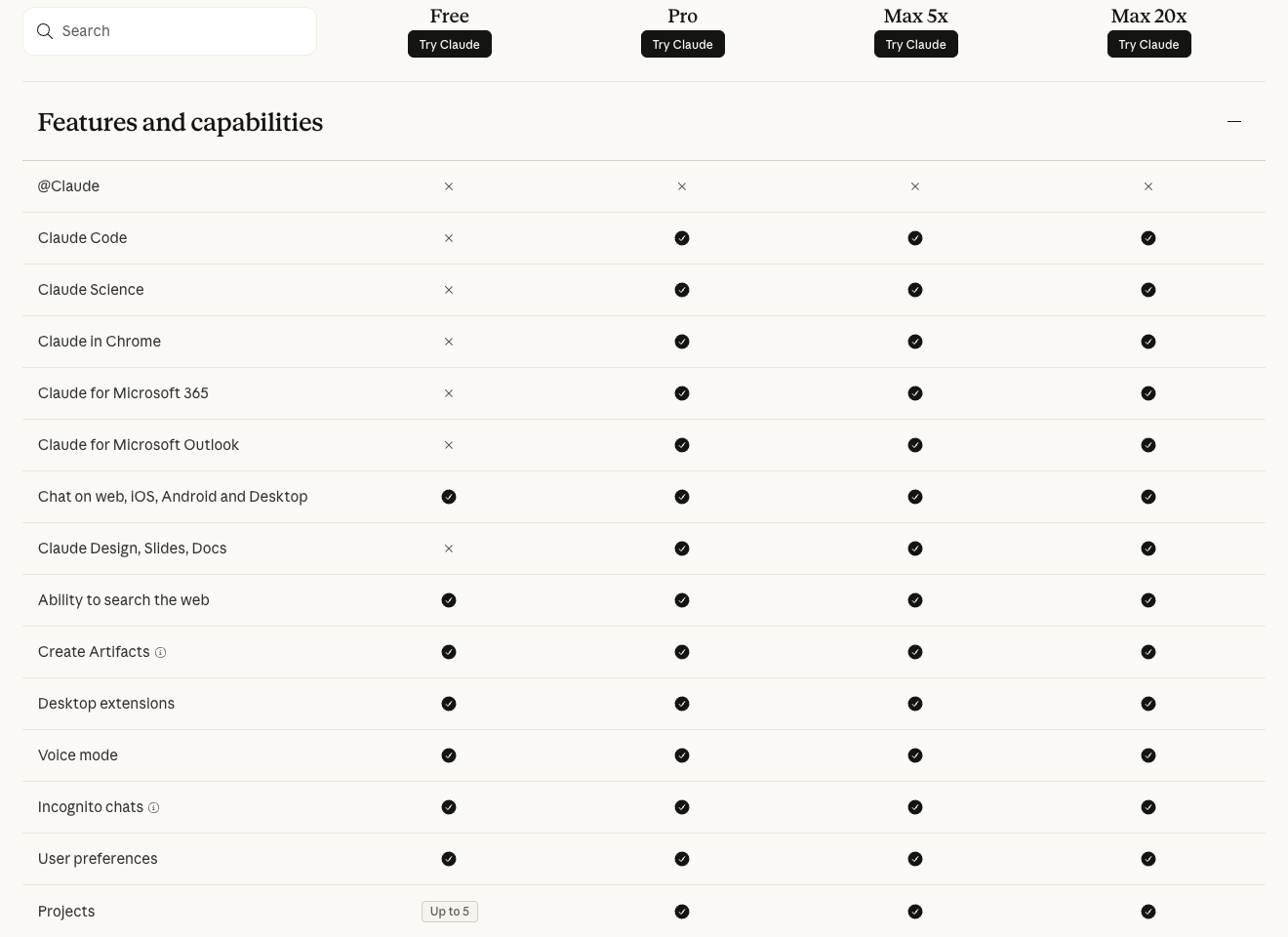 Anthropic’s pricing table, September 25, 2026. Free: no Code, no Design, Slides or Docs, Projects up to five.
That is a much thicker free tier than most articles describe. Memory, file creation, and connectors used to be paid features. They are not anymore.
The 60-second version, from my Shorts: Three things people pay a pro for that Claude does free tonight.
What should a free user put in those five Projects? My rule there is the same one I use for everything on free. Use the free one, and if you constantly hit free limitations, that’s the telltale sign to upgrade. The bigger project knowledge that uses retrieval stays paid, per Anthropic’s Projects help page.
What free does not include: Claude Code, Claude Docs, Slides and Design, Claude Science, Research, Claude in Chrome, Claude for Microsoft 365 and Outlook, Opus (Opus 5.5 included), Fable, and more than five Projects. If a tutorial tells you to run Claude Code on free, it is out of date.
September launched Docs, Slides and Design on paid plans only
Three things changed for free users in one week.
On September 16, Anthropic merged Cowork and chat into one Claude. The merge is rolling out on Pro and Max first, and the launch post says “Team and Free plans will follow soon”, with no date. The same day, Claude Docs, Claude Slides and Claude Design shipped “in beta on paid plans.”
Between September 13 and September 17, the pricing table itself changed. Here are the Free cells, from the archived copies of the page:
| Free plan row | September 13, 2026 | September 17, 2026 |
|---|---|---|
| Projects | No | Up to 5 |
| Context window | 200k | Up to 1M, varies by model |
| Claude Design, Slides, Docs | (no row) | No |
| “Extended thinking for complex work” on the Free card | Listed | Gone |
Then on September 22, Opus 5.5 launched, and the table lists Opus as paid-only. My Opus 5.5 vs Fable page covers which paid plan gets what.
One Anthropic source disagrees. The September 16 release note says “Artifacts, including Claude Design, Claude Slides, and Claude Docs, are available on every plan, including Free.” The pricing table, the launch post and both help articles (Claude Docs and Artifacts) say paid. I go with paid until the table changes.
So does a missing tool change my rule? No. If you really need it for slides, then it becomes an obvious question. Maybe you just need it for that month. Then just buy and then quit.
That is the whole move for a one-off deck. Subscribe, make the thing, cancel. If you catch yourself subscribing and cancelling every other month, that is the pain telling you to stay.
The number everyone prints is made up
Here is what ranks for “claude free vs pro” on September 25, 2026. Three pages, one borrowed range, none of it from Anthropic:
| Source | Claimed free limit |
|---|---|
| Anwesha Roy, gmelius.com (updated July 21, 2026) | “roughly 30–100 messages per day” |
| George Mitchell, aionx.co (updated September 15, 2026) | “30-100 messages per day (varies by demand)” and “Claude Sonnet 4.5 (200K context window)” |
| aitomationacademy.com | “Daily usage 30-100 msgs” and “Context window 200K tokens” |
Now here is Anthropic, in its own pricing FAQ:
“Every plan has usage limits that reset on a rolling five-hour session window, and paid plans add weekly limits on top. Your activity across Claude on web, desktop, mobile, and Claude Code all draws from the same pool. How much you can do depends on the length and complexity of your conversations, the model you choose, and the features you use, so there’s no fixed message count. Free covers everyday questions.”
There it is: “there’s no fixed message count.”
That one sentence makes most of what ranks for this question wrong. Anthropic does not sell you messages. It sells you a rolling five-hour budget, and how fast you spend it is up to you.
That’s my read on Claude free. Once you see it that way, you stop feeling cheated and start knowing what to change.
Anthropic also leaves itself room to change things: “we may limit your usage in other ways, such as weekly and monthly caps or model and feature usage, at our discretion.” So even the way it works is not fixed.
You can check where you stand anytime at Settings > Usage.
What actually drains your budget
Four levers, straight from Anthropic’s wording, in the order they usually bite:
- Length of the conversation. Every turn re-reads the whole thread. Message 40 in a long chat costs many times what message 2 cost.
- Complexity of the request. A dense document analysis is not the same unit as “what’s a good subject line.”
- The model you use. Heavier models cost more per turn.
- The features you use. Web search and file creation add work on top of the reply.
That’s why the most common complaint on Reddit is really a complaint about long threads.
One user on r/ClaudeAI described it exactly: “i used to never exhaust my tokens, used to take me 1.5-2 hrs of conversation. but now, the tokens get exhausted within a single message???”
Nothing was nerfed. That single message was carrying an hour of history behind it.
Same thing on the paid side. Another r/ClaudeAI user reported: “After my usage limits reset, I sent one prompt. Within 12 minutes, it ate 21% of my 5-hour limit.” One prompt ate a fifth of the window.
On the other side, one person actually ran a test on r/ClaudeAI: “I decided to test them limit. I got 100 conversations, each at least 3 messages long yesterday. I didn’t get the usage warning.”
One hundred conversations, no warning. That is the same free plan other people burn through in an afternoon. The difference is how they use it.
Fix these three habits before you spend $20
This is what I would tell anyone who just got cut off mid-task. Do not open your wallet yet.
Be smart about your context. Do not dump everything into one chat window. Bring one specific use case per conversation. Context is your history of interaction on a topic, and it grows every turn. Ten messages deep, you are re-reading thousands of tokens on every single reply.
Yes, the context window is big. That is exactly why you burn through your usage faster.
Keep chats light. Start a new one when the task changes.
Choose down, not up. My rule wherever I have the choice: you can get away with Haiku for the small mechanical stuff and Sonnet for most real work. Do not reach for Opus on routine tasks. You will burn through your budget fast and often not get a better answer for it.
On free, that choice is already made for you: Sonnet and Haiku only, with Opus and Fable on paid plans. The habit matters the day you start paying, which is when it starts saving you real money.
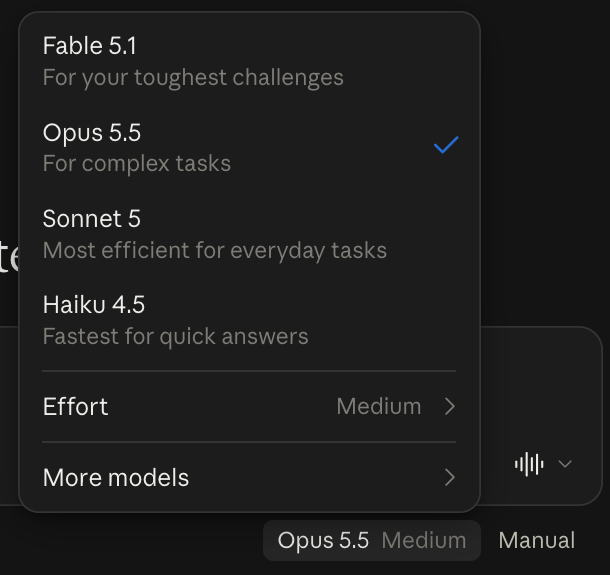 My Max picker, September 22, 2026. Free gets Sonnet and Haiku, not the top two.
Use free Claude for what it is best at. For me that is writing, plus code-related questions. Sign up for both free plans and split the job: Claude for writing, ChatGPT for general everyday research. Two free accounts cost nothing and cover more than one paid account at the same money.
What $20 actually adds
If you work through those habits and still hit walls on work that matters, here is what the money buys, per Anthropic’s pricing table on September 25, 2026.
| Free | Pro ($20/mo, or $17 a month billed annually) | |
|---|---|---|
| Usage | Everyday questions | At least 5x more per 5-hour session |
| Context window | No published number (table says “Up to 1M, varies by model”) | 1M on Opus 5.5, Fable 5.1, Opus 5, Sonnet 5 · 500K on Fable 5, Opus 4.8 to 4.6, Sonnet 4.6 · 200K otherwise |
| Claude Code | No | Yes |
| Claude Docs, Slides, Design | No | Yes (beta) |
| Hand off and schedule tasks | Not yet (“soon”) | Yes |
| Projects | Up to 5 | Yes, plus project RAG |
| Research | No | Yes |
| Models | Sonnet, Haiku | Adds Opus, including Opus 5.5 |
| Fable | No | Usage credits |
Note the context row, because it has moved twice. For most of 2026 the context window was 200k on Free, Pro, Max 5x and Max 20x alike, and this post said so loudly.
On September 11 I corrected that: Anthropic’s context window page gave paid plans bigger windows, and I wrote that free stayed at 200K. Six days later the pricing table stopped printing 200k for any plan. That help page covers paid plans only, so there is no free number to quote.
Honestly, I don’t know about the context window. That kind of stuff you can figure out yourself. What changes your day on Pro is more usage, Claude Code, Docs, Slides and Design, and Opus 5.5.
For the full “should I pay” verdict, read Is Claude Pro worth it?
So is free enough for real work? No
I’ll be straight with you instead of giving you the comfortable answer.
If you have real workflows, don’t depend on the free plan.
For testing, absolutely yes. Test it on writing. A good email rewrite, yes. A few posts here and there, sure. That is a real and useful thing to have for $0, and I would tell anyone to start there.
But something serious? A batch of LinkedIn posts, a full document review, anything with real length? You are probably going to run out mid-task. And running out mid-task is worse than never starting, because now you are waiting on a reset with half a job done.
Here is how it actually went for me. I was on free, and I just found use cases. I would paste my problems in and get away with it for a few tries.
I’d be using n8n workflows and I’d paste errors, and after 20-30 minutes of doing that it’d time me out. Five hours. Sometimes I’d just wait it out.
After a while I got tired of waiting and paid the twenty bucks. I told myself, I just do it for this month, and next thing you know I just kept it for longer than that.
Then Claude Code happened and everything changed. Way more use cases, building skills and agents, and the $20 plan stopped making sense. So I moved to $100. Eventually I hit that ceiling too, and moved to $200.
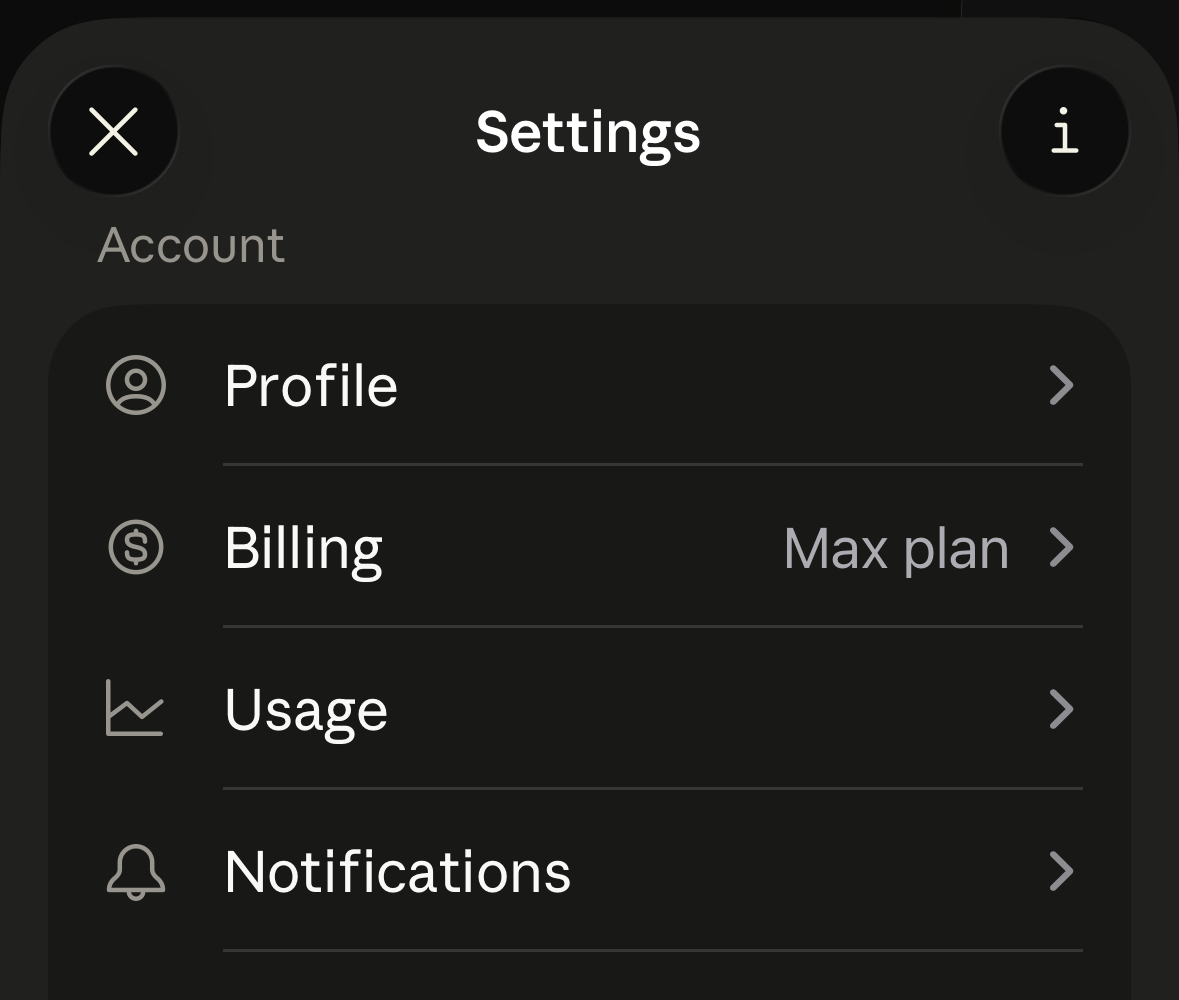 Where that ladder ended for me: Max 20x, on my own account.
Notice the pattern: every upgrade came after the wall, never before it. I never once paid because a comparison table told me to.
Don’t upgrade just because you think you need it, especially if you’re not sure. So here is how I would split it:
- If free never stops you, stay free.
- If you need a deck or a doc this month, buy the month of Pro and cancel after.
- If you hit the five-hour wall every week, stay on Pro. That is the pain talking.
Start free. Let the wall tell you when to move.
What to read next
- Claude usage limits explained if you want the full mechanics of the two meters
- Is Claude Pro worth it? for the honest $20 verdict
- Claude Pro vs ChatGPT Plus if you only have one $20 to spend
- ChatGPT Free vs Plus for the same question on the ChatGPT side
- Claude Pro vs Claude Max if free already stopped being the question
- The AI plan tracker for every plan change, dated
Where this comes from
Every plan fact here is from Anthropic’s pricing page, help center and announcements, re-read September 25, 2026, plus archived copies of the pricing page from September 13 and 17. The model picker and billing screens are from my own Max 20x account.
I’m not on free today, so I can’t show you the inside of it.
Correction log
- August 14, 2026. Published. It said free and paid share one 200k context window.
- September 11, 2026. Anthropic documented 1M and 500K windows on paid plans. Retired the parity claim and wrote that free stayed at 200K.
- September 25, 2026. Anthropic’s table stopped listing 200k for free, so every “free is 200K” line is gone. Added what changed in September: Docs, Slides and Design paid-only, five free Projects, Opus 5.5 paid-only. Rebuilt the free list and the $20 table, replaced the August page-one table and pricing screenshot with today’s, added my model picker, my rule for a one-month upgrade, and two FAQs. Changed the SEO title from “Claude Free Plan 2026: What You Get and the Real Limits” and rewrote the description.
Published August 14, 2026. Updated September 25, 2026 for the September plan changes, with the dates in the correction log above.
This post is part of Claude Guides, the hub with every plan decision, task comparison, and setup guide for using Claude without code.
Plan-change alerts
Your plan is gonna change. Nobody emails you when it does.
I pay for Claude, ChatGPT and Grok, so I check the pricing pages every week anyway. When one moves a price or a limit, you get one email that day. No newsletter, no schedule. Last one I caught: Fable 5 quietly dropped out of Claude Pro.

Written by
Chris AlarconChris Alarcon shows people who don’t code the boring Claude setup that actually works. He runs his one-person operation on these systems and shares every workflow, prompt, and tool combo in public. Start with the 15 prompts he uses every day.
Picked a plan? Now set it up
Whichever plan you buy, it still won't know you tomorrow.
The Setup is one folder. Drop it into a Project, answer three questions, and Claude or ChatGPT stops forgetting you, stops sounding like AI, and runs three real jobs by name. Twenty minutes tonight. No code. $39, 30-day refund.
See The Setup →