In this article
- 1 Both Tools Generate Editable .pptx Files as of July 2026
- 2 There Are Four Mechanisms Here, Not Two Tools
- 3 The Tier Gates Invert, and That Is the Actual Decision
- 4 Only the Add-Ins Have a Verified Claim to Edit an Existing Deck
- 5 Every Vendor Says the Same Thing About Company Templates: Start From the File
- 6 Claude Makes the Confident Template Claim, ChatGPT Makes the Honest One
- 7 What Neither One Knows Is What Your Audience Needs to Believe
- 8 Deck Due Tomorrow, You Pay for Both? Research in ChatGPT, Design in Claude
- 9 How to Actually Build the Thursday Deck
- 10 Frequently Asked Questions
- 11 Where this comes from
- 12 Pick By Which Mechanism You Need
- 13 Correction Log
Both make real, editable .pptx files. The first page of Google gets that wrong.
Several of the slide-tool vendor pages ranking for this query still say the chatbots do not produce slides at all. A MindStudio page dated May 4, 2026 puts it plainly: Claude “is in the same boat as ChatGPT for visual design. It doesn’t produce slides.”
That was roughly true when it was written. It is not true now, and Anthropic’s and OpenAI’s own documentation is where you can check.
This happens a lot. The products change fast and the comparison pages don’t. MindStudio itself published a newer piece on June 3, 2026 comparing ChatGPT PowerPoint, Claude, and Gamma that references the PowerPoint add-in and editable decks. The claim got updated. The older page is the one still ranking.
So before you trust any AI comparison, including this one, check the date on it.
Once you know both make files, the real decision is the tier gates, and they flip.
So here’s my split for slides: the tool makes the file, you make the argument.
The premise of the question is out of date. My take: don’t use PowerPoint. It’s silly. It’s like you have an assistant who does it better than you and faster.
Below is what each one actually makes, which plan gets you which one, and what to do when you have a deck due Thursday and a company template you have to match.
Both Tools Generate Editable .pptx Files as of July 2026
This changes the whole comparison, so here are the vendors’ own pages.
Anthropic’s file-creation doc: “Claude can create Excel spreadsheets (.xlsx), PowerPoint presentations (.pptx), Word documents (.docx), and PDF files.” It does this by executing code to create files directly in your conversations, inside an isolated, sandboxed container.
OpenAI describes ChatGPT for PowerPoint as “a PowerPoint-native AI experience that lives in a sidebar inside Microsoft PowerPoint. It can help you create, edit, understand, and polish presentations directly, while preserving editable slide structure.”
Editable slide structure. Not an image of a slide, not a wall of HTML. A file you open, click into, and fix.
Both of those pages are dated. Hold this one to the same standard.
There Are Four Mechanisms Here, Not Two Tools
The mistake is comparing “Claude” to “ChatGPT” as if each has one slide feature. Claude now has three separate ones with different plan requirements, and that third one is two days old.
Claude Slides, new on September 16, 2026. Anthropic launched it alongside the Cowork merge.
It drafts a presentation inside a normal conversation, you edit the slides directly, and you present from Claude or download PowerPoint or PDF. It is in beta, and per Claude’s pricing page it is available on Pro and Max and not on Free.
This is the one that breaks every other comparison on this search, including the last version of this page. Keep reading for the corrected gate table.
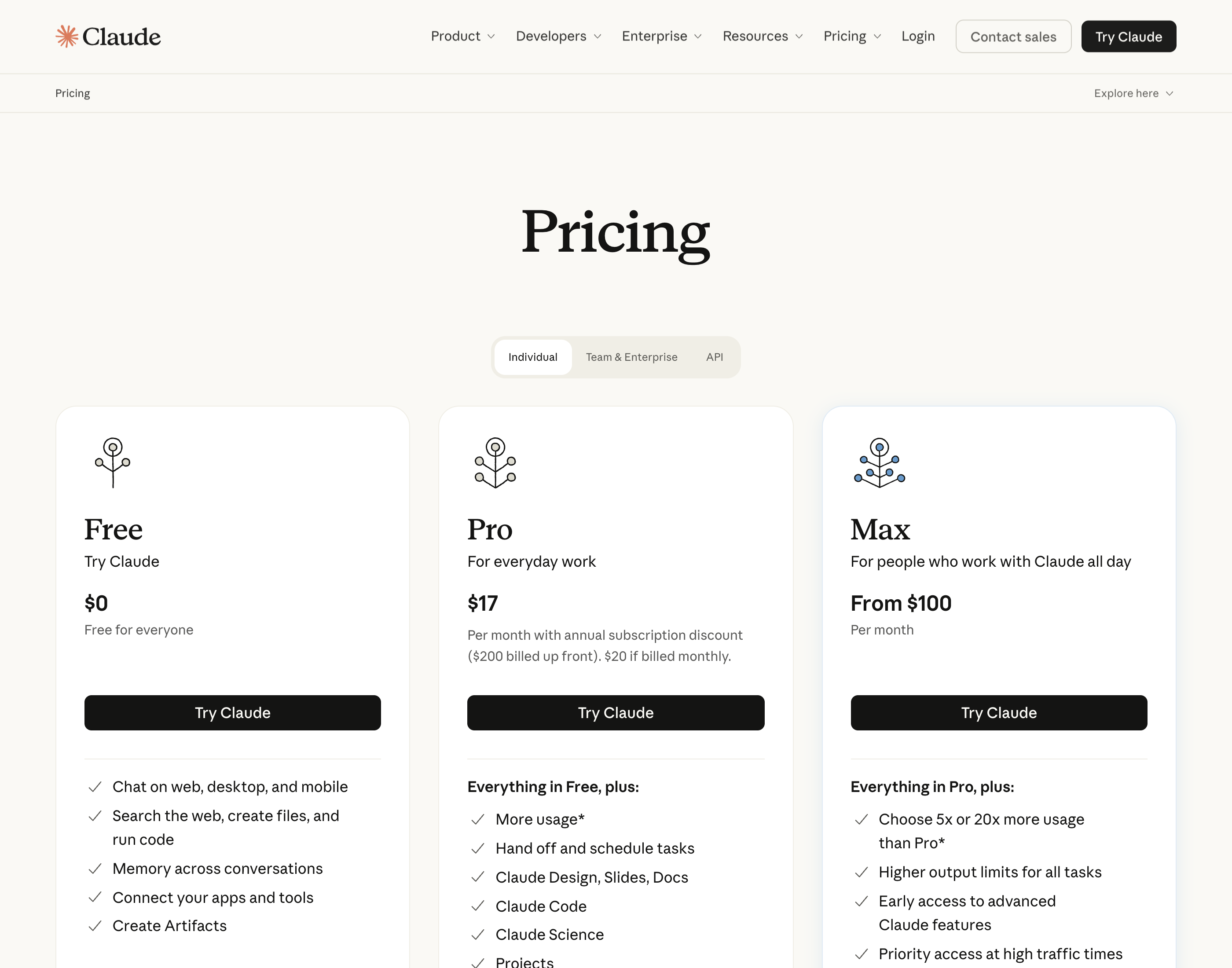 Anthropic’s pricing page, September 18, 2026: Slides sits in the Pro column. Max adds usage, not Slides.
Claude, in-chat file creation. Claude writes code in a sandbox and hands you a .pptx. Anthropic states that “code execution and file creation is available to all Claude users (Free, Pro, Max, Team, and Enterprise)” on web, desktop, and mobile. Files can save to Google Drive. The cap is 30MB per file.
Claude for PowerPoint, the add-in. An add-in that integrates Claude into your PowerPoint workflow, running in PowerPoint on web, Windows, and Mac. Anthropic states it “is available to Pro, Max, Team, and Enterprise plans.” Free is excluded.
ChatGPT for PowerPoint, the add-in. The sidebar described above. OpenAI states it “is available globally to Free, Go, Plus, Pro, Business, Enterprise, ChatGPT Edu, and K-12 users. Free and Go include limited usage access.”
Put those four tier lists side by side and you can see them flip.
The Tier Gates Invert, and That Is the Actual Decision
A free Claude user can get a .pptx file but cannot get the sidebar. A free ChatGPT user can get the sidebar but is metered.
| Claude, in chat | Claude Slides | Claude for PowerPoint | ChatGPT for PowerPoint | |
|---|---|---|---|---|
| Free plan included | Yes, all users | No. Pro and up | No. Pro, Max, Team, Enterprise | Yes, limited usage |
| Where it runs | Web, desktop, mobile chat | Inside a Claude conversation | PowerPoint on web, Windows, Mac | Sidebar inside PowerPoint |
| Output | A .pptx file you download | Editable slides, export .pptx or PDF | Slides in your open deck | Slides in your open deck |
| Edits an existing deck | Not documented | Not documented | Yes, pinpoint slide edits | Yes, add or revise slides |
| Reads your slide master | Not documented | Not documented | Yes, stated explicitly | Hedged, “may not always match” |
| Metered by credits | No | No, but spends normal usage | No | Yes, roughly 20 to 110 per task |
| Status | Stable | Beta | Stable | Stable |
| Other file types | .xlsx, .docx, .pdf too | Slides only | Slides only | Slides only |
One caution on that credit row. OpenAI conditions its credit figures on flexible pricing being effective, which makes it rollout-dependent. Check the current help page before you plan a week of deck work around a number from a blog post, including this one.
Only the Add-Ins Have a Verified Claim to Edit an Existing Deck
If your Thursday deck already exists and needs revisions, this is the row that decides it.
Claude for PowerPoint is documented to “make pinpoint edits to specific slides without regenerating entire decks.” You select a slide and tell Claude what to change. ChatGPT for PowerPoint is documented to “add or revise slides in an existing deck.”
Claude’s in-chat file creation is documented for creating files. There is no equivalent published claim that it will take your uploaded .pptx and edit it in place.
That matters more than it sounds. Making a fresh deck and fixing slide 7 of an approved deck are different jobs. Only one of them is what most people are actually doing at 4pm on a Wednesday.
If you need the second one, you need an add-in, which means a paid Claude plan or a metered ChatGPT session.
Every Vendor Says the Same Thing About Company Templates: Start From the File
Anthropic, OpenAI, and Microsoft all agree on this one. It’s also the move that actually works.
Microsoft’s Copilot documentation is the bluntest: “Start with your organization’s template. If your organization uses a standard presentation template, start with this file before creating a presentation with Copilot. Starting with a template will let Copilot know that you’d like to retain the presentation’s theme and design.”
OpenAI’s Work documentation says to ask ChatGPT to match an existing file, master deck, or reusable template, and draws a useful line: a reference file applies to one request, a template can be used again.
One catch, though: OpenAI’s Work documents article says PowerPoint is not included in that Work desktop flow at launch.
So whichever tool you pay for, do this:
- Open the approved company template file first. Do not start from a blank prompt and hope.
- Work inside that file with the add-in, so the tool can see the master, layouts, and theme colors already in it.
- Give it the argument, not the design. It has the design.
- Check the first two generated slides against a known-good deck before you let it produce twenty.
Nobody is going to praise your gradient. They will notice immediately if the logo is in the wrong corner.
Claude Makes the Confident Template Claim, ChatGPT Makes the Honest One
Each tool wins something different here.
Anthropic’s is the strongest sentence either company publishes on this topic, from the add-in doc: “Claude reads the slide master, layouts, fonts, and color scheme in your deck and uses them when generating or editing slides.” That’s a clear, specific claim about the exact stuff a company template is made of.
One more nice detail: skills you have enabled in your Claude settings are available inside the PowerPoint add-in too, so any house style rules you have already written travel with you.
OpenAI hedges, in writing, on the same question: “Template adherence: The product is designed to work within existing presentation templates where possible, but generated or edited slides may not always match a preferred style perfectly.”
It goes further and flags that “some advanced PowerPoint editing, chart, shape, formatting, and slide-management capabilities may be limited or still in development.”
That hedge actually helps you.
A vendor telling you up front that formatting might drift beats a confident claim that turns out to be loose at 11pm. Plan a formatting check either way. ChatGPT just told you to.
ChatGPT’s real win is reach. It is in the sidebar on Free, in a product your employer already licenses, on a plan you may already have. Claude’s sidebar requires Pro or above.
What Neither One Knows Is What Your Audience Needs to Believe
This decides whether the deck lands, and no docs page covers it.
In Claude vs ChatGPT for Excel, my argument is that being technical stopped mattering. Nice-looking output and reading the data are cheap now. What matters is taste, plus the way you already know things should be done.
Slides are the clearest case of that. Both tools will produce a clean, on-brand, well-spaced deck. Neither knows that your VP kills any recommendation that appears before the cost slide, or that the number on slide 4 is the one the whole room came to argue about.
I handle this the same way on the content side. In my write-up of Claude Cowork scheduled tasks, I describe trying to fully automate long-form content and watching it fail: you sound robotic reading it, you lose track of what you’re talking about.
What works instead is that the system generates the outline and I supply the substance.
Same shape for a deck.
Let the tool build the structure and the file. You own the argument, the order, and the cut. It fails the same way in both cases. You get something that reads smooth but says nothing you would defend in a room.
One more rule worth stealing from that Excel piece: one job per session. Do not dump twenty files on twenty topics and ask ten questions at once. One deck, one audience, one decision you want made.
If you are still deciding how much of your work belongs in these tools at all, the Claude Guides pillar lays out the lanes.
Deck Due Tomorrow, You Pay for Both? Research in ChatGPT, Design in Claude
If you pay for both and you have a deck due, do not agonize. Here’s the split I would run. It’s two steps.
Step one: ChatGPT, for the thinking. Get the raw ideas, the text, and the research hashed out first. ChatGPT is phenomenal at this part.
Use Astra if your plan has it, or a mid reasoning level on the $20 tier if that is still what you are offered, which is plenty for this. One warning: Astra burns your usage fast, so do the research pass and get out. Come away with an outline and the actual words.
Step two: Claude, for the deck. Then open Claude and tell it you are designing a presentation. Give it three things first:
- Your audience. Who is in the room and what they need to believe.
- Your colors. Say them explicitly.
- A reference deck you like, and ask it to reverse engineer why it works. The composition, the font choices, the psychology of how the thing is laid out. Most people can’t explain why a deck looks good. This step lets you borrow that judgment instead of guessing.
Then let it come back with topics, colors, and layout options.
For PowerPoint, I say open Claude. That’s it. ChatGPT thinks, Claude builds the slides. That’s my split on this one.
The 60-second version, from my Shorts: Claude or ChatGPT? Wrong question. Here's when to use each..
And do not use PowerPoint by itself. I know that sounds a little much, but I mean it. You have an assistant that does this faster and better than you will by hand. Using the bare app is picking the slow path on purpose.
In my opinion, the bolted-on Copilot experience is a downgrade from just going to Claude or ChatGPT directly and bringing the file back.
Is the beta label on Claude Slides a reason to wait?
Beta doesn’t mean anything, bro. Use the feature and just try it out. It might be buggy, but it is not useless. Anthropic shipped it because it is usable. Try it, find out where it breaks on your work, and keep the old route in your pocket for the deck that actually matters.
How to Actually Build the Thursday Deck
No feature list here, just the order to do it in.
- Write the argument first, in plain text. Five to eight bullets, in the order you want the room to accept them. You can’t hand this part off.
- Open the approved template file. Not a blank deck, not a theme you picked. The file your company sends around.
- Open the add-in you have access to. Claude for PowerPoint if you are on Pro or above, ChatGPT for PowerPoint otherwise.
- Ask for structure from your bullets, one section at a time, not the whole deck in one shot.
- Check slides one and two against a known-good deck before generating the rest. Fonts, logo placement, color, title case.
- Revise slide by slide. Both add-ins support targeted edits. Use them instead of regenerating.
- Read it out loud as an argument. If you cannot say why each slide exists, cut it.
Step 1 is the one people skip, and it is the one the tools cannot do.
If you want the free-tier path instead: ask Claude in chat for a .pptx built from your bullets, download it, then paste your content into the company template manually. Slower, but it costs nothing and you keep the template intact.
Frequently Asked Questions
Can Claude make PowerPoint presentations?
Yes. Anthropic’s documentation states Claude can create PowerPoint presentations (.pptx), along with Excel, Word, and PDF files, by executing code in a sandboxed container inside the conversation. This file creation is available to all Claude users including Free, on web, desktop, and mobile, with a 30MB per-file limit.
Does ChatGPT work inside PowerPoint?
Yes. ChatGPT for PowerPoint is a sidebar that lives inside Microsoft PowerPoint and can create, edit, understand, and polish presentations while preserving editable slide structure. It is available globally to Free, Go, Plus, Pro, Business, Enterprise, Edu, and K-12 users, with Free and Go getting limited usage access.
Which one matches my company template better?
Claude makes the stronger documented claim. Anthropic says Claude for PowerPoint reads the slide master, layouts, fonts, and color scheme in your deck and uses them when generating or editing slides.
OpenAI hedges, stating that generated or edited slides may not always match a preferred style perfectly. Either way, start from the template file rather than a blank prompt.
Can AI edit an existing PowerPoint deck?
Yes, through the in-PowerPoint add-ins. Claude for PowerPoint can make pinpoint edits to specific slides without regenerating entire decks. ChatGPT for PowerPoint can add or revise slides in an existing deck. Claude’s in-chat file creation is documented for creating files, not for editing an uploaded .pptx, so use the add-in when you need to edit.
Do I need a paid plan for AI slides?
It depends which mechanism you want, and the gates invert. Claude’s in-chat .pptx creation includes Free users, but Claude for PowerPoint requires Pro, Max, Team, or Enterprise. ChatGPT for PowerPoint includes Free and Go with limited usage, but it is credit-metered, with a typical task consuming roughly 20 to 110 credits.
Where this comes from
I do not make decks, and nothing on this page pretends I do. Every capability claim links to Anthropic, OpenAI or Microsoft’s own pages, checked July 18 and again September 18.
The MindStudio quote is word for word from a page dated May 4, 2026. I didn’t run a head-to-head test. Prices and credit numbers move, so the linked pages win over this one.
Pick By Which Mechanism You Need
There’s no one winner here. It depends on your plan and your deck.
- You are on a free plan and just need a deck to exist: Claude, in chat. It is the only free path to an actual .pptx file, and it also does .xlsx, .docx, and .pdf.
- You are on a free plan and need to work inside PowerPoint: ChatGPT for PowerPoint. It is the only sidebar that includes Free, though usage is limited and metered.
- You already pay for Claude Pro or above: Claude for PowerPoint. The slide master claim is the most specific one either vendor publishes, and your enabled skills come with you.
- You must match a strict corporate template: open the template file first, then use an add-in inside it. That advice comes from Anthropic, OpenAI, and Microsoft alike.
- You need to revise an existing approved deck: an add-in, not in-chat generation. Only the add-ins have a documented edit-existing-deck capability.
- You want the new Claude Slides specifically: it needs Pro or above, it is in beta, and I wrote up what it is and what it cannot do at Claude Slides.
- You are deciding which subscription to hold for work generally: read Claude vs ChatGPT for writing and Claude vs ChatGPT for Excel before you pick, because slides are rarely the only thing on the list.
Making the file is the easy part now. The argument is still your job.
Correction Log
This page’s whole point is “check the date on it,” so here are this page’s own dates.
- July 18, 2026. Published with two Claude mechanisms and one ChatGPT mechanism, and the tier-inversion argument.
- September 4, 2026. Reviewed, no mechanism changes.
- September 18, 2026. Wrong, in the same way I accused everyone else of being wrong. Claude Slides launched on September 16 and the previous version of this page did not know it existed. Added it as a third Claude mechanism, rebuilt the gate table around it, added the beta row, and added the two-step workflow. The tier-inversion thesis survives: Free still gets in-chat .pptx from Claude and still cannot get Claude Slides.
This stuff just moves that fast.
Published July 18, 2026. Updated September 18, 2026 for Claude Slides. The correction log above has the dates.

Written by
Chris AlarconChris Alarcon shows people who don’t code the boring Claude setup that actually works. He runs his one-person operation on these systems and shares every workflow, prompt, and tool combo in public. Start with the 15 prompts he uses every day.
The boring setup
It still won't know you tomorrow.
The Setup is one folder. Drop it into a Project, answer three questions, and Claude or ChatGPT writes your memory file and your voice file itself. It stops forgetting you, stops sounding like AI, and runs three real jobs by name. Twenty minutes tonight. No code. $39, 30-day refund.
See The Setup →The 15 AI prompts I actually use every day
I tested hundreds and kept the 15 that survived. You get them right away, then one short email from me every Tuesday.