In this article
- 1 The money answer: Codex is free tonight, Claude Code starts at $20
- 2 Both of these were built for engineers, so here is the honest test of whether you are one
- 3 Where Codex genuinely wins
- 4 Where Claude Code genuinely wins
- 5 Why I still need to see the folders
- 6 You do not have to pick one
- 7 If neither of these is your tool, the answer is the chat window
- 8 So which one should you open
- 9 Common questions
Quick answer: open Codex first, because it costs nothing to find out. Codex is included on every ChatGPT plan including Free, per OpenAI’s Codex help article. Claude Code is not on Claude’s free plan at all and starts at $20 a month, per Anthropic’s pricing page. The comparisons ranking for this question lead with benchmarks and tend to say both tools cost $20. Neither of those framings helps you, and the second one is wrong.
This page answers it in both directions, so whether you searched Codex vs Claude Code or Claude Code vs Codex, the decision below is the same one.
The Ship Lean rule on coding agents: Codex decides your first night, your folders decide your second week.
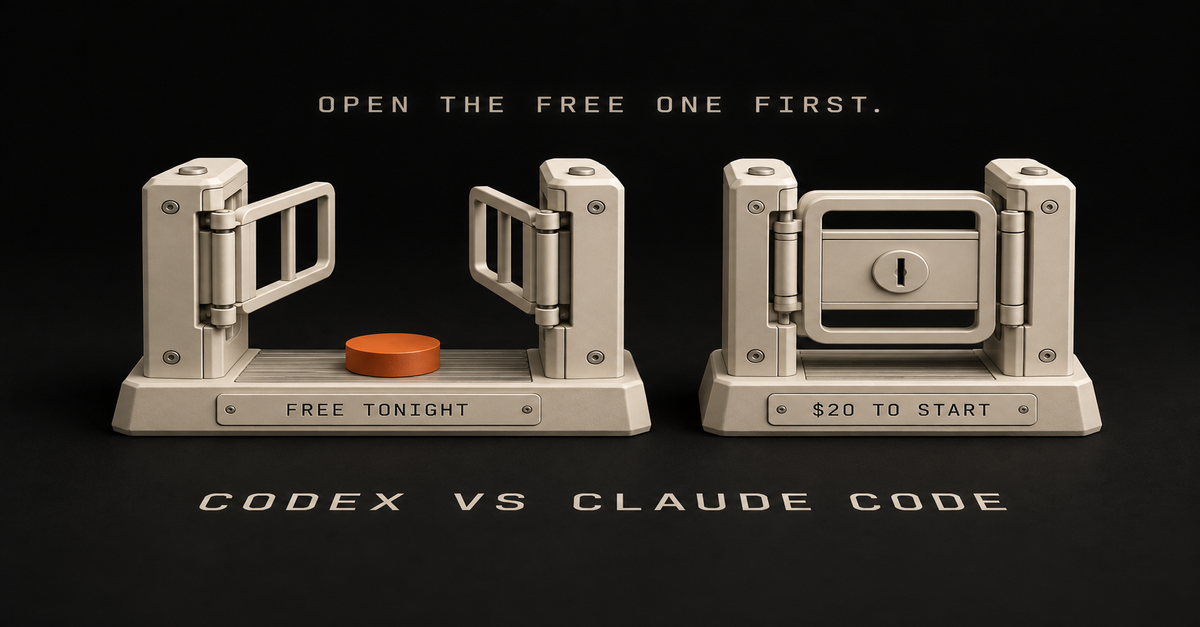
The money answer: Codex is free tonight, Claude Code starts at $20
This is the decision most people actually need, and it is the one page one skips.
| Codex | Claude Code | |
|---|---|---|
| Free plan | Included | Not included |
| Entry price | $0 on a ChatGPT Free account | $20/mo (Pro), or $17/mo billed annually |
| What the price buys | More usage, not access | Access itself |
| Also on | Go $8, Plus $20, Pro from $100, Business, Enterprise | Max from $100 |
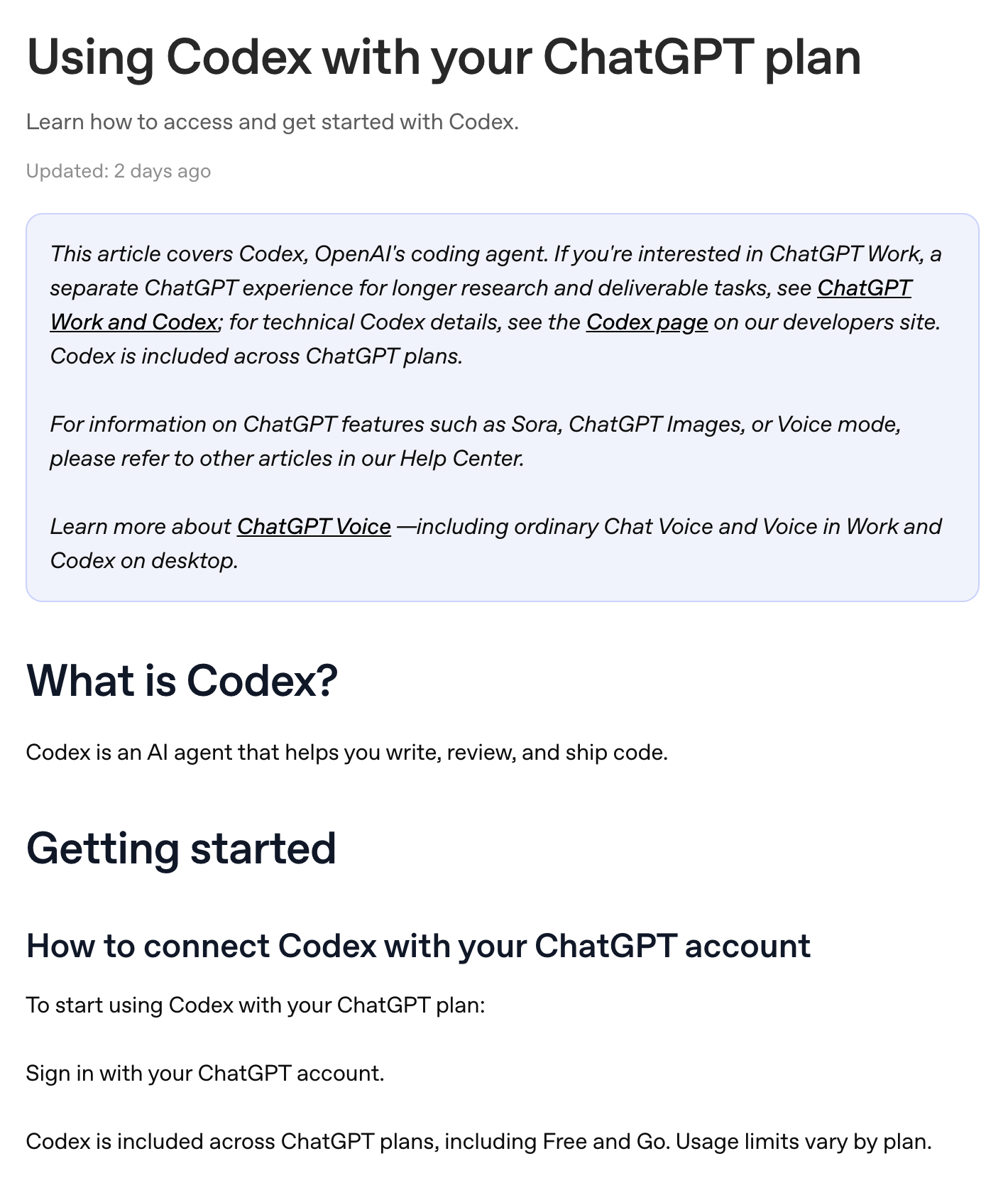
OpenAI’s Codex help article, updated in September 2026, puts it in one sentence: “Codex is included across ChatGPT plans, including Free and Go. Usage limits vary by plan.”
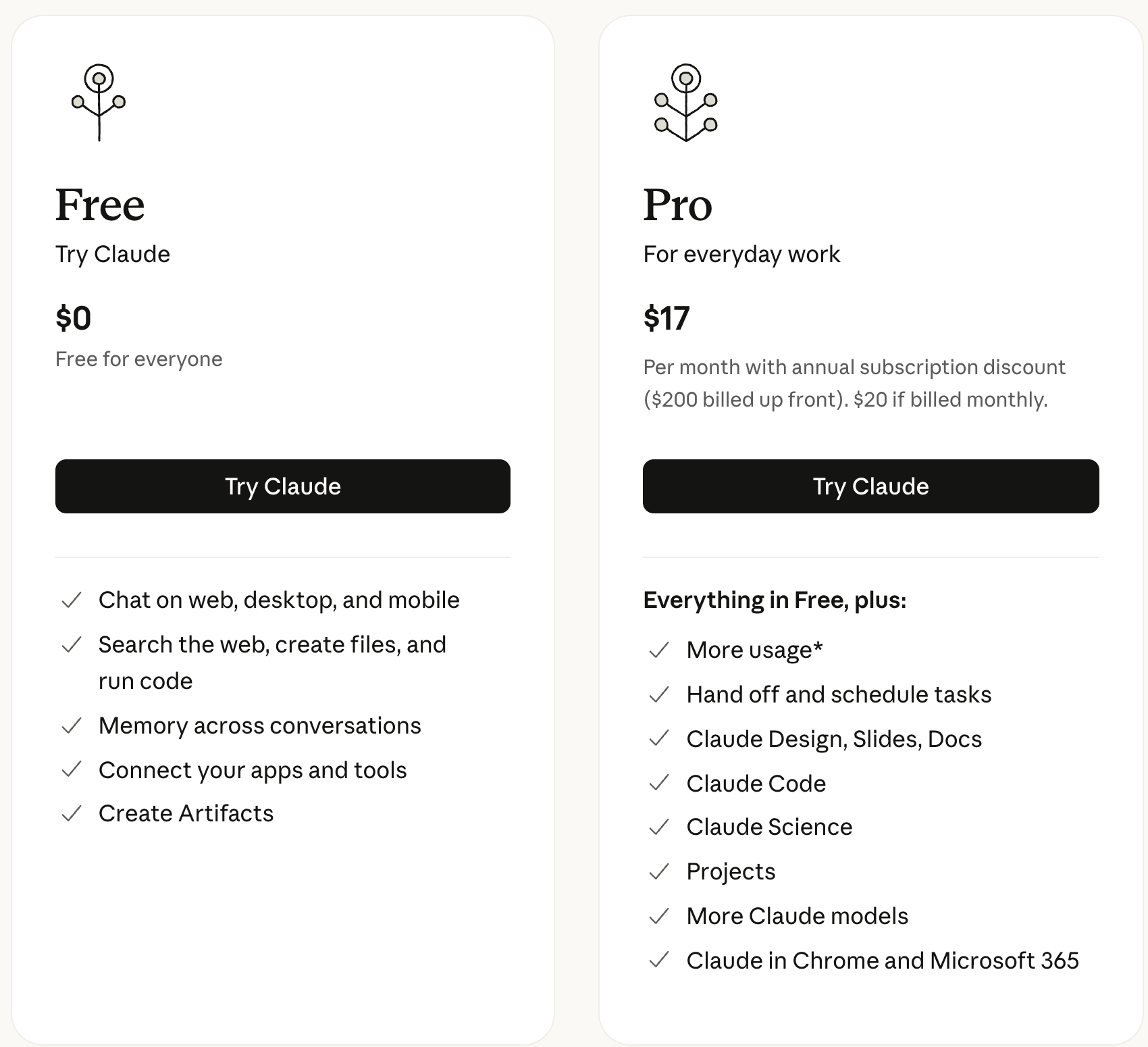
Anthropic’s pricing page tells the other half of the story. The Free tier lists chat, web search, file creation, memory, connectors and Artifacts. It does not list Claude Code. Claude Code appears one column over, under Pro.
So the honest one-line answer to “which do I try first” is decided by money, not by benchmarks. One of these you can open tonight for nothing on an account you already have. The other one starts at twenty dollars.
Both of these were built for engineers, so here is the honest test of whether you are one
Before you pick, answer three questions. They take a minute and they will save you a weekend.
- Can I try it tonight for $0? Codex yes, Claude Code no.
- Do I want something opening and changing the actual files on my laptop? Claude Code does exactly that, including your version history. Codex can too, and it can also run the job in an OpenAI-managed cloud sandbox instead, so with Codex the question is which mode you picked.
- Is the thing I am trying to do actually a software job? Not “could a programmer do it faster”, but: does the finished thing end up being a working program?
If you answered no to the third one, a coding agent is probably not the tool you need yet, and the last section of this page says where to go instead.
Michael Crist wrote the closest thing to a guide for people in exactly this spot, and he is honest about the first hour: “Every time it asked to do something on my computer, I’d Google the command just to make sure it wasn’t going to break something.”
That is not a knock. That is the correct instinct, and it is the reason question two matters more than any benchmark on page one.
Where Codex genuinely wins
It costs $0 to find out. That is not a small feature, it is the whole trial. You do not have to decide whether a coding agent is for you before you are allowed to touch one.
It has more ways in. Codex runs in a terminal, in a VS Code extension, in a web app, in an iOS app and in a desktop app. Claude Code has fewer front doors, and its reputation is still terminal-first even though the Claude desktop app now reaches it. If the command line is what scares you, Codex gives you more room to put off meeting it.
The voice lane is real. OpenAI documents ChatGPT Voice as a live voice interface to Work and Codex in the desktop app, where you can speak, interrupt naturally, and coordinate tasks. That is the part that keeps surprising me. You can genuinely talk to it instead of typing at it, and I prefer it to how I work on the Claude side.
The $20 goes further. This is a preference from running both daily rather than a published figure, and I am not going to put a number on it that OpenAI and Anthropic do not publish themselves. What I can say precisely is the part that is published: on ChatGPT the $20 buys you more usage, and on Claude the $20 buys you access at all.
Where Claude Code genuinely wins
Codex being free does not make it the better tool, and this is the section the “just use the cheap one” crowd skips.
It works on your actual files. Claude Code runs on your own machine with access to your real folders and the version history of your work. When the job is “change this thing that already exists on my laptop”, that is not a nice-to-have, it is the entire job.
It is the one I build in. Building an app, building something custom, refining a tool I already use: that is Claude Code for me, every time. I use the terminal because I am used to it.
You can see it working. Which sounds like a preference rather than a feature, until the week it saves you. That is the honest scar below.
Why I still need to see the folders
Here is the part no comparison page can write for you, because it only shows up after a few weeks.
When you cannot see the folders, the mess compounds quietly. You ask for research, the AI makes a folder and files it away being helpful, and you never look. Do that fifty times.
It is like a room. It just starts adding stuff, and next thing you know you cannot walk through it.
Right now my own root is cluttered with next-steps files I did not ask for and do not need. So I am strict about spring cleaning and constantly deleting markdown files. That habit came from being able to see what was accumulating in the first place.
With Codex, a lot of people simply never look. You can open the folder directly and find a pile of markdown files and subfolders sitting there. It gets messy.
Now the honest caveat: if you are not building complex things, you probably do not need to see them. This is my habit, formed by the kind of work I do.
If you are running a handful of tasks a week, the mess never gets big enough to matter, and Codex staying out of your way is a feature rather than a risk.
You do not have to pick one
Every page ranking for this query frames it as a permanent allegiance. It is not.
I pay for both and run them against each other daily. Codex is where I do research and day-to-day work. Claude Code is where I build. They are not competing for a slot in my week, they are doing different jobs in it.
Nothing stops you paying for one and using the free tier of the other. If you already pay for ChatGPT, you already have Codex. Trying it costs you nothing but an evening.
This is what running both looks like on my screen:
The 60-second version, from my Shorts: Claude Code and Codex together: how I 10x my output.
If neither of these is your tool, the answer is the chat window
If your finished work is a document, a spreadsheet or a decision rather than a working program, you are the person this section is for, and I would rather say it plainly than sell you a subscription.
Claude’s graphical, file-handling mode was called Cowork, and Anthropic’s own docs now carry the line “Claude Cowork is now just Claude.” No terminal anywhere. That is where most people doing non-software work should start: Cowork vs Claude Code sorts it in two minutes, and the Claude at Work hub is the map downstream of it.
Rich Holmes at Department of Product watched this audience arrive: “Despite originally being designed for developers, now, an increasing number of non-technical folks like product managers, designers and execs are dabbling with Claude Code to make use of its powerful abilities.”
Dabbling is the right word. Dabble for free first.
So which one should you open
- If you already pay for ChatGPT: open Codex tonight. You have it. There is no decision to make.
- If you pay for Claude Pro or Max and not ChatGPT: you already have Claude Code. Use it, and know that the free Codex tier is there whenever you want to compare.
- If you pay for neither: make a ChatGPT Free account, open Codex, and spend one evening. Twenty dollars is a fine thing to spend after you know what it does, and a bad thing to spend before.
- If the terminal is the actual blocker: neither. Start in Claude’s chat window and come back to this page in a month.
- If your job genuinely ends in code: run both. They have different strengths and you will find yours faster by using them than by reading about them.
For the next question after this one, which model to actually pick once you are inside Claude, see Fable vs Opus. For the automation version of this argument, Codex vs n8n covers when a coding agent beats a workflow tool, and my real Claude Code usage is what a month of it actually costs me.
Common questions
Is Codex free?
Codex is included on every ChatGPT plan. OpenAI’s own help article, updated September 2026, says Codex is included across ChatGPT plans, including Free and Go, and that usage limits vary by plan. You can open it tonight on an account you probably already have. The limit is how much you get, not whether you get in.
Is Claude Code free?
No. Claude’s pricing page lists Claude Code under Pro, which is $20 per month billed monthly or $17 per month billed annually. The Free plan does not include it. Max, from $100 per month, includes it as well.
Which is better for a non-coder?
Open Codex first, because it costs nothing to find out. But both were built for software work. If your job does not end in code, the tool you actually want is the chat window with a file-handling mode, not a coding agent.
Do these tools touch the files on my computer?
Both can. Claude Code runs on your machine against your real files and folders. Codex documents both local and cloud workflows, so with Codex the answer depends on which surface and mode you are using. Know which one you are in before pointing either at real work.
Can I run both?
Yes. I pay for both and use them for different jobs. If you already pay for ChatGPT you already have Codex, so comparing them costs you nothing extra.
Where this comes from: OpenAI’s Codex help article and Anthropic’s pricing page, read and screenshotted September 18, 2026. I pay for ChatGPT and Claude Max and use both tools every day; the habits are mine and carry no measured numbers. No benchmark scores on purpose, they change with every version. Last reviewed September 2026.

Written by
Chris AlarconChris Alarcon builds Ship Lean: the boring Claude and AI setups that actually work, handed to people who don’t code. He runs his one-person operation on these systems, around a full-time job, and shares every workflow, prompt, and tool combo in public. Start with the 15 prompts he uses every day.
Work With Me
Setting this up for your team?
I do that. The right plan per seat, the boring setup that makes it stick, and the first three chores handed off. A 2-hour workshop or a done-with-you build, for teams of 2-50.
See how it works →The 15 AI prompts I actually use every day
I tested hundreds and kept the 15 that survived at my desk. You get them right away, then one short Ship Lean note every Tuesday.